Which LED Filament Bulbs Are Best for Hotels?
A practical guide to selecting LED filament bulbs for hotel bedrooms, lobbies, restaurants, corridors, and other hospitality spaces.

Choosing the best LED filament bulbs for hotels is not simply a matter of selecting the most attractive vintage-style lamp. Hotel lighting must support atmosphere, visual comfort, operational reliability, maintenance planning, and brand identity at the same time. A bulb that looks excellent in a product photograph may produce glare in a guest room, perform poorly with a dimmer, or create inconsistent color across a large installation.
The right decision begins with the application. Lobby pendants, bedside lamps, restaurant chandeliers, corridor fixtures, and bathroom fittings have different requirements. Buyers should therefore evaluate LED filament bulbs as part of a complete lighting system rather than as isolated decorative products.
What makes an LED filament bulb suitable for a hotel?
A strong hospitality specification balances five factors: appearance, light quality, electrical compatibility, physical suitability, and supply consistency. Decorative form is important because the bulb may be visible, but it should not override practical performance.
- Appearance: Select the correct envelope, filament arrangement, glass finish, and overall proportion for the fitting.
- Light quality: Check color appearance, color rendering, glare, beam distribution, and visual consistency.
- Compatibility: Confirm voltage, base, dimming behavior, control-system compatibility, and operating environment.
- Durability: Review construction, thermal conditions, switching conditions, and suitability for the intended location.
- Consistency: Require stable specifications and matching appearance across replenishment orders.
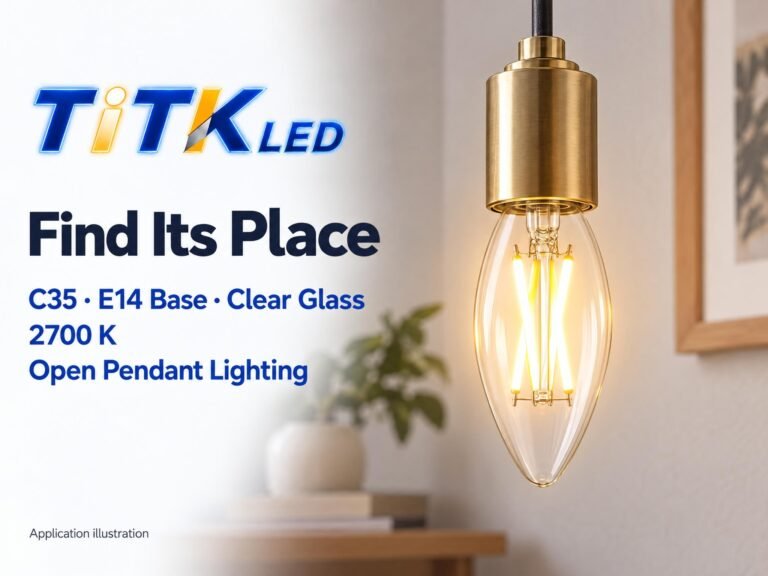
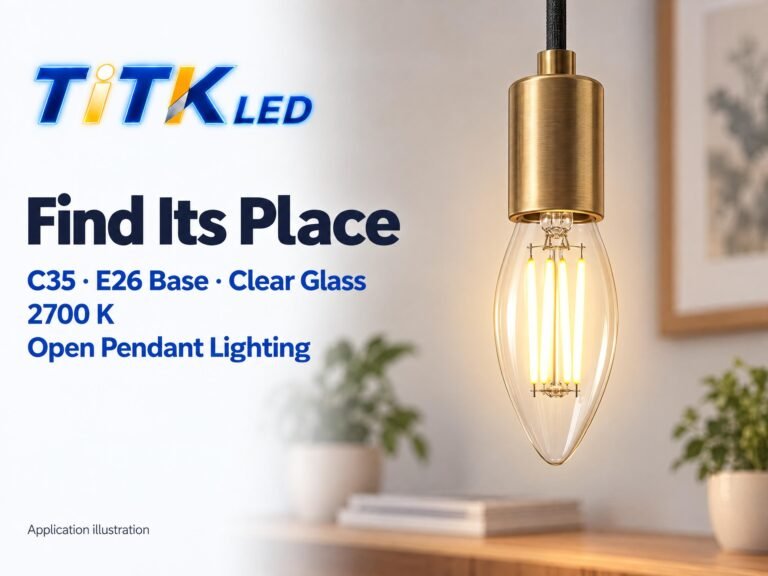
For initial product research, buyers can review TITK’s LED filament bulb range and then request detailed product documentation from the supplier.
Which bulb styles work best in different hotel areas?
Guest rooms and bedside lighting
Guest rooms usually benefit from comfortable, low-glare light. Frosted or opal LED filament bulbs can soften the appearance of the light source, particularly in bedside lamps and open-base table fixtures. Where the bulb is visible, a compact decorative shape can support the interior design without becoming a visual distraction.
Bedside applications also require careful consideration of switching and dimming. Guests may operate the lamp frequently, so buyers should confirm that the bulb is suitable for repeated switching and that its dimming range is compatible with the installed control. If a conventional dimmer is already specified, request confirmation of compatibility rather than assuming that every dimmable LED bulb will behave in the same way.
Lobbies, reception areas, and lounges
Lobbies often use exposed bulbs in pendants, wall lights, chandeliers, or decorative clusters. Here, globe and Edison-style LED filament bulbs can provide a strong visual feature. The best choice depends on the viewing distance and fitting scale. Larger spaces may require a larger envelope or a stronger light distribution, while smaller seating areas may need a more restrained decorative form.
Warm light can create an intimate arrival experience, but excessive amber coloration may affect the appearance of fabrics, artwork, signage, or food and beverages. Buyers should compare samples in the actual interior and assess the bulb together with the fixture, ceiling finish, wall color, and surrounding daylight.
For visible spherical designs, see the available LED globe bulbs. For a more traditional exposed-filament appearance, review LED Edison bulbs.
Restaurants, bars, and banquet spaces
Restaurants frequently need decorative light with a controlled atmosphere. Clear glass bulbs can emphasize the filament structure, while tinted or amber glass can create a more intimate appearance. The choice should be based on the desired visual effect and the need to present food and surfaces naturally.
Dimming is particularly important in dining spaces because the lighting scene may change between breakfast, lunch, evening service, and events. Confirm the dimmer type, minimum stable output, control protocol, and behavior when multiple bulbs are connected. A sample installation should be tested for flicker, audible noise, uneven dimming, and unwanted color change before full deployment.
Corridors, public rooms, and decorative wall fixtures
Corridors and public areas may operate for long periods and may contain many identical fittings. In these locations, uniformity and maintenance access deserve as much attention as appearance. A decorative bulb should provide a predictable visual effect from different viewing angles and should be easy to replace without disrupting hotel operations.
Where a fixture has limited ventilation, the buyer should ask the supplier whether the proposed bulb is suitable for enclosed or partially enclosed use. Heat management can influence LED performance and service life, and a decorative appearance alone does not confirm suitability for every fixture.
Key technical checks before ordering
| Requirement | What to confirm |
|---|---|
| Electrical specification | Rated voltage, frequency, base type, input behavior, and regional compatibility. |
| Light output | Distribution, beam appearance, color consistency, glare, and photometric documentation. |
| Color quality | Color temperature, color rendering information, chromatic consistency, and appearance under real interior finishes. |
| Dimming | Compatible dimmer or control system, dimming range, flicker behavior, and test conditions. |
| Physical fit | Bulb dimensions, base clearance, fixture orientation, glass shape, and ventilation conditions. |
| Environmental suitability | Indoor or outdoor use, humidity exposure, temperature range, and any enclosure restrictions. |
| Supply continuity | Product identification, batch consistency, replacement availability, packaging, and lead-time expectations. |
Ask for a current datasheet, installation guidance, product photographs, and samples from the same specification proposed for production. If the project is large or distributed across several locations, retain an approved reference sample and define acceptable visual variation in the purchasing documents.
Clear, frosted, amber, or flexible filament?
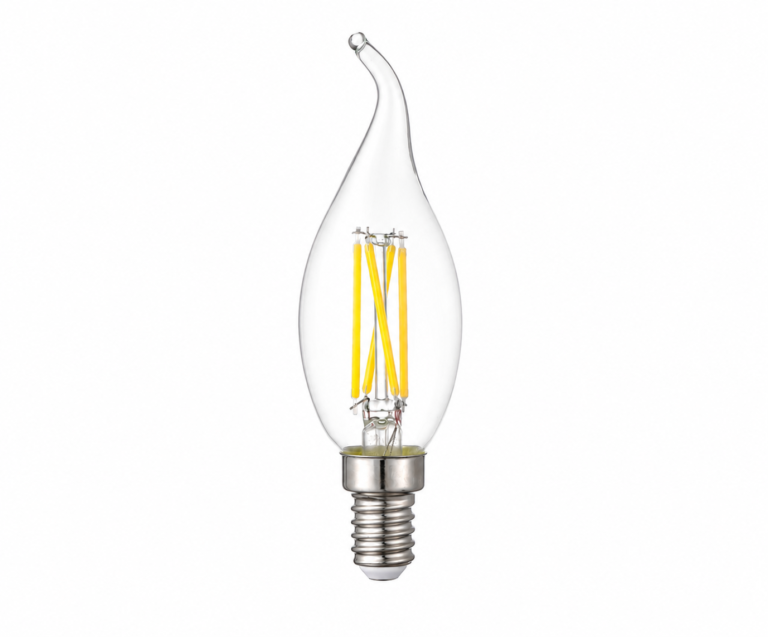
Clear bulbs are useful when the filament itself is part of the design. They require careful positioning because the visible light source may create glare when viewed directly.
Frosted bulbs provide a softer visual impression and can be appropriate for guest rooms, reading areas, and fixtures viewed at close range. They may be preferable when comfort is more important than showing the internal filament structure.
Amber or tinted bulbs can support an intimate decorative concept, especially in bars, lounges, and restaurants. Their effect should be checked against the hotel’s material palette and food presentation requirements.
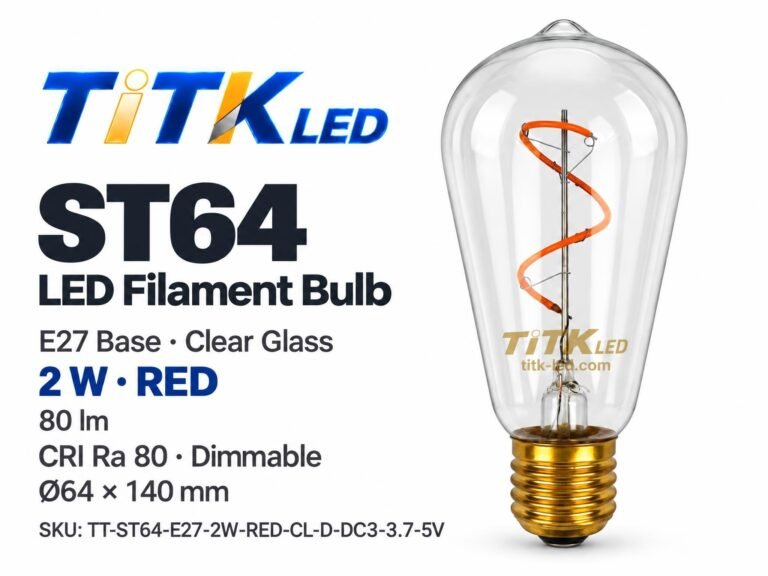
Flexible filament bulbs offer additional decorative possibilities where the internal light pattern is central to the design. Review the product’s electrical data and fitting compatibility carefully rather than selecting only by filament shape. A relevant starting point is the flexible filament bulb category.
Common selection mistakes
- Choosing by color temperature alone without testing glare and color rendering in the completed space.
- Assuming that a bulb marked dimmable works with every dimmer or hotel control system.
- Using a large decorative bulb where the fitting cannot provide sufficient clearance or ventilation.
- Mixing bulbs from different specifications, creating visible variation between rooms or floors.
- Ignoring replacement planning for a product that may be difficult to source later.
- Approving a sample under showroom conditions without checking it at night and under normal operating controls.
A practical hotel purchasing process
- Map the applications: List each area, fixture type, operating schedule, control method, and desired atmosphere.
- Create a short specification: Define bulb shape, base, appearance, color, dimming, environmental conditions, and documentation requirements.
- Request samples: Test samples in representative fixtures and compare them from normal guest and staff viewpoints.
- Run a compatibility test: Check dimming, switching, flicker, heat, glare, and interaction with existing controls.
- Approve a reference: Record the exact product identification and retain a sample for future replenishment.
- Confirm supply details: Discuss packaging, order quantities, production consistency, documentation updates, and replacement arrangements with the supplier.
Final recommendation
The best LED filament bulbs for hotels are application-specific: frosted designs often suit guest comfort, clear or Edison-style bulbs suit visible decorative fittings, globe forms suit prominent pendants, and flexible filament designs suit distinctive interiors. No single bulb is ideal for every hotel area.
For the next step, prepare a room-by-room lighting schedule and ask TITK or another qualified supplier to match suitable samples against your fixture, control system, and regional requirements. Approve the bulb only after an in-situ test confirms appearance, comfort, compatibility, and replenishment practicality.