Best Vintage Bulbs for Table Lamps: A Troubleshooting Guide
Learn how to choose and troubleshoot vintage LED bulbs for table lamps, from incorrect bases and poor dimming to glare, flicker, and shade fit.

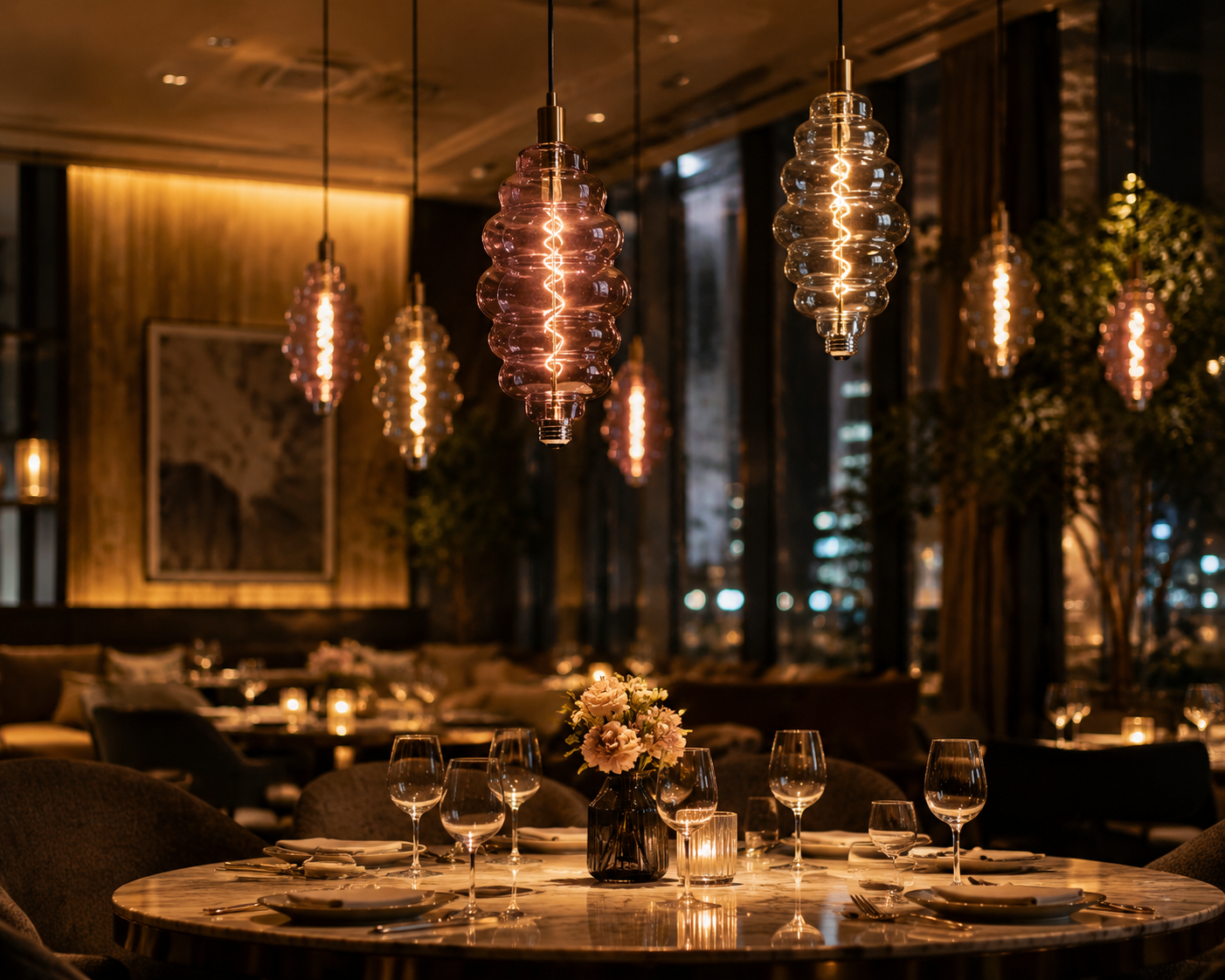
Choosing the best vintage bulbs for table lamps involves more than selecting an attractive Edison shape. A table lamp combines a socket, shade, switch, dimmer, and decorative light source in one compact application. If any part is mismatched, the result may be flicker, glare, poor illumination, overheating, or an appearance that does not suit the room.
This troubleshooting guide moves from visible symptoms to likely causes, practical checks, and corrective actions. It is intended for international buyers, distributors, installers, interior professionals, and consumers comparing vintage LED bulbs for residential, hospitality, retail, and commercial table lamps.
Start with the table lamp application
Before comparing bulb shapes, define how the lamp will be used. A bedside lamp may need comfortable, low-glare illumination. A reception or restaurant table lamp may prioritize decorative appearance and consistent colour. A desk lamp requires more useful light on the working surface, while a display lamp may mainly provide ambient effect.
Record the lamp’s socket type, supply voltage, maximum permitted lamp rating, shade dimensions, switch arrangement, and whether a dimmer is installed. For projects involving several countries or markets, confirm the exact electrical requirements for each destination rather than assuming that a bulb suitable in one region will be suitable elsewhere.
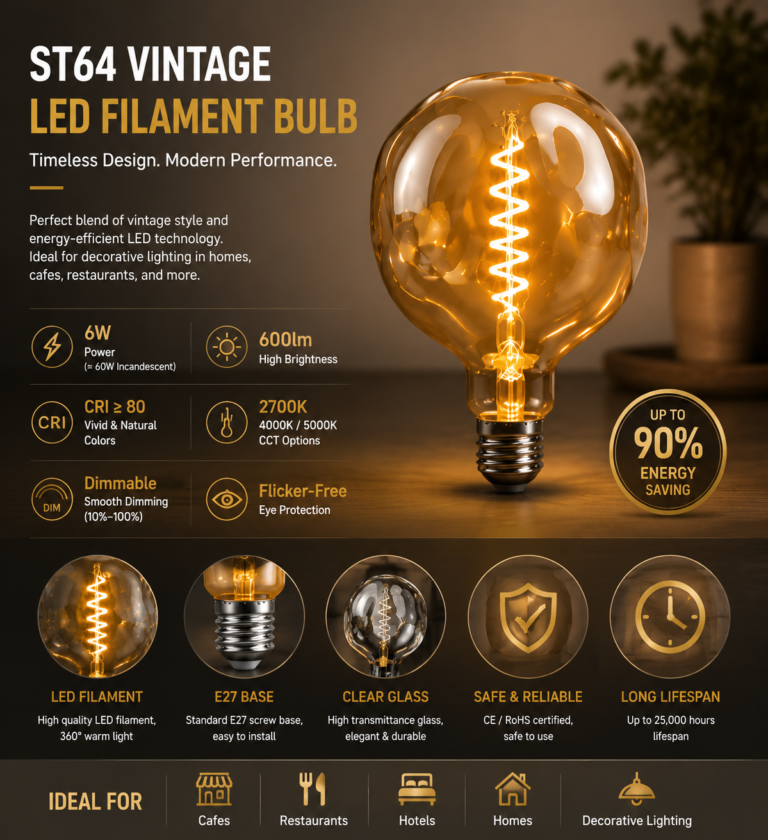
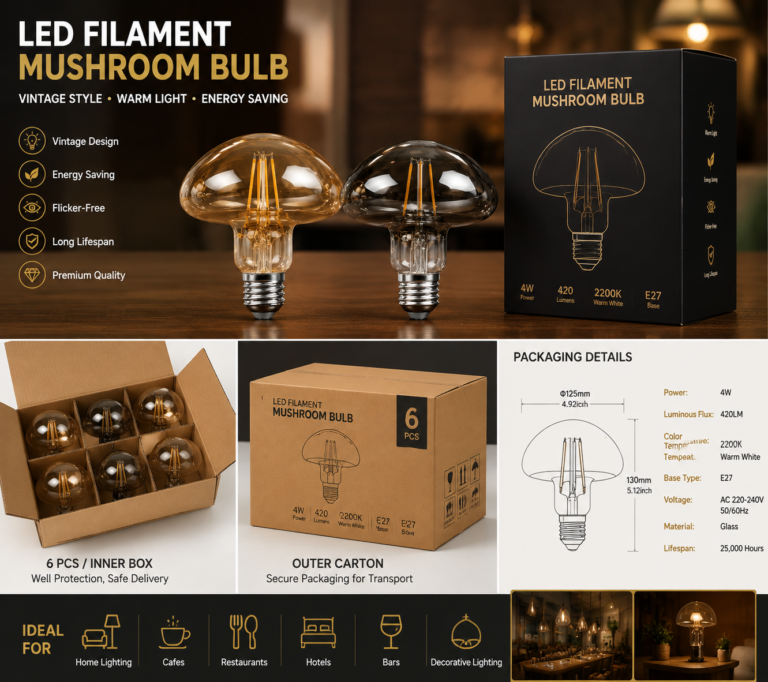
Vintage LED filament designs are often selected for visible-bulb fixtures. You can review the broader LED filament bulb range when comparing classic shapes, finishes, and decorative applications.
Symptom: The bulb does not fit or sits incorrectly
Likely causes
- The cap or base is incompatible with the lamp socket.
- The bulb diameter or length conflicts with the shade, harp, or diffuser.
- The bulb is too heavy for a small decorative holder.
- The lamp’s socket is worn, damaged, or poorly aligned.
Checks
Switch off and unplug the lamp before inspection. Check the socket marking, measure the available clearance, and compare the bulb drawing or dimensional specification with the lamp. Do not rely on a product photograph alone; similar vintage bulbs may have significantly different neck lengths, globe diameters, or overall heights.
Corrective action
Select the correct base family and a bulb whose dimensions leave adequate space around the shade and socket. For exposed-bulb lamps, confirm that the decorative shape is visible without touching the shade. If a shade covers the bulb, check that the neck and body do not press against fabric, paper, plastic, or other heat-sensitive materials.
Symptom: The lamp looks attractive but gives insufficient useful light
Likely causes
- The chosen decorative bulb is intended primarily for ambience.
- The shade absorbs or blocks a large portion of the light.
- The bulb has a narrow illumination pattern that does not suit the lamp.
- The selected colour and appearance make the light seem less effective in the space.
Checks
Assess the lamp from the user’s normal position, not only from across the room. Check whether the shade directs light upward, downward, or sideways. Compare the supplier’s lumen information, beam description, and colour specification with the intended task. For a reading or work lamp, a highly tinted vintage appearance may be less practical than a clear warm-white filament bulb.
Corrective action
Choose a bulb designed for the application rather than selecting by shape alone. A clear Edison-style bulb can work well in an open lamp, while a globe or bottle form may be more suitable where the bulb is visible from several angles. If the lamp is decorative but must also provide useful illumination, ask the supplier for a model balancing appearance, output, and glare control. See the LED Edison bulb selection for classic exposed-lamp applications.
Symptom: The light is too harsh or creates uncomfortable glare
Likely causes
- The filament or LED elements are directly visible at eye level.
- The bulb has a clear glass finish in a lamp that needs diffusion.
- The shade is too open or positioned too close to the viewer.
- The colour appearance is unsuitable for a relaxed environment.
Checks
View the lamp from seating, standing, and walking positions. Note whether the bright filament is visible in the normal field of view. Check the bulb finish, glass tint, and whether the design is intended for an open fixture. Also inspect the shade for missing lining, incorrect height, or a loose fit.
Corrective action
Consider an amber, frosted, or otherwise diffused vintage LED bulb where direct brightness is uncomfortable. A larger shade or a lower bulb position may also reduce glare. For hospitality installations, assess the lamp in the actual interior because wall colour, table surface, and surrounding lighting can change the perceived contrast.
Symptom: The bulb flickers, pulses, or glows after switch-off
Likely causes
- The bulb is connected to an incompatible dimmer or electronic switch.
- A lighted switch or control circuit allows a small residual current.
- The lamp wiring, socket, or plug has a fault.
- The bulb is not designed for the supply conditions or control system.
Checks
Test the lamp with a standard on-off switch, where safe to do so, and compare the result with another compatible bulb. Identify whether the dimmer is leading-edge, trailing-edge, electronic, or otherwise specified by the installer. Inspect connections only when the circuit is isolated and by a qualified person where local rules require it.
Corrective action
Use a bulb specifically identified as compatible with the installed control system, or replace the control with a suitable dimmer. If the bulb glows when switched off, a compatible bypass or switch solution may be required. Do not treat persistent flicker as a cosmetic issue; it can indicate an unsuitable combination or an electrical installation problem. For projects requiring dimming, compare the available dimmable LED bulbs and confirm compatibility with the supplier before ordering.
Symptom: Dimming is uneven or the bulb cuts out
Likely causes
- The bulb is non-dimmable.
- The dimmer’s load range is unsuitable for the LED circuit.
- Several different bulb models are mixed on one dimming circuit.
- The control system is not compatible with the bulb driver.
Checks
Confirm that the bulb is labelled for dimming and request the supplier’s compatibility guidance. Check the dimmer model and installation instructions. In multi-lamp applications, verify that all bulbs share compatible electrical and dimming characteristics.
Corrective action
Use a matched bulb-and-dimmer combination and avoid mixing unrelated LED products on the same circuit. If reliable dimming is not essential, an on-off switch often provides a simpler and more stable arrangement.
Symptom: The bulb or socket becomes excessively hot
Likely causes
- The bulb is installed in a poorly ventilated or enclosed fitting.
- The bulb rating does not suit the lamp or enclosed shade.
- The socket has a loose connection or damaged contact.
- The lamp is placed close to heat-sensitive materials.
Checks and corrective action
Follow the bulb and lamp instructions regarding enclosed fixtures, ventilation, and maximum ratings. Inspect the socket for discolouration, looseness, or heat damage, and stop using the lamp if these signs are present. Select a bulb approved for the actual fixture conditions, not merely one with the desired vintage appearance. A supplier should confirm suitability where the lamp is enclosed, tightly shaded, or used for extended periods.
Buyer checklist for vintage table lamp bulbs
- Confirm the socket base and local supply requirements.
- Measure bulb height, diameter, and shade clearance.
- Decide whether the priority is ambience, reading light, or both.
- Choose the appropriate glass finish, colour appearance, and filament style.
- Verify dimming, switch, and control compatibility.
- Check enclosed-fixture, ventilation, and heat guidance.
- Request drawings, electrical data, samples, and packaging specifications for larger orders.
Final selection guidance
The best vintage bulbs for table lamps are those that match the complete lighting system: socket, shade, controls, electrical supply, and intended visual effect. Edison, globe, tubular, and other decorative forms can all perform well when their dimensions and specifications suit the lamp.
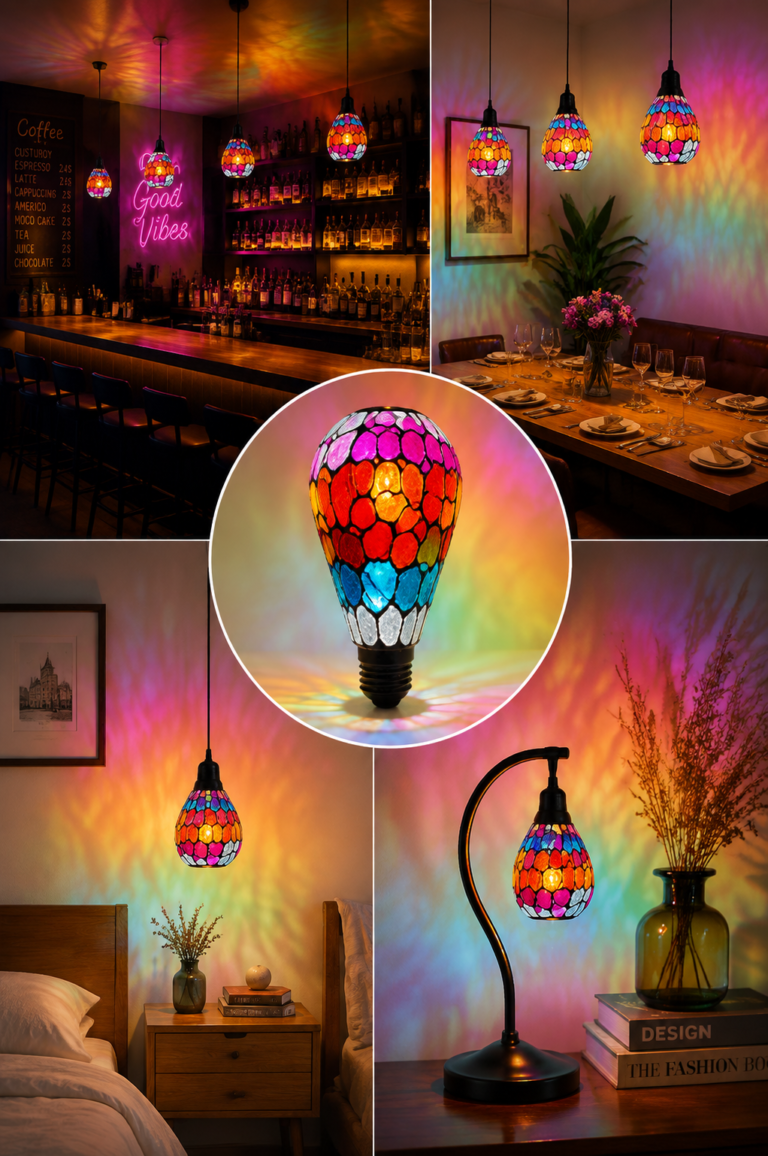
For a broader comparison of finishes and decorative formats, review decorative light bulbs. Before final procurement, confirm current specifications, compatibility information, sample availability, and market requirements directly with the supplier.