Planning Hotel LED Bulb Lifecycle Costs Without Guesswork
A practical framework for evaluating hotel LED bulbs by visual performance, compatibility, maintenance demands, procurement risk, and total lifecycle cost.

Hotel lighting projects are rarely decided by bulb price alone. A bulb that appears economical during procurement can create additional work if it produces the wrong visual effect, conflicts with existing controls, requires frequent replacement, or is difficult to replenish. Conversely, a technically advanced option may be unsuitable if its appearance does not support the interior concept.
The most reliable approach is to evaluate hotel LED bulb lifecycle cost as a combination of energy use, replacement effort, operating compatibility, guest experience, and supply continuity. This does not require unsupported savings claims. It requires a transparent comparison of the conditions that will affect the property throughout its working life.
Start with the hotel’s lighting priorities
Before comparing catalogues, divide the project into lighting zones. Guest rooms, corridors, reception areas, restaurants, bars, bathrooms, back-of-house spaces, and exterior-adjacent locations may need different bulb characteristics. A single bulb family can simplify stock management, but standardization should not override the requirements of each space.
Define the visual brief
Document the intended atmosphere before reviewing technical details. Consider whether the space should feel intimate, neutral, fresh, formal, or visually consistent with an existing decorative fitting. Then record the required color appearance, brightness impression, beam distribution, bulb shape, base type, and visible filament or diffuser style.
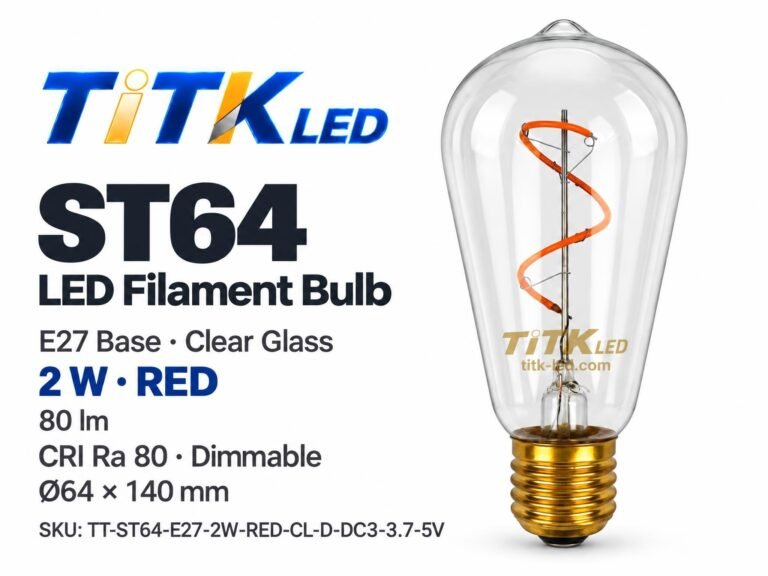
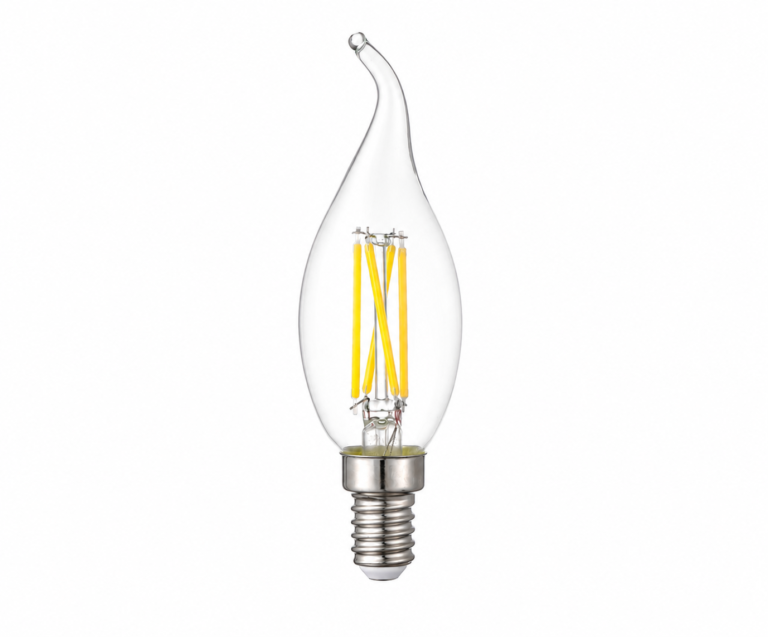
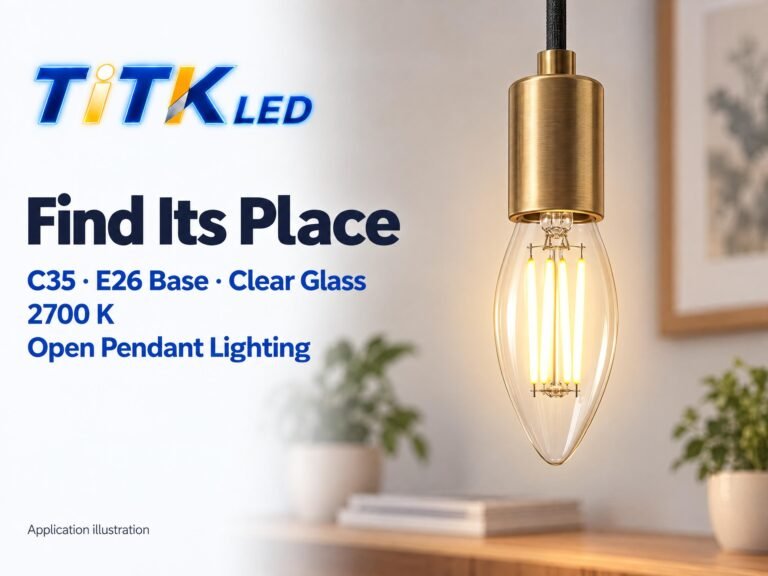
Decorative sources are often part of the guest-facing design rather than hidden components. For project references, review TITK’s LED filament bulb range and confirm the actual appearance with samples or supplier photographs taken under comparable conditions.
Separate appearance from performance
A bulb can look attractive in a product image but behave differently once installed in a shade, pendant, chandelier, or open fitting. Ask how the bulb’s shape, optical structure, and light distribution will interact with the luminaire. A visible source may need a controlled appearance from multiple viewing angles, while a recessed or shaded source may be judged more by useful illumination than decorative detail.
Assess lifecycle cost as a set of practical factors
Lifecycle cost is broader than the initial invoice. It includes every recurring requirement created by the selected bulb. Use the following framework when comparing quotations or product samples.
| Factor | Questions for the project team |
|---|---|
| Energy use | Does the proposed light output meet the design intent without unnecessary electrical demand? Can operating schedules or controls be used effectively? |
| Replacement effort | How difficult is access to the fitting? Will replacement require ladders, lifts, room closure, or coordination with housekeeping? |
| Compatibility | Will the bulb work with the installed voltage, socket, dimmer, sensor, emergency arrangement, and control system? |
| Guest experience | Could glare, color inconsistency, visible flicker, uneven dimming, or a mismatched appearance affect comfort or brand standards? |
| Supply continuity | Can the same specification be reordered, and are key details documented for future purchasing? |
| Waste and handling | What procedures apply when failed bulbs are removed, stored, transported, or disposed of? |
This framework supports qualitative decisions when verified operating data is not yet available. It also shows where a supplier must provide evidence rather than general assurances.
Specify the technical details that influence hotel operation
Light quality and consistency
For hospitality interiors, consistency is usually as important as a single bulb’s appearance. Request clear information about color temperature, color rendering, beam behavior, brightness, and product consistency across batches. If rooms are photographed, inspected, or compared side by side, visible variation can become a maintenance concern.
Do not select a color temperature from a label alone. Install representative samples in the actual room type, with the intended shade, wall finish, furniture, and control setting. Review the result during both daytime and evening conditions where practical.
Dimming and control compatibility
Hotel projects frequently combine wall dimmers, room-management systems, occupancy sensors, timers, or centralized controls. The selected bulb should be checked against the exact control equipment rather than a general statement that it is “dimmable.” Confirm the usable dimming range, startup behavior, minimum load requirements, and behavior when several bulbs operate on the same circuit.
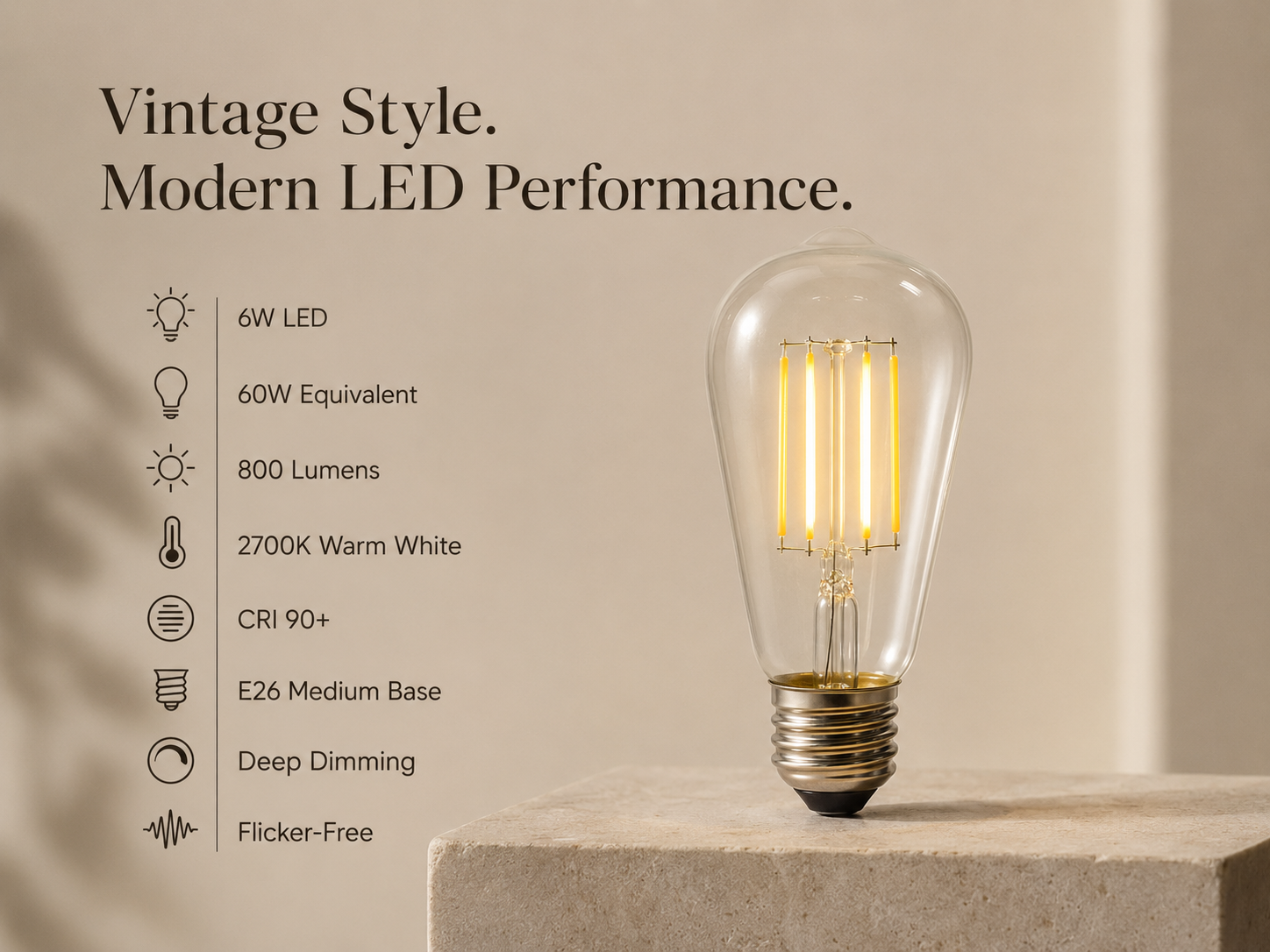
Where dimming is not required, a non-dimmable option may simplify the installation. Where dimming is central to the guest experience, compatibility testing should be treated as a project requirement. TITK’s dimmable LED bulbs category can be used as a starting point, but the supplier should confirm suitability for the project’s controls.
Physical and electrical fit
Verify the socket or cap, bulb dimensions, clearance, operating position, voltage, frequency, and fitting ventilation. A bulb that fits the socket may still be unsuitable for a narrow shade, enclosed luminaire, restricted ceiling void, or high-temperature location.
Also confirm whether the installation includes transformers, older dimmers, emergency equipment, or other components that could affect operation. These details should be recorded in the purchase specification, not left to assumptions at the installation stage.
Match bulb types to hotel zones
Guest rooms often benefit from a balance between visual comfort, decorative character, and straightforward replacement. Bedside, desk, and vanity fittings may each require different optical behavior even when they use the same base.
Public areas place greater emphasis on presentation and consistency. Reception counters, corridors, lounges, and restaurants may use decorative shapes where the bulb is visible. For these applications, explore decorative LED bulb options and assess them in the final fitting rather than selecting from a product image alone.
Bathrooms and service areas should be reviewed for moisture exposure, enclosed fittings, cleaning routines, and access constraints. Back-of-house spaces may prioritize straightforward maintenance and dependable availability over decorative appearance. The best project specification may therefore contain several approved bulb types rather than one universal model.
Use samples and a controlled site review
A sample installation is one of the most useful ways to reduce procurement risk. Test the proposed bulb in representative fittings and observe the result from normal guest viewpoints. Review visual comfort, shadows, reflections, dimming response, startup behavior, and the appearance of adjacent surfaces.
Include the people who will live with the decision: the lighting designer, interior team, facilities manager, installer, housekeeping representative, and procurement lead. Each group may identify a different lifecycle issue. For example, a fitting that looks successful in a mock-up may be difficult to access during room turnover.
Build a specification that can be reordered
Future maintenance depends on accurate records. Save the approved bulb description, photographs, fitting location, control compatibility, supplier reference, packaging information, and any sample approval notes. Avoid relying only on informal names such as “warm decorative bulb” or “standard room lamp.”
For distributors and OEM buyers, clarify which features are fixed and which can vary. Confirm the required base, shape, finish, color appearance, electrical input, dimming status, packaging, labeling, and quality-control documentation. Ask the supplier to identify any change-notification process for future production or substitutions.
When requesting a quotation from TITK or another supplier, ask for the complete technical datasheet and confirm all project-critical specifications before approval. Company-specific claims about performance, certification, warranty, or supply capability should be verified directly with the supplier and documented in the purchase agreement.
Make the decision with a balanced scorecard
A simple scorecard can make the decision easier to explain internally. Rate each shortlisted option against visual fit, energy-efficiency potential, control compatibility, installation effort, maintenance access, supply continuity, documentation, and purchase cost. Weight the categories according to the hotel’s priorities.
The winning bulb is not necessarily the least expensive or the most feature-rich. It is the option that meets the visual brief, operates correctly in the installed environment, and creates manageable responsibilities for the people who will maintain the property. This is the practical meaning of lifecycle cost in hotel lighting.
For a project-specific shortlist, share the fitting details, control equipment, room types, and visual requirements with TITK and request confirmed specifications before placing an order.