Restaurant Edison Bulb Sourcing: A Practical OEM Checklist
A practical guide to sourcing Edison-style LED bulbs for restaurants, covering specifications, samples, quality checks, packaging, documentation, and supplier communication.

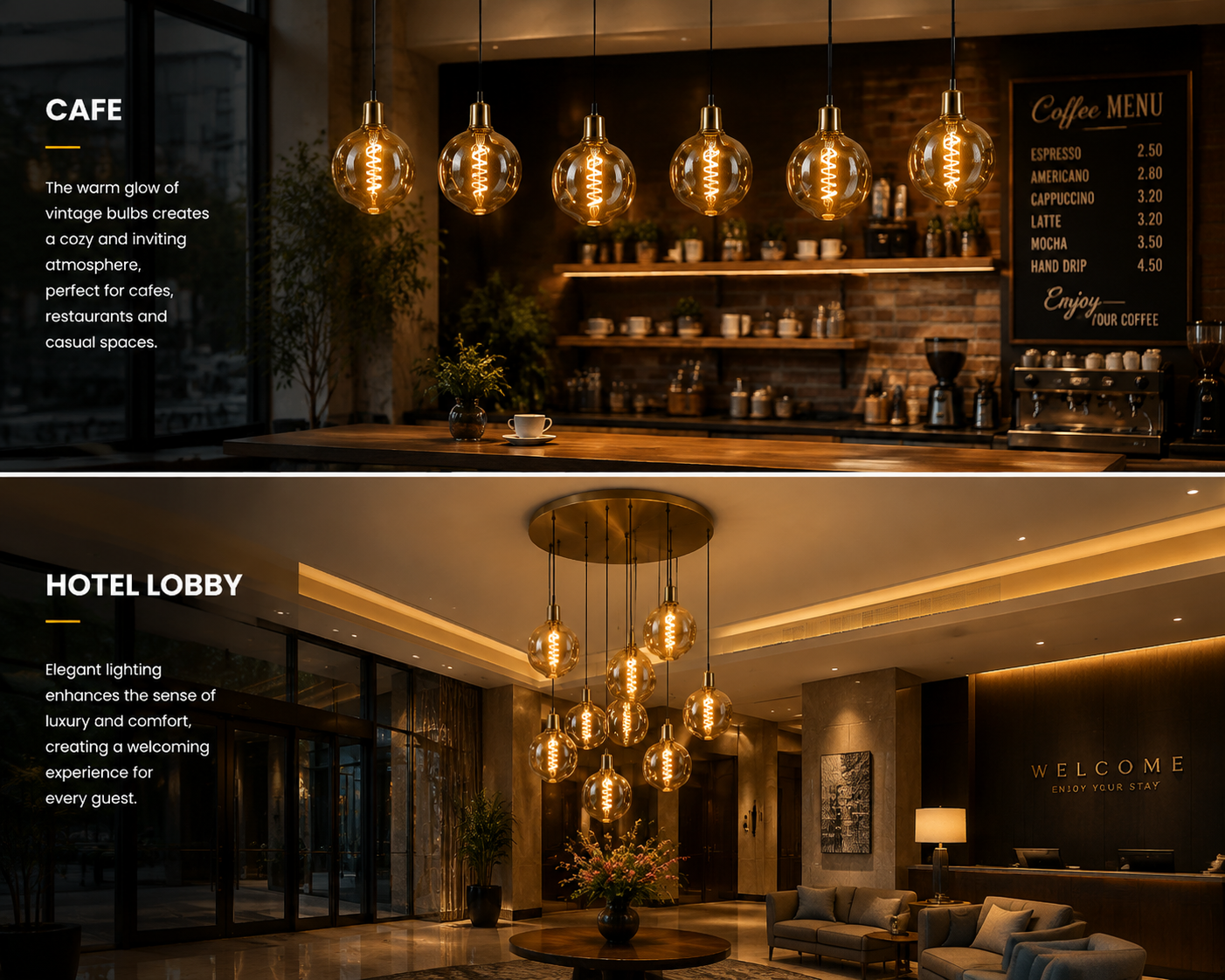
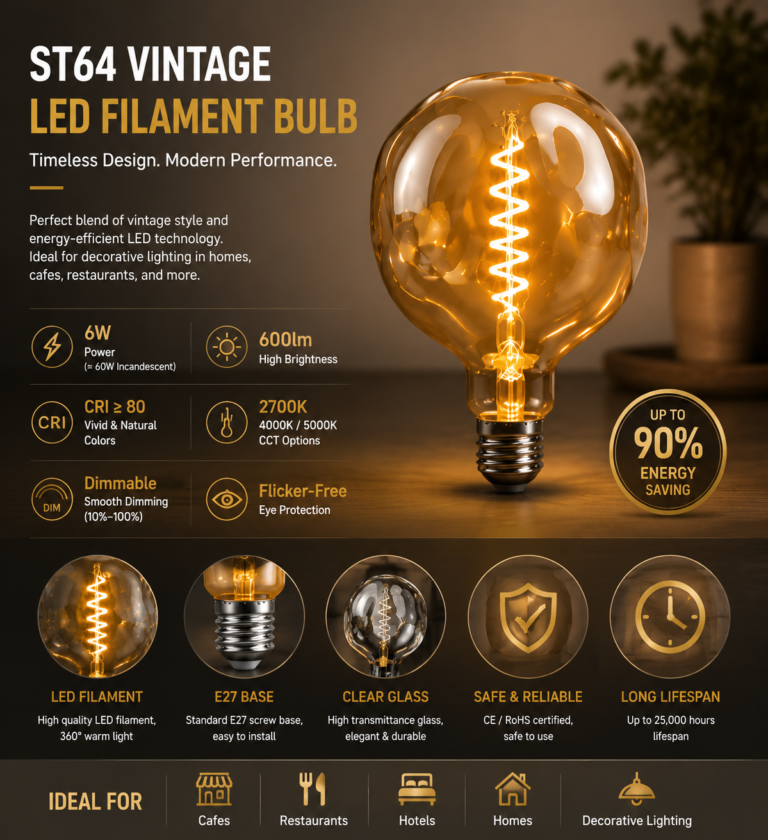
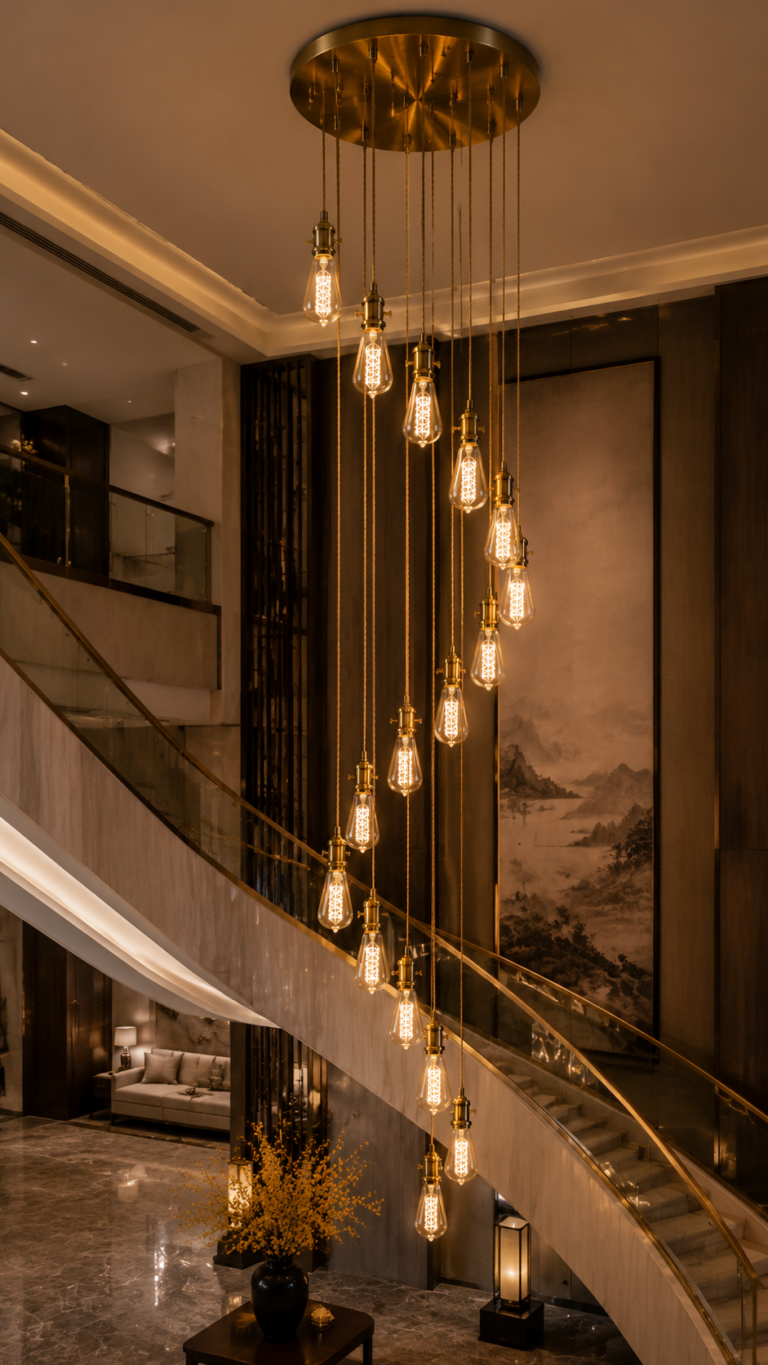
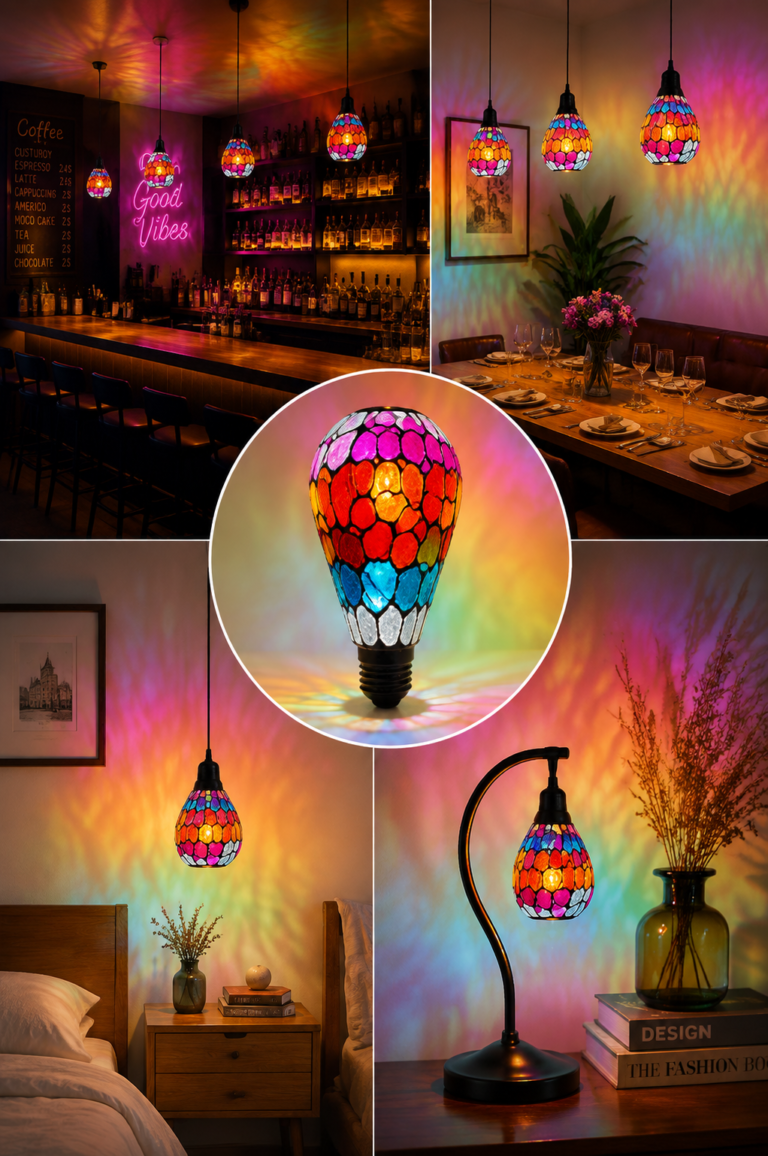
Restaurant lighting has to support more than visual style. Edison-style LED bulbs may appear in dining rooms, bars, private areas, reception zones, and decorative feature installations, where the bulb itself is part of the interior design. For an international buyer, however, selecting the right product is also a sourcing exercise involving electrical compatibility, appearance consistency, packaging, documentation, and repeat-order control.
The strongest procurement process begins by translating the restaurant concept into measurable requirements. Rather than choosing a bulb from a photograph alone, buyers should prepare a specification sheet, request samples, check the samples in a representative setting, and confirm how the supplier will control production consistency. This approach is useful for OEM projects, wholesale programs, and multi-site restaurant rollouts.
Start with the restaurant application
Before comparing suppliers, identify where and how the bulbs will be used. A decorative bulb above a dining table has different priorities from a bulb installed in a bar display, open pendant, wall fitting, or exposed socket installation.
- Viewing distance: Decide whether guests will see the bulb closely. Close viewing makes glass shape, filament arrangement, coating, and surface finish especially important.
- Lighting role: Establish whether the bulb is intended mainly for ambience, general illumination, accent lighting, or a combination of these functions.
- Fixture position: Record whether the bulb will be installed vertically, horizontally, or in an open fixture. Orientation can affect the visual appearance of internal filaments and the distribution of light.
- Operating environment: Confirm whether the location is dry, exposed to moisture, subject to heat from nearby equipment, or frequently accessed for cleaning and maintenance.
- Replacement planning: Consider whether the operator needs a standard product for easy replenishment or a custom appearance that will require controlled repeat purchasing.
These details help a supplier recommend suitable options within the LED Edison bulb range, rather than proposing a visually similar product with unsuitable electrical or installation characteristics.
Align the specification before requesting a quotation
A clear specification prevents price comparisons from becoming misleading. Ask suppliers to quote against the same technical and visual requirements, and request written confirmation of any item that is not fully defined.
Electrical and photometric requirements
- Nominal input voltage and frequency for the destination market
- Base type and compatibility with the intended sockets
- Required wattage or energy-use range
- Target light output and beam distribution
- Color temperature and acceptable color consistency
- Color rendering requirements for food, materials, and interior finishes
- Dimming requirement, including the intended dimmer type if applicable
- Flicker expectations and any project-specific lighting controls
- Operating temperature and installation limitations
Appearance and construction requirements
- Bulb shape, dimensions, neck length, and base finish
- Clear, amber, smoked, frosted, or other glass treatment
- Filament arrangement and visual symmetry
- Logo, marking, or private-label requirements
- Required photometric files or product drawings for the lighting designer
For restaurant interiors, appearance tolerances should be written down. Define what variation is acceptable in glass tint, filament position, printed markings, and overall dimensions. If the bulbs are installed in a row or cluster, small differences can become noticeable even when each individual item appears acceptable.
Use samples to test both design and performance
Samples should be evaluated in the actual fixture or in a close simulation of the intended installation. A showroom sample may look suitable in isolation but produce a different impression when combined with the socket, shade, wall color, ceiling height, and surrounding lighting.
Request samples from the proposed production configuration. If the project involves a custom glass finish, filament layout, base, label, or packaging format, the sample should reflect those details. Keep an approved reference sample or documented approval record for later comparison.
What to check during sample approval
- Visual consistency between samples in the same batch
- Color appearance when viewed from normal guest positions
- Glare and brightness in open fixtures
- Light distribution across tables, counters, or display areas
- Dimming behavior with the specified control equipment
- Startup behavior and operation after extended observation
- Fit in the intended socket and clearance within the fixture
- Glass, filament, and base appearance after handling and installation
When dimming is required, do not approve the bulb based only on a general statement that it is dimmable. Confirm the compatible control conditions with the supplier and test the bulb with the equipment specified for the project. A buyer may also review related dimmable LED bulb options before finalizing the product brief.
Build a practical quality-control plan
Quality checks should cover more than whether the bulb lights. Agree with the supplier on what will be checked before shipment, how results will be recorded, and how nonconforming goods will be handled.
Recommended inspection areas
- Product identity: Verify model, wattage, voltage, base, color temperature, finish, and labeling against the purchase order.
- Appearance: Inspect glass, coating, filament alignment, base assembly, markings, and visible damage.
- Dimensions: Check critical measurements where fixture clearance or visual alignment matters.
- Electrical operation: Confirm that agreed operating and safety checks are completed using suitable equipment.
- Consistency: Compare samples from different cartons or production lots where the order is large or repeated.
- Packaging condition: Check protection against impact, movement, moisture, and abrasion during transport.
Ask for the supplier’s proposed inspection procedure before mass production. If an independent inspection is required, define the inspection stage and acceptance criteria in advance. Avoid relying on vague terms such as “high quality” without a documented reference.
Review packaging for international wholesale supply
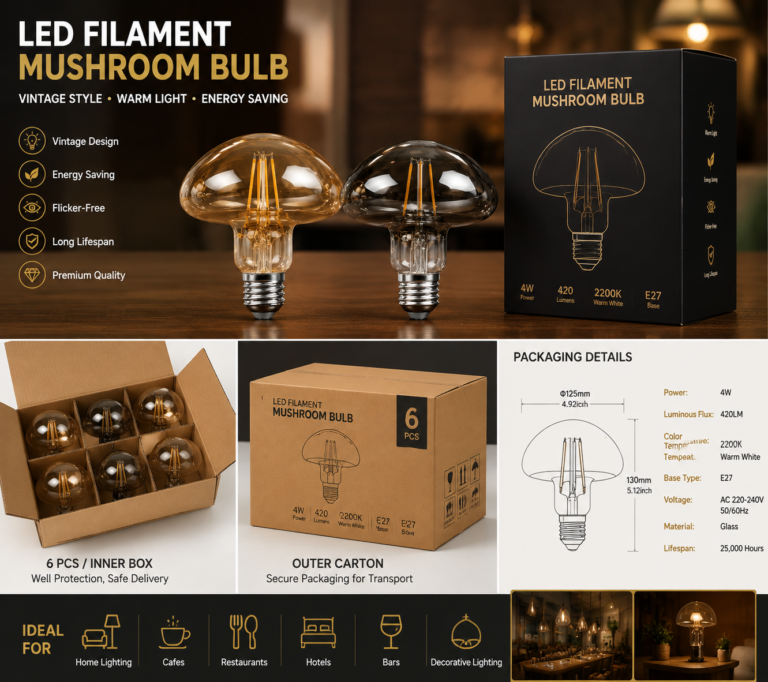
Decorative bulbs often have exposed glass and distinctive shapes, so packaging is part of product protection and cost control. Confirm the individual box design, carton configuration, internal dividers, cushioning, labeling, and pallet or outer-carton requirements.
For wholesale distribution, the packaging should make model identification simple. Discuss barcode requirements, carton marks, language requirements, quantity per carton, and whether mixed models are permitted. If the product is sold under a private label, approve artwork, print colors, regulatory wording, and placement before production.
Request a packaging sample or photographs of the final packed configuration. The buyer should also confirm carton dimensions and gross weight for freight planning, warehouse handling, and distributor pricing.
Prepare the documentation file
Documentation requirements vary by destination, product configuration, and sales channel. Ask the supplier which documents are available and have the relevant files reviewed before ordering.
- Commercial invoice and packing list
- Product datasheet and technical drawings
- Installation or usage instructions where needed
- Test reports or declarations requested by the destination market
- Packaging artwork and approved label files
- Photometric data for lighting design and planning, when required
- Batch, model, or production identification records where applicable
Do not assume that a document for one model applies automatically to another model. Match documents to the exact bulb, electrical configuration, market, and private-label version being purchased. The supplier should confirm the current revision and scope of each document.
Make supplier communication measurable
Good communication is a procurement control, not simply an administrative preference. Send one consolidated specification sheet and ask the supplier to respond line by line. This makes omissions easier to identify and creates a useful record for future orders.
Clarify the approval stages: quotation, technical confirmation, sample, artwork, packaging, production, inspection, and shipment. Assign a decision-maker on the buyer’s side and define how changes will be approved. Any change to the LED source, driver, glass, filament structure, base, label, or packaging should be communicated before implementation.
For repeat orders, ask how the supplier will identify the approved configuration and manage revisions. Retain the purchase order, approved sample references, drawings, artwork, inspection records, and correspondence together. This is particularly important when a restaurant group operates across countries or relies on distributors for replenishment.
Compare total suitability, not only unit price
A lower quotation may not represent better value if it excludes packaging changes, sample development, documentation, inspection, or replacement planning. Compare suppliers using a structured table that includes specification fit, sample quality, communication clarity, packaging, documentation, lead-time assumptions, and commercial terms.
For a dependable restaurant lighting program, the best Edison-style bulb is the one that meets the design brief, works with the installation, arrives protected, and can be reordered against a clearly controlled specification. Buyers can also review broader LED filament bulb selections and decorative light bulb options when comparing shapes and finishes.
Final sourcing checklist
- Define the restaurant application and installation environment.
- Issue a complete electrical, visual, packaging, and documentation specification.
- Request samples in the proposed production configuration.
- Test samples in representative fixtures and control systems.
- Agree on inspection points and acceptance criteria.
- Approve packaging, labels, artwork, and carton information.
- Confirm documents for the exact model and destination market.
- Record the approved configuration for repeat orders.
For an OEM or wholesale project, share this checklist with the shortlisted supplier and ask for written confirmation of each requirement. Contact TITK to discuss a suitable product brief or review the full guide with your purchasing and installation teams.