Vintage-Style LED Table Lamp Bulbs: A Buyer’s Guide
A practical guide to selecting vintage-style LED bulbs for table lamps, with advice on appearance, compatibility, dimming, sourcing risks, and supplier questions.

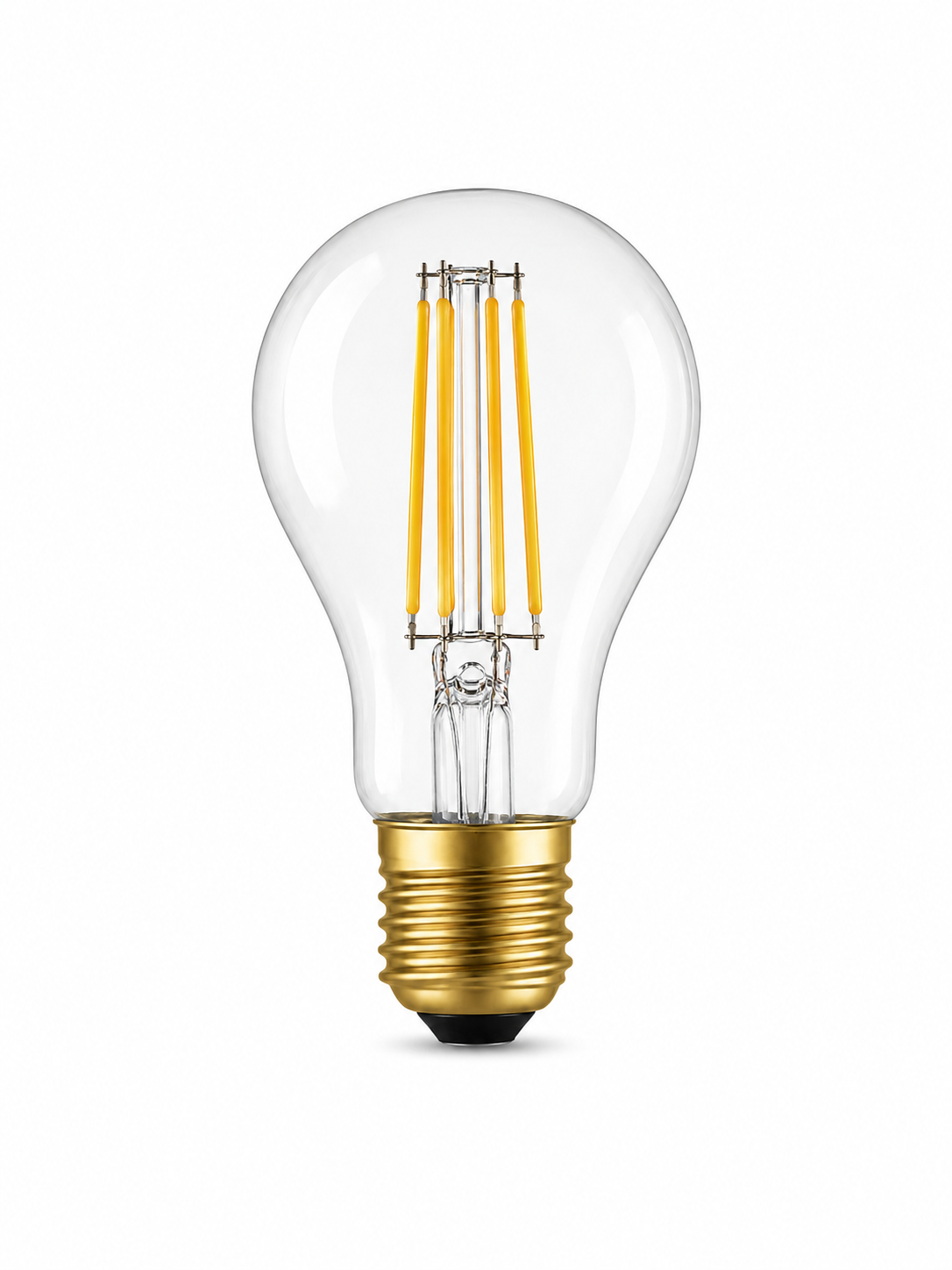
Choosing the right vintage-style LED table lamp bulbs is not simply a matter of selecting an amber glass bulb with a visible filament. A table lamp is viewed at close range, often in a residential, hospitality, retail, or workplace setting. Glare, color consistency, shade clearance, socket compatibility, and dimmer performance can all affect the result.
For B2B buyers, the decision also includes packaging, repeatability, documentation, and supply continuity. The best option is the one that matches the lamp, the intended atmosphere, and the operating conditions while remaining practical to source and replace.
This guide explains how to define requirements, compare relevant bulb types, identify procurement risks, and prepare useful questions for potential suppliers.
Start with the table lamp and application
Before comparing bulb designs, document where and how the lamp will be used. A decorative bedside lamp has different requirements from a reception-desk lamp, restaurant table lamp, or retail display fixture.
- Viewing distance: If users can see the bulb directly, filament layout, glass tint, and brightness uniformity become important.
- Shade design: A narrow shade may require a compact bulb, while an open-base lamp can accommodate a larger decorative shape.
- Operating schedule: Frequent switching and long operating periods may make thermal behavior, driver design, and replacement availability more important.
- Ambient purpose: Decide whether the bulb is intended for atmosphere, reading support, general illumination, or a combination of these.
- Market requirements: Record the destination country, mains system, socket standard, language requirements, and applicable compliance documentation that the supplier must provide.
For a broad starting point, review the available LED bulb solutions, then narrow the specification according to the lamp and project environment.
Compare the main vintage bulb options
Amber or smoked glass filament bulbs
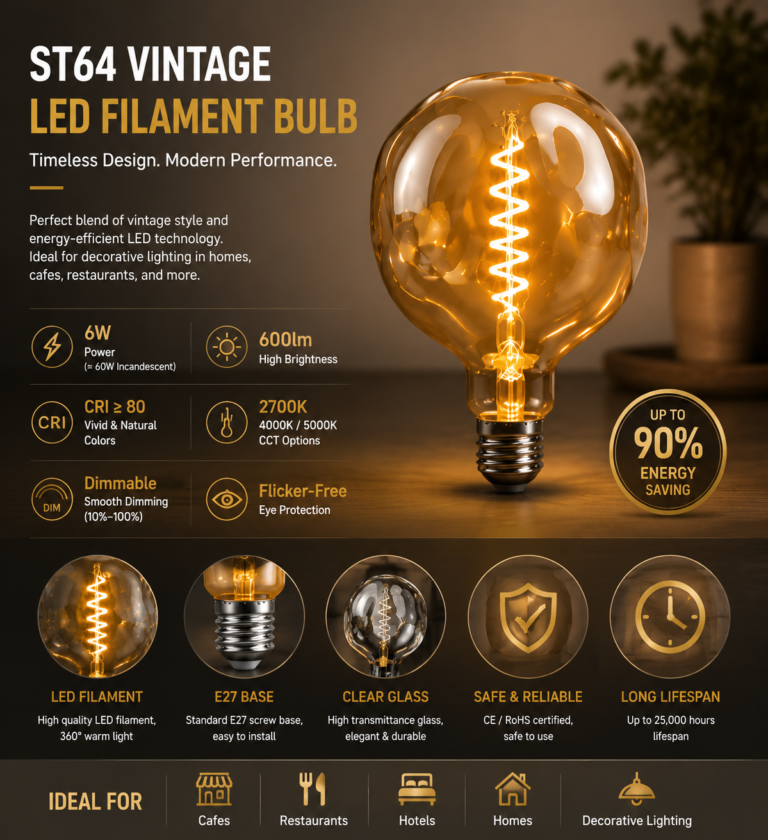
Amber glass creates a warm, nostalgic appearance and can soften the perceived brightness of a visible bulb. It is often suitable for hospitality, lounge, bedroom, and decorative residential applications. However, the darker the glass treatment, the more carefully the buyer should evaluate usable light output and visual consistency between batches.
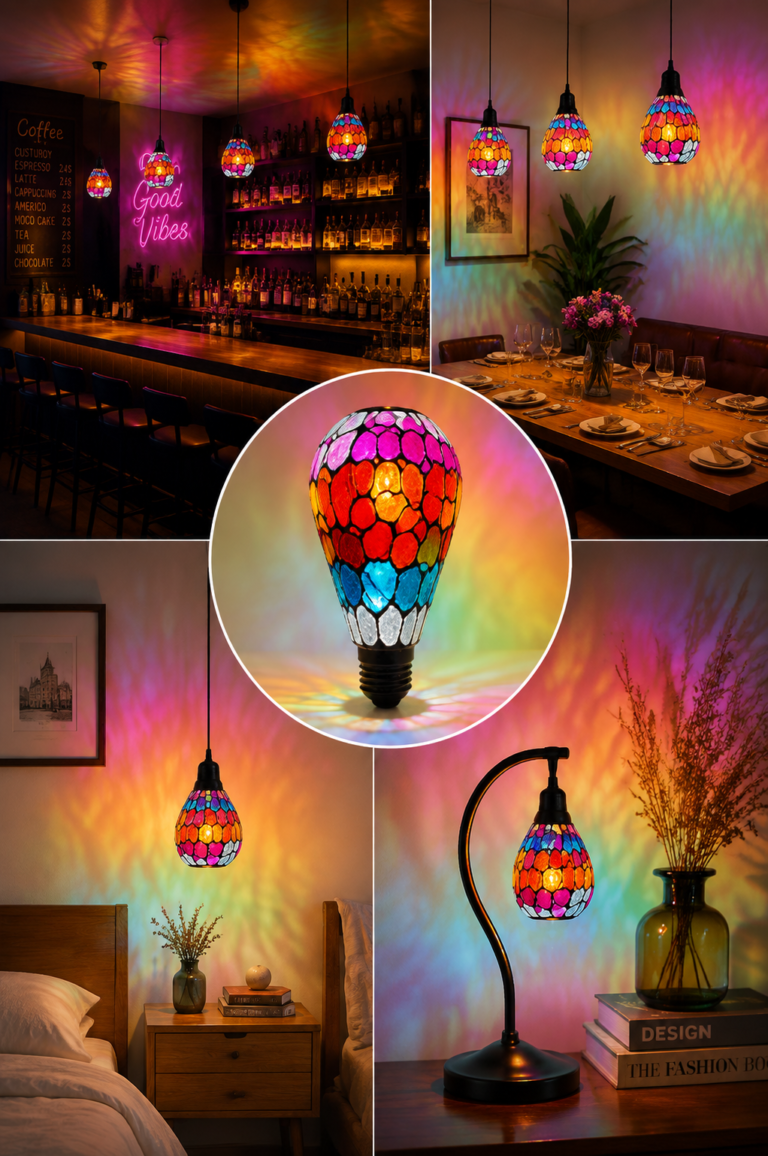
Smoked or tinted glass may provide a contemporary vintage effect, but it can look different under daylight, warm interior lighting, or photography. Request physical samples when the glass appearance is central to the project.
Clear glass filament bulbs
Clear glass reveals the filament structure and can provide a cleaner, more versatile appearance. It may suit table lamps with fabric shades or open decorative fittings where the bulb needs to contribute to the design without strongly changing the shade color.
Clear bulbs can also expose imperfections more readily. Inspect filament alignment, internal support visibility, glass clarity, and the appearance of the powered bulb rather than relying only on product photography.
Different decorative shapes
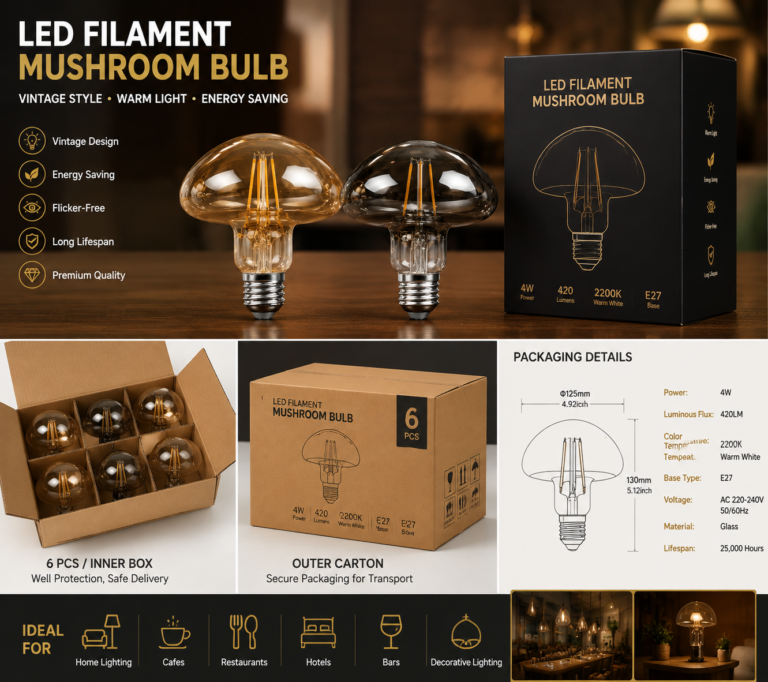
Traditional Edison-style shapes, round globe forms, tubular designs, and compact household shapes can all work in table lamps. The correct choice depends on the shade opening, lamp proportions, and viewing angle. A large bulb may look attractive in an open lamp but may touch the shade or create unwanted shadowing in a confined fixture.
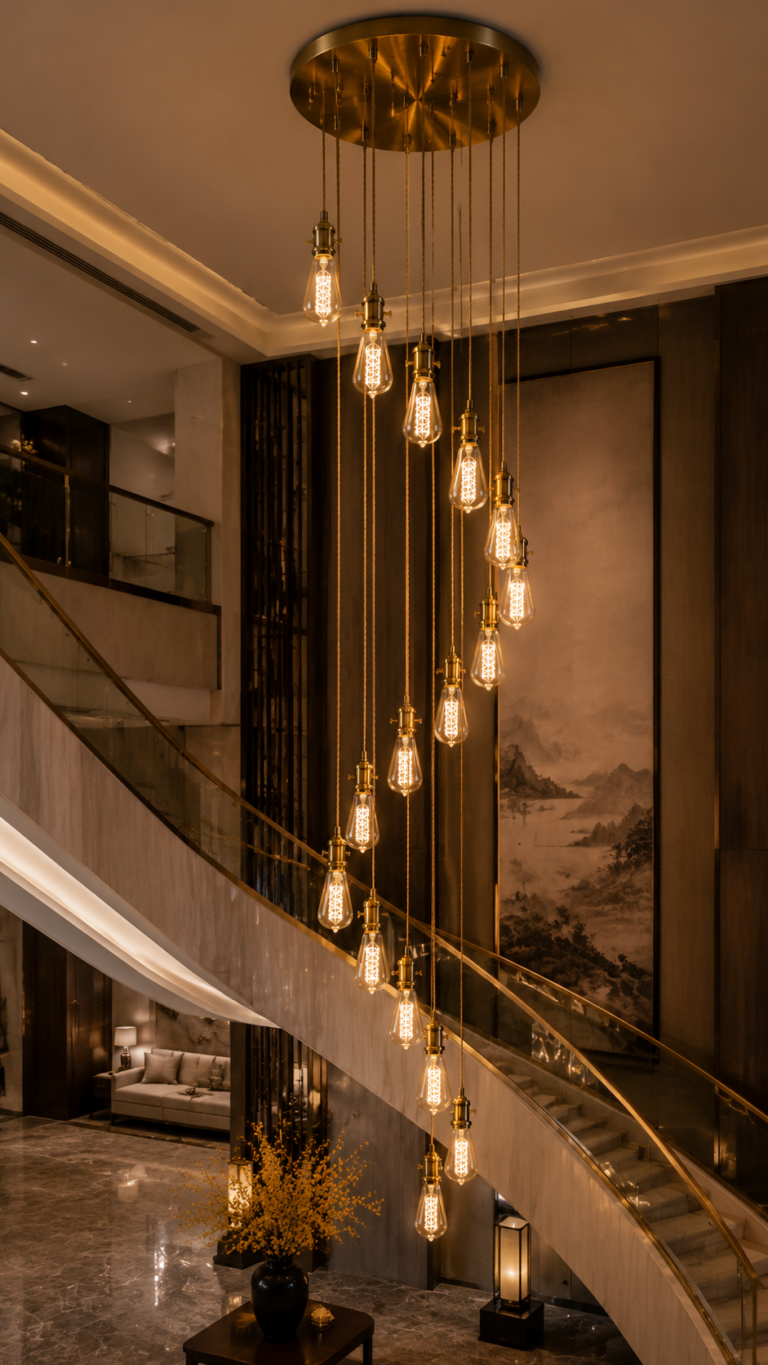
Compare the bulb’s overall dimensions, maximum diameter, length, base position, and visible filament pattern with the actual lamp. The LED Edison bulb range can be relevant for classic profiles, while other decorative shapes may be better suited to compact or contemporary table lamps.
Define the technical specification
A clear specification prevents attractive but unsuitable samples from entering the purchasing process. Ask the supplier to confirm each item in writing and identify which details are standard and which can be customized.
| Requirement | What to define | Why it matters |
|---|---|---|
| Socket and voltage | Base type, electrical system, and destination market | Prevents installation incompatibility |
| Bulb dimensions | Shape, diameter, length, and shade clearance | Confirms physical fit |
| Light appearance | Color description, glass tint, filament style, and visible uniformity | Controls the finished visual effect |
| Dimming | Whether dimming is required and which control systems will be used | Reduces flicker, dropout, or compatibility problems |
| Electrical documentation | Datasheet, label information, test documents, and market-specific files | Supports responsible importing and distribution |
| Packaging | Individual protection, master cartons, labeling, and barcode needs | Helps limit transit damage and warehouse errors |
Do not assume that every decorative filament bulb is dimmable. If the project requires dimming, review dimmable LED bulb options and test the complete combination of bulb, lamp, dimmer, and wiring.
Evaluate light quality and user comfort
Vintage styling should not compromise comfort. A visible filament can produce glare when the bulb is exposed at eye level. Consider the lamp’s position, shade material, and whether occupants will look toward the bulb while seated.
Ask for consistent product photographs and samples under comparable conditions. Review the apparent color of the glass, the filament pattern when switched off, and the light distribution when switched on. For hospitality or multi-room projects, compare samples from the same production specification rather than mixing visually similar products from different sources.
Color descriptions should be tied to the supplier’s datasheet and sample approval process. Terms such as “warm,” “extra warm,” or “vintage white” can be interpreted differently between suppliers. Use a written reference, approved sample, or project color standard where appearance must be repeatable.
Review dimming and compatibility risks
Dimming is a common source of disappointment in decorative table-lamp projects. Performance may depend on the bulb’s internal driver, the dimmer model, the number of bulbs on the circuit, minimum load conditions, and the installation arrangement.
Ask whether the supplier has a compatibility list or recommended testing method. Request guidance for minimum and maximum dimming levels, visible flicker, startup behavior, buzzing, and performance after the bulb has warmed up. These points should be verified in the complete lamp assembly, not judged from a bulb-only test.
If dimming is not required, state that clearly. It may simplify the selection and avoid paying for an unnecessary feature, but the supplier should still confirm that the bulb is suitable for the intended switching and operating pattern.
Identify sourcing and quality risks
Sample-to-order variation
Glass tint, filament position, coating, and packaging can change if the buyer approves a sample without defining the production standard. Keep an approved reference sample and request confirmation that future orders will follow the same specification.
Incomplete documentation
Product pages rarely contain every detail needed for import, installation, or resale. Ask for current datasheets, product labels, carton information, electrical ratings, and documents relevant to the destination market. Confirm that the documents correspond to the exact model and not a visually similar product.
Packaging and transport damage
Decorative glass bulbs require suitable internal protection. Review the individual box, carton structure, drop-handling expectations, pallet configuration, and replacement process for damaged units. For international shipments, clarify how packaging changes may affect carton quantity or freight planning.
Availability and substitutions
Ask how the supplier handles component changes, discontinued models, glass revisions, or driver substitutions. A lower initial price may be less useful if repeat orders cannot maintain the same appearance and compatibility.
Questions to ask a prospective supplier
- Which bulb shapes and base options are suitable for our table-lamp dimensions?
- Can you provide a complete datasheet and product label for the exact proposed model?
- How do you define and control glass tint, filament appearance, and color consistency?
- Is the model dimmable, and which dimmers or control methods have been evaluated?
- What sample approval process applies before mass production?
- How are design, component, and packaging changes communicated to buyers?
- What packaging is used for individual units and export cartons?
- What are the minimum order quantity, lead-time assumptions, and repeat-order terms?
- Can you support private labeling, customized packaging, or other OEM requirements?
- What replacement or claim procedure applies to damaged or nonconforming goods?
Build a practical buying decision
For a small project, prioritize physical fit, appearance, compatibility, and sample approval. For distribution or multi-site procurement, add repeatability, documentation, packaging, stock planning, and change control to the evaluation.
A useful comparison sheet should score each candidate against the same requirements. Separate essential criteria from preferences: the correct socket and dimensions are essential, while a particular filament shape or glass tint may be a design preference. This approach helps buyers avoid selecting a visually appealing bulb that creates installation or replenishment problems later.
When the requirements are defined, compare suitable decorative light bulbs with approved samples and written supplier responses. Contact TITK to discuss the specification and request the information needed for a responsible purchasing decision.