How to Choose LED Filament Bulbs for Hotel Guest Rooms
A practical guide to selecting, installing, and maintaining LED filament bulbs across hotel guest rooms, corridors, restaurants, and reception areas.

Choosing the right decorative light source for a hotel involves more than selecting an attractive vintage shape. A bulb must suit the fixture, support the intended atmosphere, work with the control system, and remain practical for housekeeping and maintenance teams. For international buyers and distributors, consistent specifications and clear installation procedures are equally important.
This guide explains a practical approach to hotel LED filament bulb room selection. It covers guest rooms, corridors, reception areas, restaurants, and other hospitality spaces without assuming that one bulb design will work everywhere. Always confirm the final technical specification, compatibility information, and installation requirements with the supplier and the project’s qualified electrical professional.
Start with the hotel space and guest experience
Begin by identifying what each area needs the lighting to do. Guest rooms often require a comfortable, residential appearance, while reception desks may need a more visible decorative statement. Corridors and stair areas call for consistent replacement choices, and food-service spaces may require careful coordination between decorative lighting and functional illumination.
Make a room-by-room schedule before requesting quotations. Record the fixture type, lamp position, socket, available space, switching method, dimming requirement, preferred appearance, and expected maintenance access. This prevents a common purchasing error: choosing a bulb by shape alone and discovering later that it does not suit the fitting or control system.
Typical hotel applications
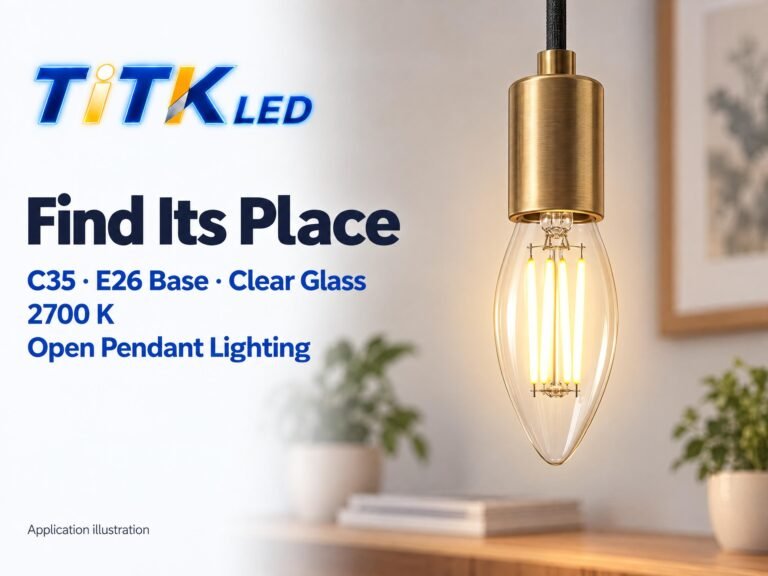
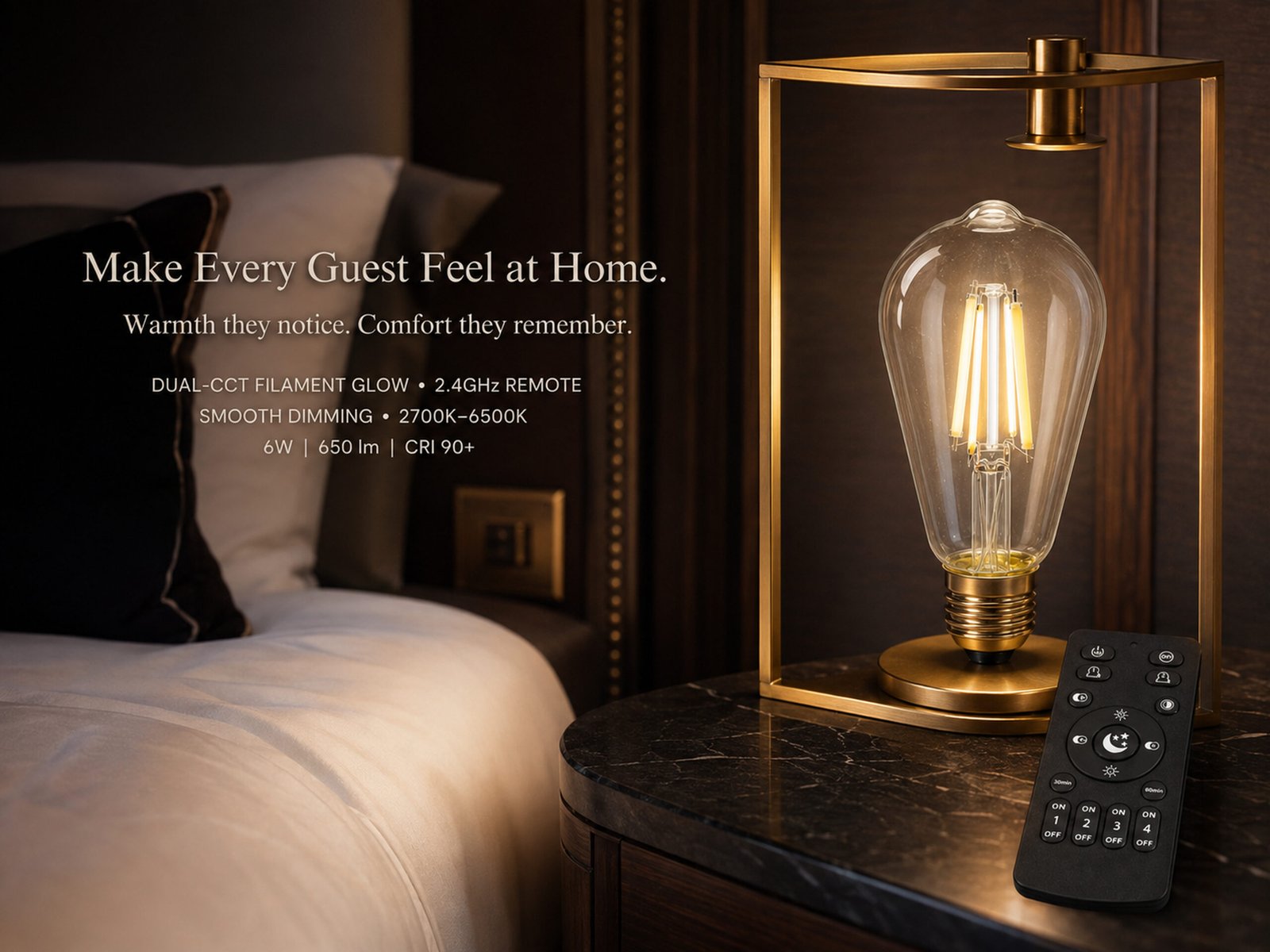
- Guest rooms: Use visually comfortable filament designs in bedside lamps, open pendants, floor lamps, or decorative wall fixtures, subject to fixture compatibility.
- Reception and lobby areas: Consider larger decorative forms where the bulb is part of the interior design, while checking viewing angles and glare.
- Corridors: Prioritize consistency, straightforward replacement, and a suitable beam pattern for the fitting.
- Restaurants and bars: Coordinate the bulb’s appearance with the furniture and finishes, then verify dimming behavior if scene control is required.
- Bathrooms and vanity areas: Check the fixture’s location, enclosure, moisture conditions, and supplier guidance before specifying a decorative filament bulb.
Choose the bulb by fit, form, and visual effect
LED filament bulbs are available in several envelope shapes and decorative finishes. Clear glass can emphasize the filament structure, while tinted or coated glass can create a softer visual impression. The right option depends on whether the bulb is directly visible or enclosed by a shade.
Check the complete dimensional drawing rather than relying on a product photograph. Confirm the bulb’s overall length, widest point, base type, and clearance from the fixture. In compact bedside lamps or multi-lamp fittings, a small difference in dimensions can affect assembly and shade placement.
Where a bulb is visible at eye level, review glare carefully. A visually attractive filament does not automatically provide comfortable viewing. Ask the supplier for product images in comparable orientations, and consider whether the fixture itself provides shielding or diffusion.
Explore TITK’s LED filament bulb range as a starting point for comparing available forms. For projects centered on appearance, the decorative LED filament bulb category may also help organize the initial shortlist.
Match light quality to the hotel’s design brief
Light appearance should be specified in writing, not left to a general description such as “warm” or “vintage.” Ask for the supplier’s stated color information, color-rendering data, light distribution, and product photographs. Then compare samples in the actual fixture or a close equivalent.
For guest-facing areas, consistency usually matters more than choosing the most unusual bulb. Mixing visibly different glass tints, filament layouts, or light colors within one room type can make the installation look unfinished. A sample approval process is useful for confirming the visual result before a larger order.
Also distinguish between decorative and functional lighting. A filament bulb may provide the desired visual accent, but the fixture layout may still need separate task or general illumination. In guest rooms, for example, bedside reading, desk work, and ambient lighting may require different sources or controls.
Check dimming and control compatibility early
Dimming is a frequent source of installation problems when it is treated as an afterthought. If the project requires dimming, identify the control type and provide that information to the supplier before ordering. Ask for the bulb’s compatibility guidance, minimum-load considerations where applicable, and any stated limitations.
Do not assume that a bulb described as dimmable will perform identically with every dimmer, driver arrangement, smart control, or scene-setting system. Test the proposed bulb with the actual control equipment and a representative fixture. Observe startup, low-level operation, visible instability, and whether the control range suits the hotel’s operating scenes.
TITK’s dimmable LED bulb selection can be reviewed when controls are part of the brief. Confirm the current technical documentation and compatibility details with the supplier before final approval.
Build a procurement specification that installers can use
A clear schedule reduces substitutions and makes future maintenance easier. For every bulb position or group, record:
- Bulb shape, finish, and visible filament style
- Base and socket type
- Physical dimensions and fixture clearance
- Required light appearance and distribution
- Dimming or control requirements
- Operating environment and fixture conditions
- Supplier model reference and approved alternative, if any
- Packaging, labeling, and replacement identification requirements
For distributors and OEM buyers, request a sample set and a consolidated technical file. The file should contain the current product data, installation guidance, compatibility notes, and ordering references supplied by the manufacturer. Avoid approving an item from a photograph or informal description alone.
Installation guidance for hotel teams
Installation should be performed by a qualified person familiar with the project’s electrical system and applicable local requirements. Before work begins, isolate the relevant circuit using the site’s established procedure and confirm that the fitting is suitable for the replacement bulb. If the wiring, socket, control gear, or fixture condition is uncertain, stop and refer the work to a qualified electrician.
Handle decorative glass carefully and keep the bulb clean during installation. Do not force a bulb into an incompatible socket, exceed the fixture’s stated limitations, or use a bulb in an enclosure or environment outside the supplier’s guidance. Check that the base is seated correctly without overtightening.
After installation, test the fitting under its normal switching and control conditions. Check for secure seating, expected light output, unusual noise, visible instability, and interference with shades or covers. Record the approved bulb reference in the maintenance system so housekeeping or engineering staff can order the correct replacement.
Maintain consistency and simplify replacement
Hotel maintenance is easier when decorative lamps are treated as controlled inventory rather than ad hoc purchases. Keep replacement stock identified by area, fixture, and supplier reference. Store bulbs in suitable packaging and inspect them before installation.
During routine inspections, look for darkened glass, physical damage, loose fittings, control issues, and changes between lamps in the same room or corridor. Replace failed or visibly mismatched bulbs with the approved specification. If repeated failures occur, investigate the fixture, socket, control system, installation conditions, and product compatibility instead of replacing bulbs indefinitely without diagnosis.
Cleaning procedures should follow the fixture and supplier instructions. Ensure that the fitting is handled safely by trained staff, and avoid applying cleaning products directly to the bulb unless the manufacturer specifically permits it.
Make the final selection with samples and documentation
The best hotel choice is the one that balances appearance, fit, control compatibility, availability, and maintainability for the specific application. Shortlist by room type, test representative samples, approve the appearance with the design and operations teams, and give installers a complete schedule.
For broader comparisons, you can also review TITK’s LED bulb category alongside filament options. Contact TITK to confirm current specifications, compatibility information, and suitable samples for your hotel lighting requirements.