Best Decorative Bulbs for Cafés: An OEM and Wholesale Buying Guide
A practical sourcing guide for cafés, covering how to align specifications, evaluate samples, check quality, review packaging, and communicate clearly with suppliers.

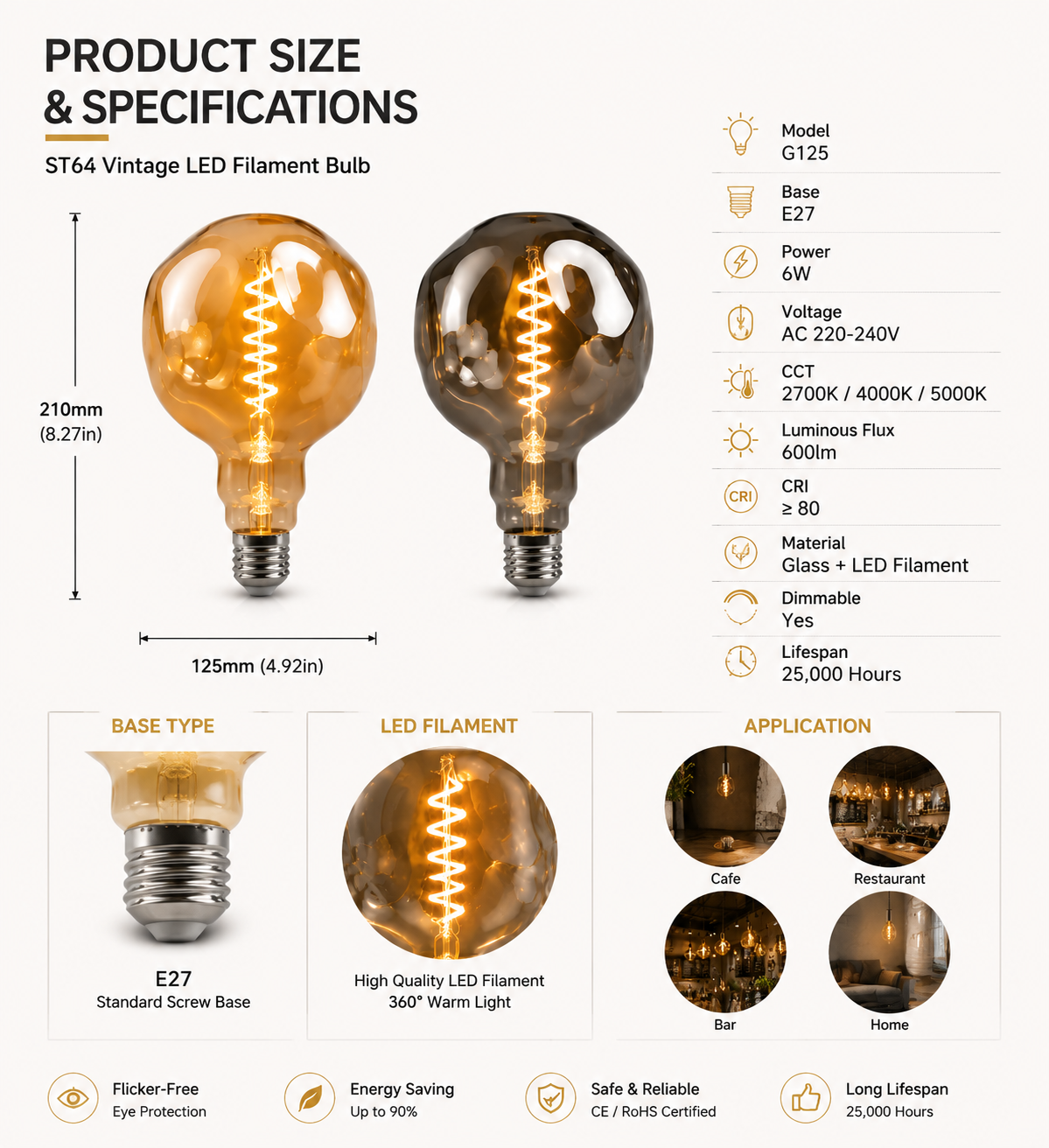
Best Decorative Bulbs for Cafés: What Buyers Need to Align First
When buyers search for the best decorative bulbs for cafés, the real challenge is rarely style alone. The right bulb has to support the concept of the space, fit the fixture, work with the control system, and arrive ready for installation. For international B2B buyers, distributors, installers, and informed consumers, that means treating the purchase as a specification exercise, not only a visual one.
In café projects, decorative lighting often needs to balance atmosphere and practicality. A bulb that looks attractive on a spec sheet may still fail if the base type, glass shape, dimming behavior, or packaging is not aligned with the project. The safest approach is to define the use case first, then confirm details with the supplier before placing a bulk order.
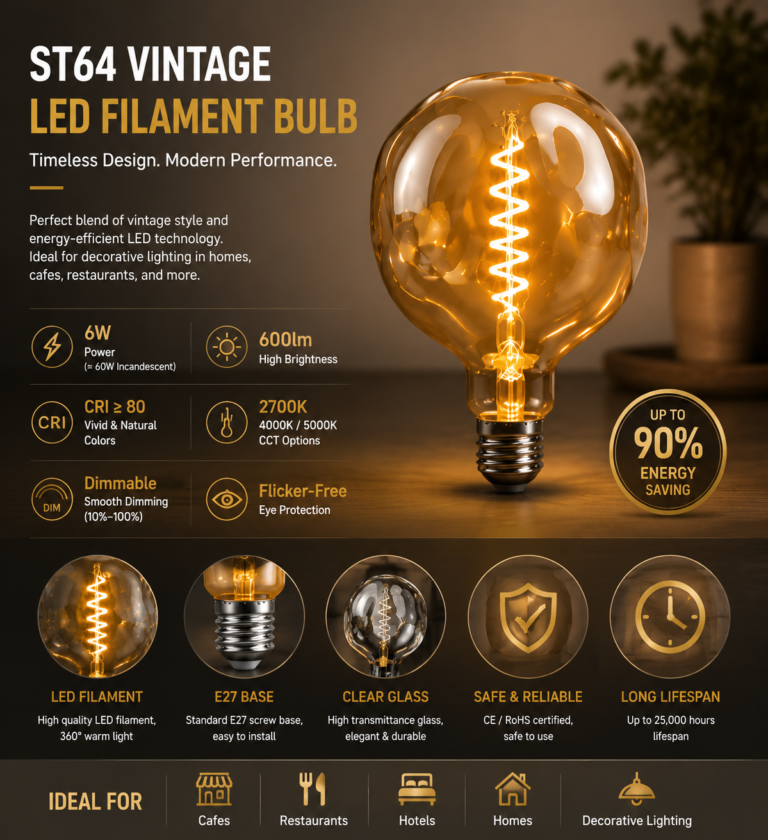
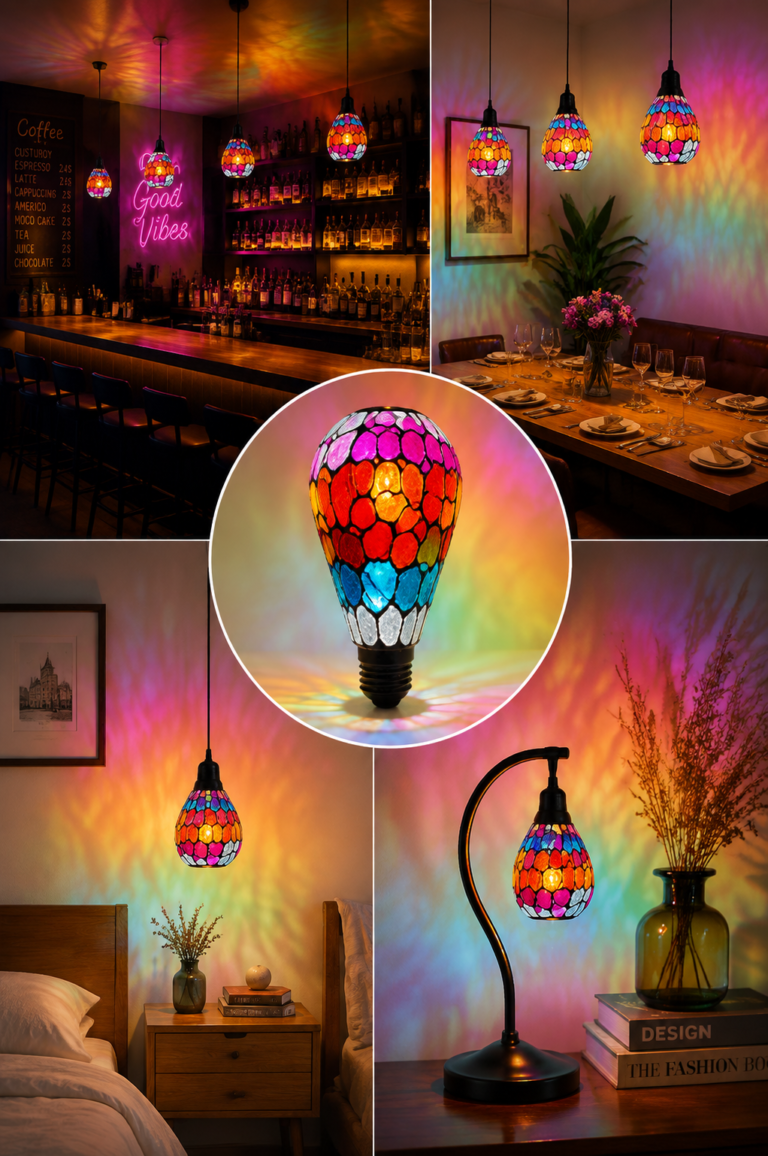
If you are building a sourcing shortlist, it can help to review related product families such as Decorative LED Bulbs, Decorative Light Bulbs, and Dimmable LED Bulbs alongside the project requirements.
Start with the café specification, not the catalog image
For sourcing teams, the first step is to translate the café design into a clear requirement list. Ask where the bulb will be used: over tables, at the bar, in window displays, or in feature pendants. Each position may call for a different balance of appearance, brightness, and beam spread.
In an OEM LED bulbs or wholesale lighting order, the most useful specification points usually include:
- Bulb shape and visible size
- Base type and fixture compatibility
- Color appearance and desired ambience
- Dimming need, if any
- Glare control and viewing angle
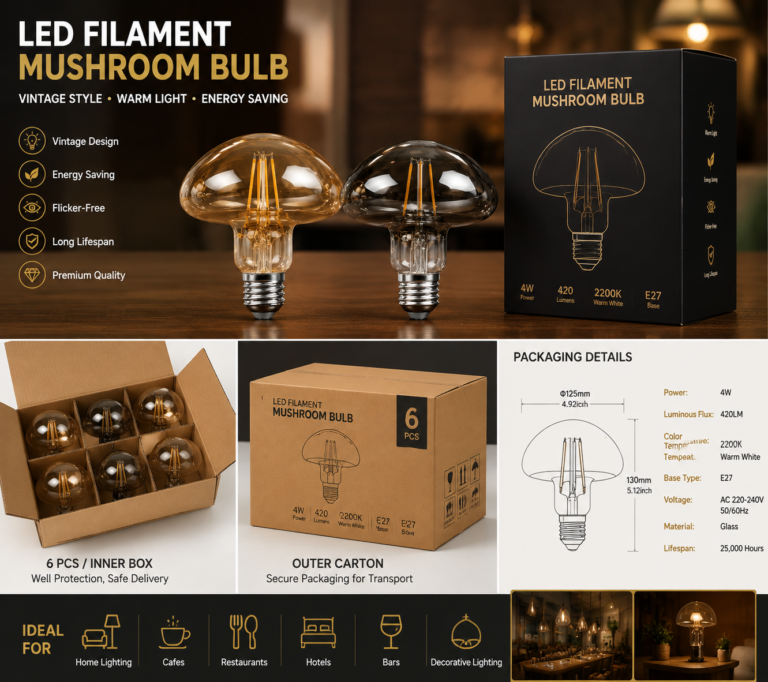
- Packaging format for project delivery
These details prevent mismatches later. A decorative bulb that works in one café concept may be unsuitable in another if the ceiling height, fixture spacing, or décor style changes. For this reason, buyers should confirm every critical point in writing before sampling.
How to evaluate samples before buying in volume
Samples are where the conversation moves from product description to real-world fit. A small sample order can reveal whether the bulb’s form, finish, and light distribution suit the café environment. It can also uncover practical issues such as reflector glare, inconsistent appearance, or incompatibility with a dimmer.
When reviewing samples, compare them against the intended fixture, not only against a bench test. Place the bulb in the actual pendant, wall fitting, or open socket used in the project. Look at it during the day and after dark. The same bulb can feel very different once it is mounted and surrounded by other materials.
For projects that rely on a more decorative profile, buyers may also want to compare LED Filament Bulbs and Decorative LED Filament Bulbs to see which shape best supports the café’s visual language.
Quality checks that matter in café projects
Quality control for decorative bulbs should be practical and repeatable. The goal is not to overcomplicate the process, but to make sure the shipment matches the approved sample and the order specification. For wholesale lighting orders, buyers typically check consistency across multiple pieces, visual finish, labeling, and basic fit.
A simple inspection routine can include:
- Verifying the bulb shape, finish, and branding against the approved sample
- Checking the base for fit and correct orientation
- Reviewing the glass surface for scratches, marks, or visible defects
- Confirming that the packaging protects the bulb during transit
- Making sure all cartons and inner boxes are labeled correctly
For larger projects, it is sensible to ask the supplier how they handle incoming and outgoing checks. Buyers should also confirm whether the supplier can match a repeated order later, especially if the café plans to expand or replace bulbs in stages.
Packaging should support both shipping and site handling
Packaging is often underestimated in decorative lighting procurement. A bulb can meet the specification and still create problems if the packaging is too fragile, difficult to identify, or inconvenient for installers. In cafés, where openings are often tight and access can be limited, clear box labeling matters almost as much as visual appearance.
Ask the supplier how bulbs are packed for bulk delivery. The answer should cover inner protection, outer carton strength, and the way product information is displayed. If the project involves multiple bulb types, packaging should help installers distinguish them quickly on site.
For some projects, a buyer may prefer to source from a broader range such as Decorative Lighting or LED Bulbs when coordinating mixed decorative and functional zones.
Documentation to request before approval
Good supplier communication is easier when the documents are clear. Before approving an order, request the information needed to compare the sample, confirm the final product, and support receiving and installation. This is especially important for international shipments and multi-site café rollouts.
Useful documents usually include product specifications, carton information, and a sample reference that matches the approved version. If the bulbs are part of a coordinated project, ask for any installation notes the supplier can provide. The purpose is to reduce ambiguity, not to collect paperwork for its own sake.
For buyers managing commercial lighting procurement, documentation also helps downstream teams. Distributors need clear product identification, installers need traceability on site, and purchasing teams need a stable record of what was agreed.
How to communicate clearly with the supplier
Many sourcing issues are caused by incomplete communication, not by the product itself. The best way to avoid confusion is to send one concise brief that includes use case, quantities, target fixture type, sample expectations, packaging needs, and any special handling requirements. Use plain language and confirm the final points in writing.
Useful questions include:
- Which bulb variant matches our café fixture and visual target?
- Can you send samples that reflect the final production specification?
- How will the products be packed for bulk shipment and site delivery?
- What documentation will accompany the order?
- How should we confirm any changes before mass production?
This approach works well for LED bulb buying guide processes because it reduces rework. It also helps when the project requires decorative lighting consistency across several rooms or locations. Clear communication gives both sides a better chance of agreeing on the same product before volume production begins.
A practical selection framework for café buyers
| Decision area | What to check | Why it matters |
|---|---|---|
| Appearance | Shape, finish, and visual fit with the café style | Supports the intended atmosphere |
| Fixture fit | Base type, size, and placement | Prevents installation issues |
| Lighting behavior | Dimming, glare, and viewing comfort | Affects guest experience |
| Sampling | Real fixture testing and side-by-side comparison | Reduces ordering mistakes |
| Packaging | Protection and labeling | Helps shipping and site handling |
| Documentation | Confirmed specifications and order records | Supports procurement and installation |
For many cafés, the best result comes from a simple process: define the specification, compare samples in the real space, check the packaging and paperwork, then confirm the supplier communication before the bulk order is released. That sequence is especially useful when the decorative bulb must support both branding and day-to-day operation.
Final takeaway
The best decorative bulbs for cafés are the ones that meet the design brief, install cleanly, and arrive with enough consistency for repeat use. Keep the focus on specification alignment, sample review, quality checks, packaging, documentation, and supplier communication. If you are planning a café project, review the product options carefully and confirm every detail with the supplier before buying at scale.