A60 2W vs 6W LED Filament Bulbs: A Buyer’s Guide
Compare the published specifications of two TITK A60 E27 models and prepare a clear sample or wholesale enquiry.

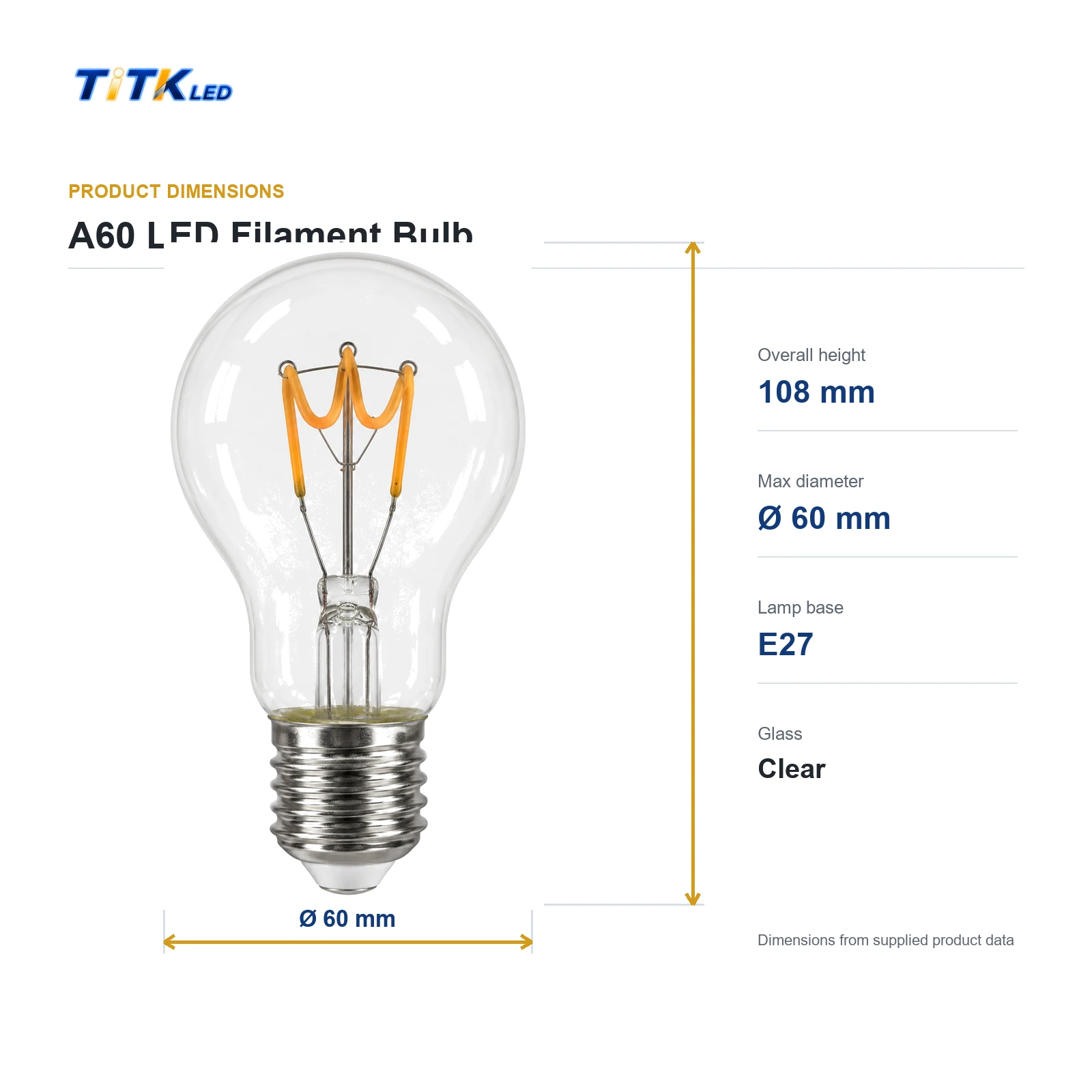
The TITK A60 E27 2W and 6W clear-glass models have the same published dimensions, but they are different lighting choices. The 2W model lists 150 lm at 2200 K; the 6W model lists 650 lm at 2700 K. Both measure 60 mm in diameter and 108 mm in overall height, are rated AC220-240V, and are non-dimmable.
For distributors and project buyers, the useful question is which model meets the required light output, appearance and fixture conditions. This guide compares these two specific products and shows what to record before requesting samples or a wholesale quotation.
A60 2W vs 6W: compare the exact models
| Selection point | A60 E27 2W model | A60 E27 6W model |
|---|---|---|
| Rated power | 2 W | 6 W |
| Published luminous flux | 150 lm | 650 lm |
| Color temperature | 2200 K | 2700 K |
| Lamp base | E27 | E27 |
| Rated supply | AC220-240V | AC220-240V |
| Diameter × overall height | 60 × 108 mm | 60 × 108 mm |
| Glass finish | Clear | Clear |
| Dimming | Non-dimmable | Non-dimmable |
Source: the linked TITK product records, checked on 19 November 2026. These values identify the two models compared here; they are not specifications for every A60 bulb or independent test results.
Compare light output and color together
Watts describe electrical power, while lumens help buyers compare light output. The ENERGY STAR guide to brightness explains why wattage alone is not a reliable brightness comparison.
In this pair, moving from 2W to 6W changes both the published output and the color temperature. A brief calling for 150 lm at 2200 K is different from one calling for 650 lm at 2700 K. If a buyer wants higher output while retaining 2200 K, the 6W model shown here does not match that color specification. Request a separately confirmed option.
For an exposed decorative fitting, review the sample from the positions where people will normally see it. For a shaded fitting, compare the result with the actual shade installed. A lumen figure describes the lamp’s published output; it does not establish the light level on a dining table, counter or floor.
Same dimensions still require a fixture check
Both examples publish a 60 mm diameter and 108 mm overall height. Check those measurements against the shade opening, lamp-holder position and installation access. The shared A60 name and E27 base do not establish electrical or control compatibility for another product version.

For comparisons with other bulb shapes, use the A60, ST64 and C35 dimensions guide. Keep the model reference with each drawing so the dimensions remain attached to the correct product.
Keep voltage and dimming in the purchase specification
Both compared models are rated AC220-240V and listed as non-dimmable. Neither should be selected for a dimming requirement on the basis of its filament appearance. For a dimming brief, request a separately specified dimmable model and confirmation against the intended control equipment.
Record the lamp holder and supply voltage as separate fields. An E27 base identifies the connection format; the selected model’s electrical rating still needs to match the project or destination-market brief.
Build a useful sample comparison
Give each sample a model reference before viewing it in a fixture. The two products share a size and base, so a box marked only “A60 E27” leaves out the differences that matter to this decision.
- Record the configuration: model, power, published lumens, color temperature, base, supply and dimming status.
- Review physical fit: note installation access, clearance and the position of the bulb within the intended fixture.
- Review the light: compare the appearance and required illumination in representative conditions. Keep any photographs identified by model.
- Document the decision: retain the approved sample reference and specification revision for the quotation and repeat order.
Use the LED bulb inspection checklist when agreeing the wider incoming-goods checks. Supplier ratings and product illustrations support selection; any required test report should identify the exact model and relevant test conditions.
What to include in an A60 wholesale enquiry
Start with the closest published model and state which details must remain unchanged. A concise enquiry can include:
- The linked 2W 2200 K or 6W 2700 K model, or its exact product code.
- Required light output and color temperature.
- Fixture or lamp-holder details, supply voltage and available clearance.
- Whether dimming is required and the intended controls.
- Quantity, destination, packaging and branding requirements.
- Sample requirements and the drawing or specification to be approved.
The published models provide a clear starting point. Confirm any different wattage, color temperature, voltage or control requirement by quotation rather than treating it as an available variant. Pricing, sample arrangements, minimum quantities and delivery are confirmed for the selected model and order.
Send TITK your A60 model and purchasing requirements to request specifications and a quotation.