Best Decorative Bulbs for Cafés: A Practical Buyer’s Guide
Compare filament, opal, globe and tubular LED bulbs for café ambience, comfort, dimming, maintenance and commercial sourcing.

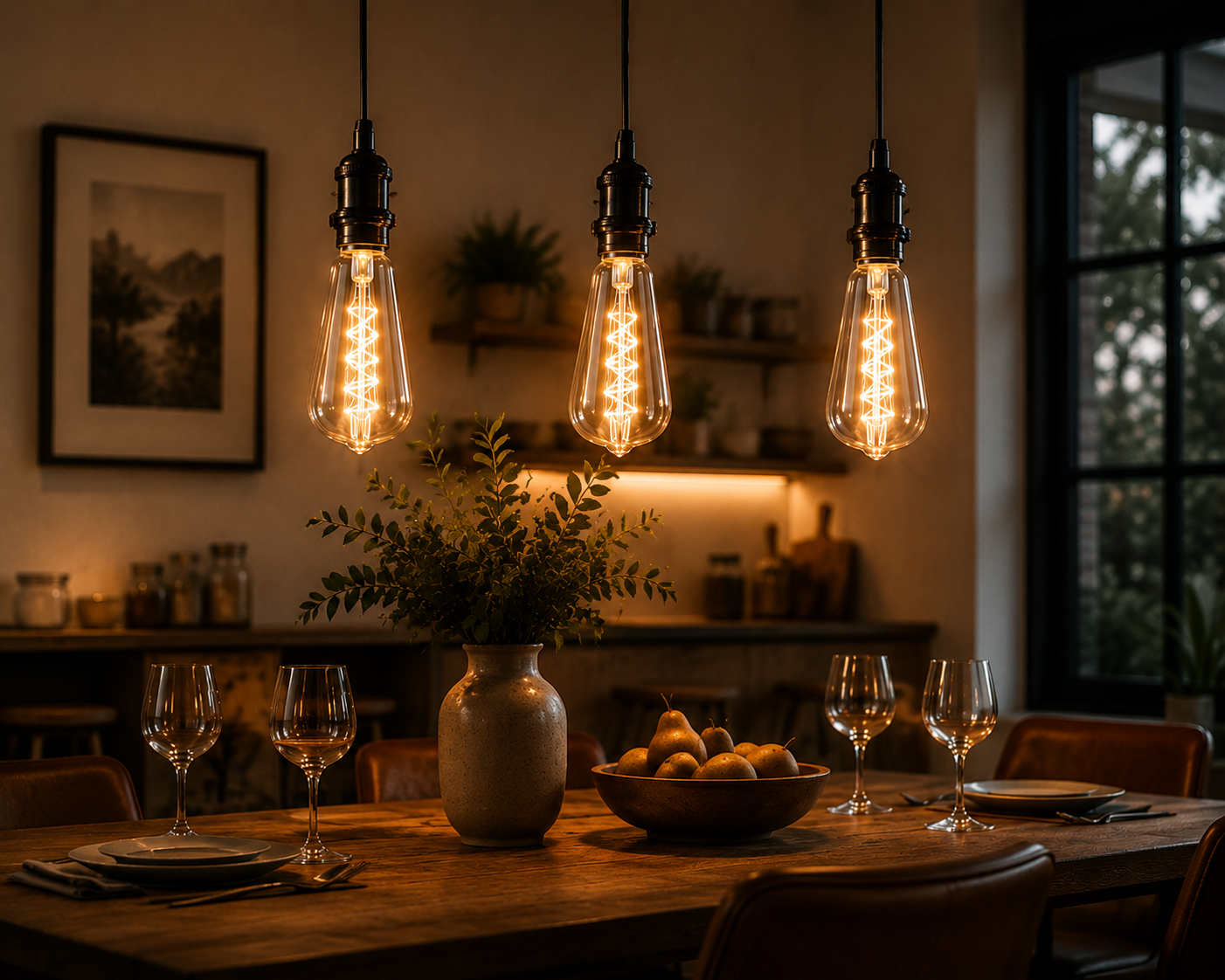
Choosing the best decorative bulbs for cafés is not simply a matter of selecting the most attractive glass shape. Café lighting must support the brand atmosphere, make food and interiors appear appealing, remain comfortable for customers, and work reliably with the installed electrical system. The right bulb also needs to fit the socket, shade, pendant or wall fitting without creating avoidable maintenance problems.
For international buyers, distributors and installers, the practical question is which LED bulb type offers the best balance of appearance, light quality, control compatibility and supply consistency. This guide compares the main approaches and identifies where each is most suitable.
Start with the café’s lighting role
Before comparing bulb designs, separate decorative lighting into three roles. Ambient lighting establishes the general mood. Task lighting supports activities such as reading menus, preparing food or working at a counter. Accent lighting draws attention to architectural details, shelving, artwork or branded displays.
Decorative bulbs are usually strongest in ambient and accent applications. They may not provide enough useful illumination for every task, particularly when installed in open pendants with low light output or heavily tinted glass. A café project may therefore combine decorative bulbs with discreet downlights, linear lighting or other task sources.
Comparing decorative LED bulb types
LED filament bulbs
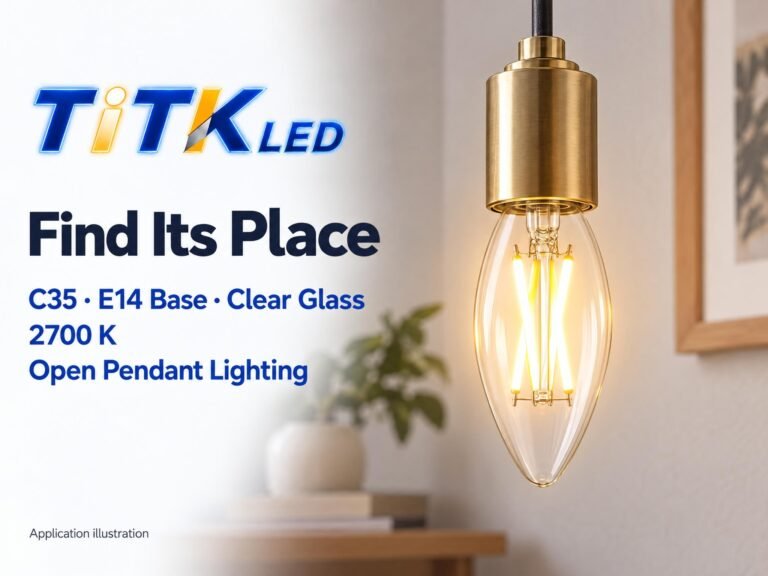
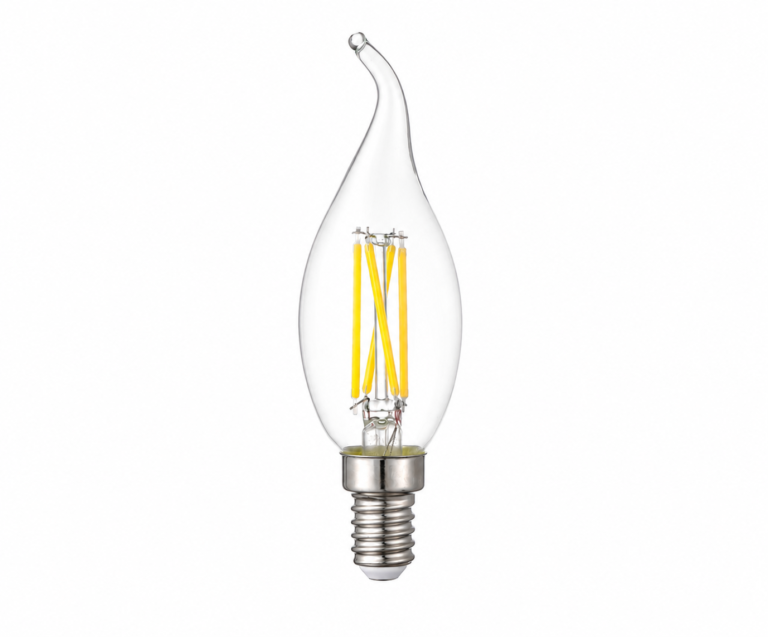
LED filament bulbs are often the first option considered for cafés because their internal light-emitting elements are visible through clear or lightly tinted glass. They can create a warm, traditional appearance in exposed sockets, pendant clusters and wall-mounted decorative fittings.
The main advantage is visual authenticity without relying on a conventional incandescent lamp. The trade-off is that clear filament designs can expose bright elements directly to the viewer. In seating areas, this may produce glare if the bulb is positioned at eye level or repeated across a large ceiling installation.
Choose filament designs when the bulb itself is part of the interior concept. Confirm the intended color appearance, viewing angle, dimming behavior and heat-management design with the supplier before approving a large order. Relevant product ranges can be reviewed in TITK’s decorative LED bulb category.
Opal and frosted LED bulbs
Opal or frosted bulbs diffuse the light source behind a less transparent envelope. This can reduce the visual harshness associated with exposed emitters and create a softer appearance over tables and circulation areas.
The trade-off is lower visual drama. An opal bulb is less suitable when the café wants customers to notice the filament structure or use the bulb as a prominent design object. It is often a sensible choice for spaces where comfort and evenness matter more than a vintage display effect.
Globe bulbs
Globe bulbs provide a broad, recognizable silhouette and work well in groups of pendants, mirror-style installations and larger decorative fixtures. Their larger surface can make a fitting look more intentional, particularly where several bulbs are visible from different viewpoints.
However, globe bulbs require careful checking of fixture scale and ceiling height. A large globe may dominate a compact café, while a small globe can appear visually lost in a spacious dining area. Confirm the bulb diameter, overall length and socket position against the fitting before ordering.
Tubular and elongated bulbs
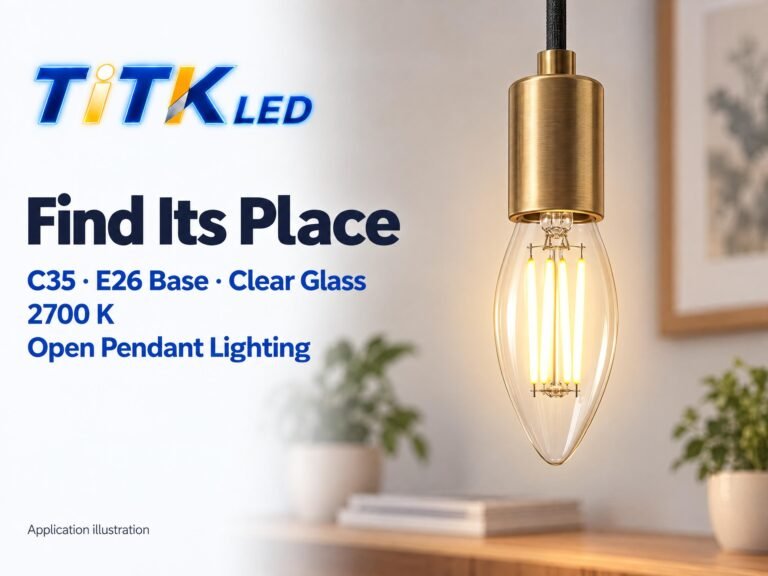
Tubular bulbs suit narrow pendants, multi-lamp bars and installations that need a vertical or linear visual rhythm. They can be especially effective above counters or along a feature wall when the fitting has a slim profile.
Their elongated shape can also make bright areas more noticeable from certain viewing angles. Use a diffuser, suitable suspension height or a carefully selected tint when the bulbs will be visible from seated positions. Tubular designs should be assessed as part of the complete fitting rather than in isolation.
Flexible-filament and specialty decorative bulbs
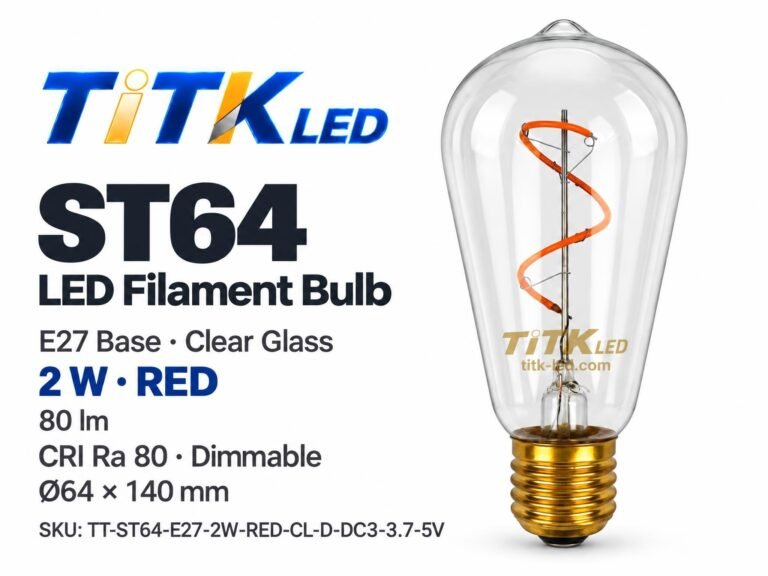
Flexible-filament designs can offer more unusual internal patterns and may help create a distinctive identity for a concept café, bar or dessert venue. They are best treated as a visual specification rather than an automatic upgrade.
Because appearance varies widely between designs, request clear product images, dimensional drawings and samples where possible. The supplier should also confirm electrical data, operating position, dimming compatibility and any restrictions associated with the construction.
Decision criteria for café bulb selection
Color appearance and light quality
Warm light is commonly associated with relaxed café interiors, timber finishes and evening service, while a more neutral appearance may support daytime activity, contemporary interiors or areas where color clarity is important. Avoid selecting color temperature from a product title alone. Ask for the relevant specification and review a sample beside the actual wall, furniture and finishes.
Color rendering is equally important. Food, drink, skin tones and decorative materials should appear natural enough for the intended environment. Buyers should compare the supplier’s stated color-rendering information and request consistent documentation across the proposed range.
Glare and customer comfort
A beautiful exposed bulb can become uncomfortable when repeated above every table. Consider the viewer’s line of sight from standing and seated positions, not only the appearance beneath the fitting. Tinted glass, frosted envelopes, diffusers, higher mounting points and lower-brightness decorative sources can all influence comfort.
For open pendants in customer areas, review a physical sample. Product photographs rarely show how a bulb behaves at the actual installation height.
Dimming and control compatibility
Dimming can help cafés adapt the atmosphere between morning service, daytime trade and evening operation. Yet a bulb described as dimmable is not automatically compatible with every dimmer, control protocol or installation load.
Confirm the dimmer type, minimum load, control method and expected operating range with both the bulb supplier and the control-system provider. If the project uses several bulbs on one circuit, test the complete combination for start-up behavior, smoothness and unwanted visual changes.
For projects that require controllable ambience, compare the available options in TITK’s dimmable LED bulb range, while confirming the exact specifications for the selected model.
Base, dimensions and installation conditions
Socket type is only the starting point. Check the bulb’s diameter, length, neck shape, weight and clearance from shades or nearby materials. Also verify mains voltage, operating frequency, ambient temperature and the fixture’s permitted lamp type for the destination market.
Installers should check whether the bulb is suitable for enclosed fittings, damp locations or restricted ventilation. These conditions can affect service life and should never be assumed from the decorative appearance.
Maintenance and replacement planning
In a busy café, replacement work can interrupt service and create access costs. Standardize bulb shapes and electrical specifications where the design allows it. Keeping compatible replacement units available is generally more practical than relying on a visually similar bulb with different dimensions or control behavior.
For distributors and multi-site buyers, ask about packaging, labeling, batch consistency, replacement availability and documentation. A decorative design is useful only when it can be supplied and replaced predictably.
Quick comparison for café applications
| Bulb type | Main strength | Key trade-off | Suitable applications |
|---|---|---|---|
| LED filament | Visible, traditional lamp appearance | Potential glare in direct view | Exposed pendants, feature clusters, branded interiors |
| Opal or frosted | Softer and more comfortable appearance | Less visible internal detail | Dining areas, general ambience, customer-facing spaces |
| Globe | Strong shape and broad visual presence | Requires careful scale matching | Grouped pendants, feature walls, larger fittings |
| Tubular | Works with slim or linear fixtures | Bright zones may remain directional | Counters, bars, narrow pendants and vertical arrangements |
| Flexible-filament | Distinctive decorative patterns | Greater need for sample evaluation | Concept cafés, feature installations and specialty interiors |
A practical buying process
- Define the visual role: decide whether the bulb is a primary design feature, a soft ambient source or an accent.
- Map viewing angles: assess glare from tables, counters, entrances and nearby circulation routes.
- Confirm the electrical specification: check voltage, base, wattage, color appearance, color rendering, dimming and operating conditions.
- Test the complete assembly: use the proposed bulb with the actual fitting, dimmer and control system.
- Review commercial details: confirm packaging, documentation, sample approval, minimum order requirements and replacement planning.
When comparing suppliers, use the same specification sheet for every candidate. Ask for product drawings and installation guidance rather than relying only on marketing images. TITK’s broader decorative lighting selection and decorative LED filament category may be useful starting points, but exact product suitability should be verified with the supplier.
Approve Samples, Packaging and Order Records
Before a volume order, test samples in the proposed fixture, at normal seated and standing sightlines, and with the actual dimmer or control system where applicable. Keep one approved sample or a documented visual reference for comparison.
- Confirm the bulb shape, glass finish, colour appearance, base, dimensions and fixture clearance.
- Check start-up and dimming behaviour with the project controls.
- Review inner protection, carton strength, labels and model identification.
- Keep the approved specification, sample reference and packaging artwork with the purchase record.
For multi-site rollouts, use the same approval record at every location so replacements remain consistent.
Which decorative bulbs are best for cafés?
There is no single best bulb type for every café. LED filament bulbs are a strong choice when exposed lamp appearance is central to the concept. Opal and frosted bulbs are often better where customer comfort and softer light take priority. Globe bulbs suit installations that need scale and visual presence, while tubular and flexible-filament designs solve more specific spatial or stylistic requirements.
The most dependable decision combines a sample review with an electrical compatibility check and a realistic replacement plan. Buyers should specify the atmosphere they want, then select the bulb that delivers it without compromising comfort, installation conditions or supply practicality. Contact TITK to discuss available decorative LED bulb options and confirm the specifications for your café project.