
Clear vs Amber vs Smoke Glass LED Bulbs: A Troubleshooting Guide
Learn how to diagnose common issues when comparing clear, amber tea, and smoke grey glass LED bulbs, plus warm white and daylight options.

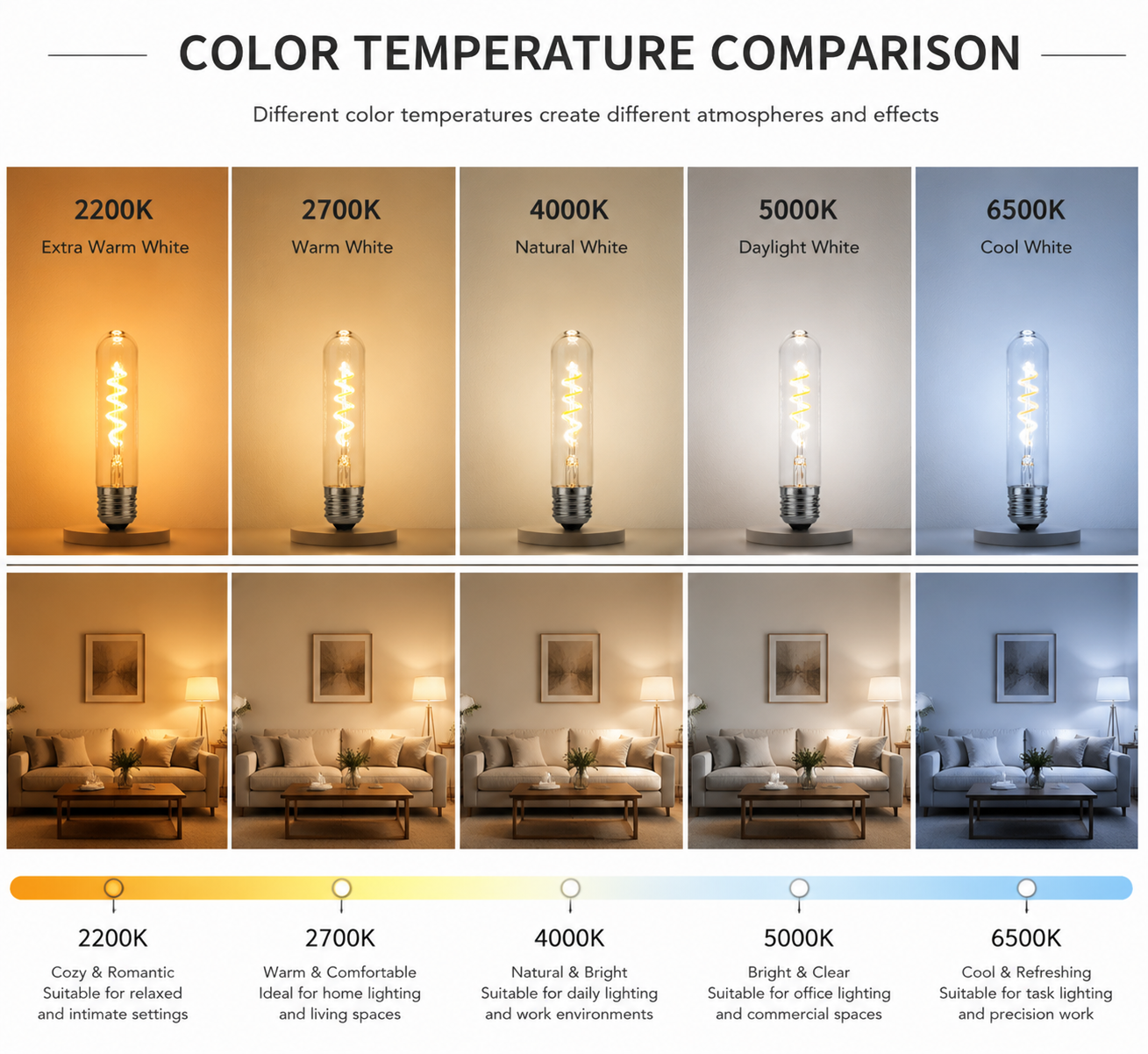
Clear vs Amber vs Smoke Glass LED Bulbs: Start with the Symptom
When a decorative bulb does not look the way you expected, the issue is often not only the lamp itself. In projects using clear vs amber vs smoke glass LED bulbs, the visible result depends on the glass finish, the filament style, the fixture, and the chosen color temperature. A bulb can be electrically correct and still look too bright, too dim, too yellow, or too gray in the final installation.
This guide is written for B2B buyers, distributors, installers, and informed consumers who need a practical way to troubleshoot common appearance problems before replacing a product.
If you are comparing product families, you can also review LED Filament Bulbs and Decorative LED Bulbs as starting points.
1. What the Customer Sees: Common Symptoms
The bulb looks too bright or too exposed
This is common with clear glass bulbs, especially in open fixtures. The filament and internal structure are more visible, so the light source may feel sharper than expected.
The bulb looks too warm, yellow, or amber
This is often reported with amber glass bulbs. The glass itself adds a warm visual tone, which can be desirable in hospitality lighting but may be too cozy for task-focused spaces.
The bulb looks darker than expected
Smoke glass bulbs can reduce visual brightness from the outside because the tinted glass softens the appearance of the filament. The bulb may still work normally, but the room impression changes.
The room looks different from the sample
One of the most frequent complaints is that the sample looked correct, but the installed result does not match. This can happen when the fixture shade, mounting height, or nearby wall colors change the final effect.
2. Likely Causes by Glass Finish and Light Color
| Observed issue | Likely cause | What to check first |
|---|---|---|
| Too harsh or overly direct light | Clear glass bulb in an open fixture | Fixture openness, bulb placement, viewing angle |
| Too warm or golden appearance | Amber tea glass plus warm white output | Glass finish, color temperature, surrounding surfaces |
| Too dim-looking or subdued | Smoke grey glass or shaded fixture | Glass tint, shade opacity, room reflectance |
| Color not as expected | Mismatch between bulb finish and chosen CCT | Whether the bulb is 2700K, 3000K, or daylight-type |
| Fixture feels uneven | Bulb type not suited to enclosed or decorative fixture | Dimensions, base, heat clearance, and visibility |
In many projects, the confusion comes from mixing appearance terms. For example, a buyer may ask for a “warm” look but specify a daylight-type output, or choose a smoke finish for a space that needs a brighter visual impression.
3. Checks to Make Before Replacing the Bulb
Confirm the bulb finish
Check whether the model is clear glass, amber tea glass, or smoke grey glass. Glass finish availability depends on the specific model, so do not assume one product family shares the same visual appearance as another.
Confirm the color temperature
Warm white lighting and daylight-style output can create very different visual results even if the bulb shape is identical. Warm white is usually preferred for relaxed decorative settings, while daylight-type output is often selected when a brighter, cleaner visual effect is needed.
Check the fixture type
Open pendant lights, chandeliers, wall sconces, and table lamps all reveal the bulb differently. A bulb that looks balanced in a closed shade may seem too intense in a fully open pendant.
Check the viewing distance
Bulbs seen at close range appear more dramatic. That matters in restaurants, cafés, and decorative interiors where the bulb is part of the design rather than hidden by the fixture.
Verify the base and voltage
Always confirm the lamp base and voltage for the individual model. TITK products may be available with bases such as E14, E26, E27, or B22 depending on the model and project requirements. Voltage must also be matched to the specific product configuration.
If you need a broader product overview, see LED Bulbs or browse LED Edison Bulbs for vintage-style applications.
4. Corrective Actions by Problem Type
Problem: Clear glass looks too stark
- Switch to a warmer CCT if the application allows it.
- Consider amber tea glass for a softer decorative impression.
- Review the fixture style; open fixtures may need a gentler visual profile.
Problem: Amber glass looks too yellow
- Use a neutral or daylight-type output if the design goal is a cleaner appearance.
- Compare the bulb in the actual fixture, not only on a sample board.
- Check whether nearby materials are already warm-toned.
Problem: Smoke glass looks too dark
- Choose a clearer finish if the bulb must remain visually prominent.
- Use smoke grey glass where a subdued, decorative mood is preferred.
- Make sure the fixture is not over-shading the bulb.
Problem: Warm white vs daylight does not match expectations
- Define the target mood before ordering: cozy, neutral, or crisp.
- Ask for the exact color temperature option available for the model.
- Request a sample comparison when the project is sensitive to visual tone.
5. Practical Selection Tips for Buyers and Installers
For hospitality lighting, decorative interiors, and retail displays, the right answer is often not “best glass finish” in general, but the best combination of finish, fixture, and color temperature for the scene. Clear glass bulbs tend to emphasize the filament and visual clarity. Amber glass bulbs create a softer vintage feel. Smoke glass bulbs reduce visual intensity and can support a more muted aesthetic.
When specifying decorative lighting, avoid choosing by shape alone. A bulb family may look similar in photographs but behave differently in real installations because the glass tint and color temperature change the final look.
For project sourcing, LED filament bulbs and decorative models should be reviewed together with base, voltage, dimensions, and intended fixture type. If your project needs a more specific match, ask TITK about OEM/ODM cooperation and confirm the model details before ordering.
6. When to Escalate the Issue
Escalate to the supplier when the problem persists after you have verified the finish, CCT, base, voltage, and fixture type. The issue may be related to model selection rather than installation. For B2B buyers, it is also wise to confirm whether the same look can be repeated across multiple batches or project phases.
For decorative projects using Dimmable LED Bulbs, also confirm whether dimming will be used in the final scene, since the visual appearance may change as the light level changes.
7. Quick Troubleshooting Checklist
- Identify the symptom: too bright, too warm, too dark, or visually mismatched.
- Check the glass finish: clear glass, amber tea glass, or smoke grey glass.
- Confirm the color temperature: warm white or daylight-style output.
- Review the fixture: open, shaded, enclosed, pendant, or decorative.
- Verify base and voltage for the specific model.
- Test the bulb in the actual installation before approving the full order.
If you are comparing clear vs amber vs smoke glass LED bulbs for a new project, or need help matching warm white vs daylight LED bulbs to a fixture, contact TITK to confirm the final specification and discuss the application before purchase.



