
How Decorative LED Bulb Design Shapes Light Quality
Learn how bulb shape, color temperature, beam distribution, and fixture constraints work together when specifying decorative LED bulbs for projects.

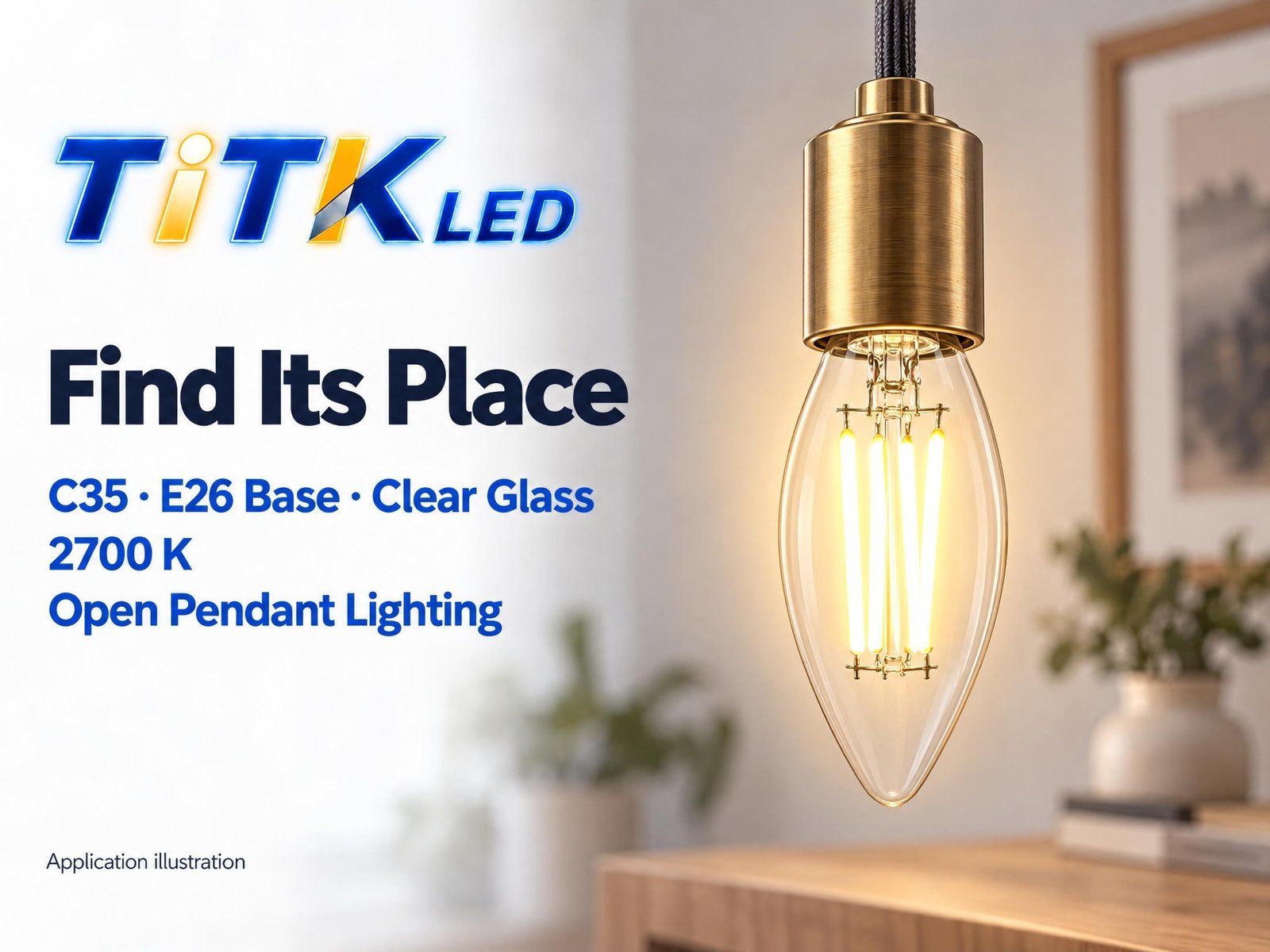
Decorative LED Bulb Design Starts with the Visual Goal
When buyers search for a decorative LED bulb manufacturer, the real question is usually not only where to source the product, but how to match the bulb to the visual goal of the space. Decorative bulbs are chosen as much for appearance as for light output. In restaurants, hotels, retail settings, and homes, the bulb often remains visible, so its shape, glass finish, filament look, and light color all contribute to the final effect.
For that reason, a practical selection process should begin with the intended atmosphere. Is the goal soft and relaxed, crisp and functional, or visually striking? Once that is clear, the bulb form, color temperature, and distribution can be evaluated against the fixture and the application.
Why Bulb Form Matters as Much as Brightness
With decorative lighting, the bulb body is part of the design language. A candle shape can support a traditional chandelier, while a globe shape may suit open pendants or decorative table lamps. Edison-style bulbs can add a vintage character, and tubular forms can create a cleaner architectural look.
TITK focuses on LED filament bulbs and decorative LED bulbs in product families such as C35 candle LED filament bulbs, G45 globe LED filament bulbs, A60 LED filament bulbs, ST58 Edison LED filament bulbs, ST64 Edison LED filament bulbs, ST21 Edison-style LED bulbs, T30 tubular LED bulbs, and globe bulbs in larger sizes. Each form serves a different visual and fixture requirement, so the bulb shape should be chosen with the fixture geometry in mind.
For buyers exploring product families, TITK decorative LED bulbs and decorative lighting categories are a useful starting point.
Color Temperature Sets the Mood
Color temperature is one of the fastest ways to change how a space feels. Warmer tones generally support a softer, more intimate atmosphere, while cooler tones can appear more active and task-focused. Depending on the model, TITK LED bulbs may be available in 2200K, 2700K, 3000K, 4000K–4500K, or 6500K. Some models also support multiple color temperatures or adjustable CCT.
In practice, the right choice depends on the environment and the materials around the bulb. Warm finishes, wood surfaces, and textured fabrics often pair well with warmer light. Brighter commercial interiors may call for a more neutral appearance. Buyers should confirm the available CCT for the exact model before ordering, because not every bulb supports every setting.
How color affects decorative fixtures
In exposed-bulb fixtures, the filament effect and glass finish are visible, so color temperature does not work alone. Clear glass can present the filament directly, while frosted or milky glass softens the appearance. Amber tea glass and smoke grey glass can shift the perceived warmth and visual character depending on the model.
That is why a decorative LED bulb manufacturer must be evaluated not only for output, but also for the consistency of its visual presentation across a project.
Distribution: How Light Spreads in the Space
Light distribution determines whether a bulb is mostly decorative, mostly functional, or a blend of both. A bulb with clear glass and visible filaments may create a strong focal point, but the effect in the room will depend on the fixture, mounting height, shade design, and surrounding surfaces.
For pendant lights and chandeliers, the goal is often to balance visible charm with comfortable illumination. For wall sconces and table lamps, distribution may need to be softer to avoid glare. In vanity lighting or commercial interiors, users often need a more practical spread of light while still keeping the decorative appearance.
Because distribution depends on the complete fixture system, it should always be reviewed together with wattage, base type, bulb dimensions, and installation height. TITK supplies decorative LED bulbs for applications such as hotels, restaurants, cafes, bars, commercial interiors, retail stores, villas, residential interiors, pendant lights, chandeliers, wall sconces, table lamps, floor lamps, vanity lighting, decorative fixtures, and hospitality lighting projects.
Check the Fixture Constraints Before You Specify the Bulb
Even the right-looking bulb can fail in the wrong installation. Buyers should confirm four basic constraints before placing an order:
- Lamp base: depending on the product model and project requirements, TITK products may use E14, E26, E27, or B22.
- Voltage: models may be designed for AC 110–120V, AC 220–240V, or specified low-voltage applications such as DC 3.7V or DC 5V.
- Dimensions: oversized globe bulbs or tall Edison-style bulbs may not fit enclosed fixtures or compact shades.
- Function: dimmable, smart-control, or dual-CCT functions are available for selected models only.
Never assume a low-voltage bulb can be connected directly to mains AC power. Voltage and base must be confirmed for the individual model before installation.
Example: selecting for a visible decorative pendant
A visible pendant usually benefits from a bulb that looks intentional from every angle. That may mean a globe bulb, an Edison-style form, or a candle shape depending on the fixture design. The goal is to align the visual language of the bulb with the room concept, while still respecting clearance, socket, and power requirements.
Choosing Between Clear, Amber, Smoke, Frosted, and Milky Glass
Glass finish is not just a style choice; it changes how the bulb reads in the room. Clear glass offers the most direct view of the filament. Amber tea glass can create a warmer decorative feel. Smoke grey glass can add a more subdued visual tone. Frosted and milky glass soften the apparent source and may reduce the visual emphasis on the filament.
Because glass finish availability depends on the specific model, buyers should confirm the finish for the exact SKU. This is especially important when sourcing wholesale LED bulbs for multiple sites, where visual consistency matters across several fixtures or rooms.
Practical Selection for B2B Projects
For distributors, installers, and project buyers, the best sourcing process is simple: define the visual goal, identify the fixture constraints, then match the bulb family and model. That approach helps reduce costly mismatches after installation.
- Define the design intent: decorative accent, warm ambience, or functional illumination.
- Confirm the fixture type and available space.
- Choose bulb form, base, and voltage.
- Review color temperature and glass finish.
- Confirm whether dimming, smart control, or dual-CCT is needed.
- Request the final specification before purchase.
For model-specific product pages, see the E27 vintage decorative LED filament bulb OEM wholesale product, the ST64 vintage decorative lighting product, and the G95 decorative globe light.
How TITK Supports Decorative Bulb Sourcing
TITK, Zhongshan Tituo Lighting & Electrical Appliances Co., Ltd., is a LED lighting manufacturer and B2B supplier focused on LED filament bulbs and decorative LED bulbs. The company supports OEM and ODM cooperation for B2B customers, with customization that may include product specifications, lamp base, input voltage, wattage, color temperature, glass finish, filament design, dimming functions, smart-control functions, product branding, private label, and packaging, depending on the project.
That makes TITK a practical partner for lighting wholesalers, distributors, importers, lighting brands, fixture manufacturers, commercial lighting companies, hospitality lighting suppliers, project contractors, and interior lighting companies that need decorative LED bulb manufacturer support for project-based sourcing.
Conclusion: Match the Bulb to the Space, Not the Catalog Photo
The best decorative bulb is the one that fits the room concept, fixture constraints, and usage pattern at the same time. Shape influences style, color temperature shapes mood, distribution affects comfort, and the installation environment sets the final limits. When those factors are evaluated together, decorative lighting becomes easier to specify and easier to approve.
If you are comparing models for wholesale or project supply, contact TITK to confirm voltage, base, finish, and specification for the exact product before ordering.



