Restaurant Edison-Style Lighting: A Buyer’s Guide
A practical comparison of Edison-style LED bulbs, filament designs, dimming options, color appearance, and sourcing considerations for restaurants.

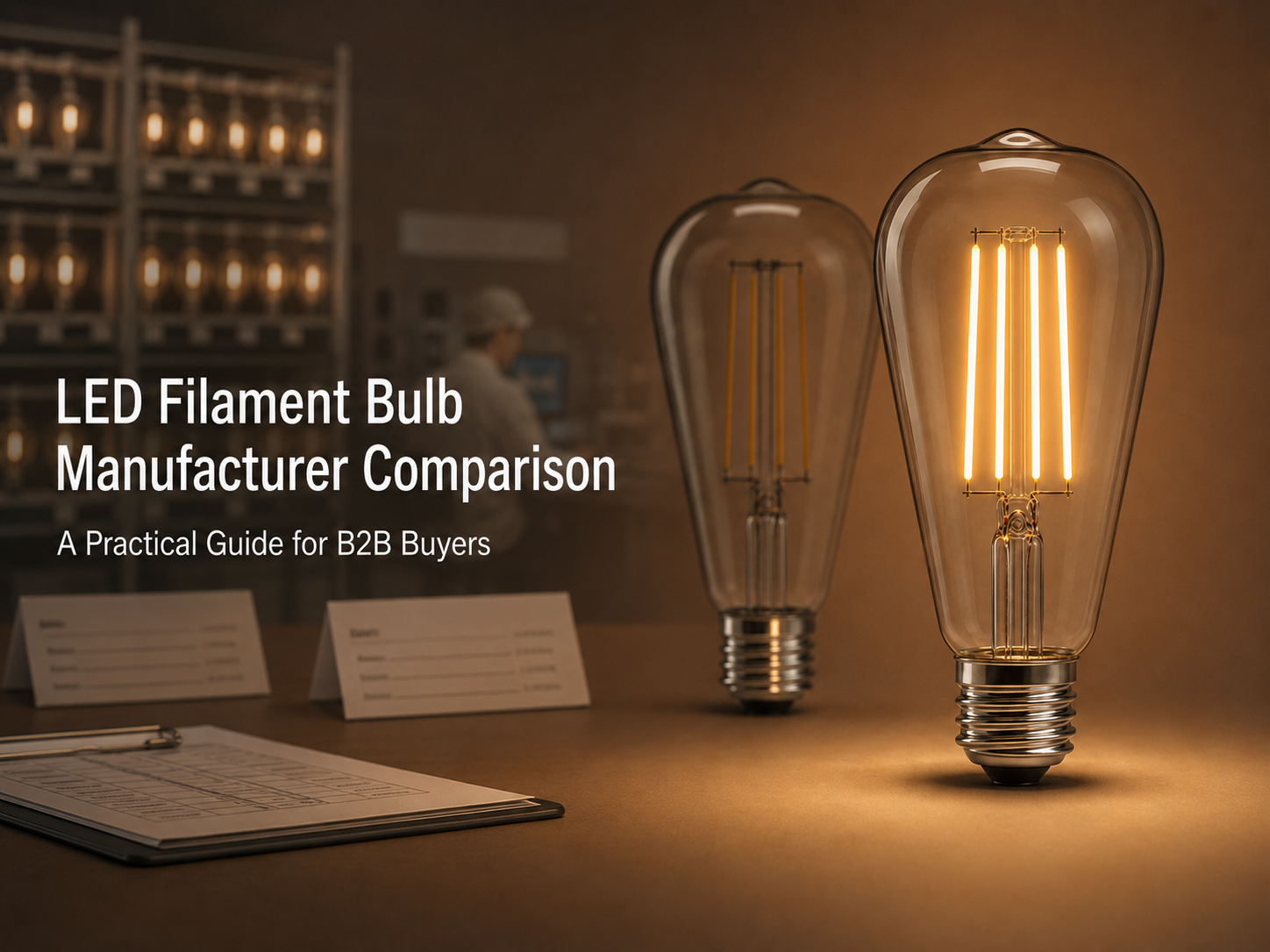
Restaurant lighting has to perform two jobs at once: create a memorable atmosphere and support practical operations. Edison-style lamps are popular because their visible filament structure makes the bulb part of the interior design rather than something to conceal. However, appearance alone is not a sufficient purchasing criterion. The right choice depends on the restaurant concept, fitting design, control system, maintenance plan, and required visual comfort.
This guide compares the main LED approaches used in Edison-inspired restaurant lighting. It is intended for international buyers, distributors, installers, and operators who need to select a commercially suitable product rather than simply the most attractive bulb in a catalogue.
Start with the restaurant’s lighting role
Before comparing bulb shapes, define what the lamp must do in the space. A decorative bulb above a bar has different requirements from a bulb used in a dining table pendant or a semi-exposed wall fitting.
- Atmospheric lighting: The priority is a warm, comfortable glow with an attractive filament pattern and controlled brightness.
- Task-support lighting: The bulb must provide enough useful illumination for menus, table settings, service counters, or food presentation.
- Feature lighting: The lamp is viewed directly and should have a consistent glass finish, filament arrangement, and visual balance.
- General background lighting: A decorative appearance may be desirable, but light distribution, glare control, and system compatibility become more important.
Many restaurants use a layered scheme. Edison-style bulbs may create the visible decorative layer, while downlights, concealed linear lighting, or wall fixtures supply broader illumination. This allows the decorative lamps to be selected for character without forcing them to carry the entire lighting load.
Compare the main LED bulb approaches
Traditional rigid LED filament bulbs
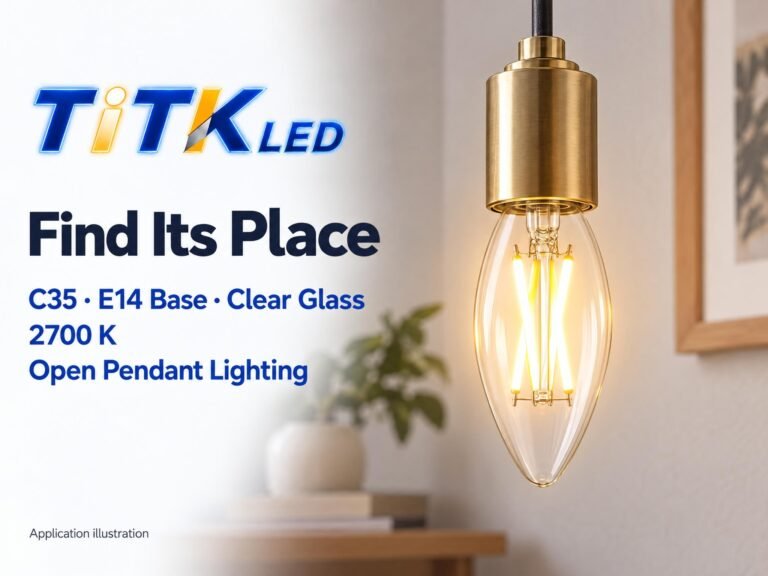
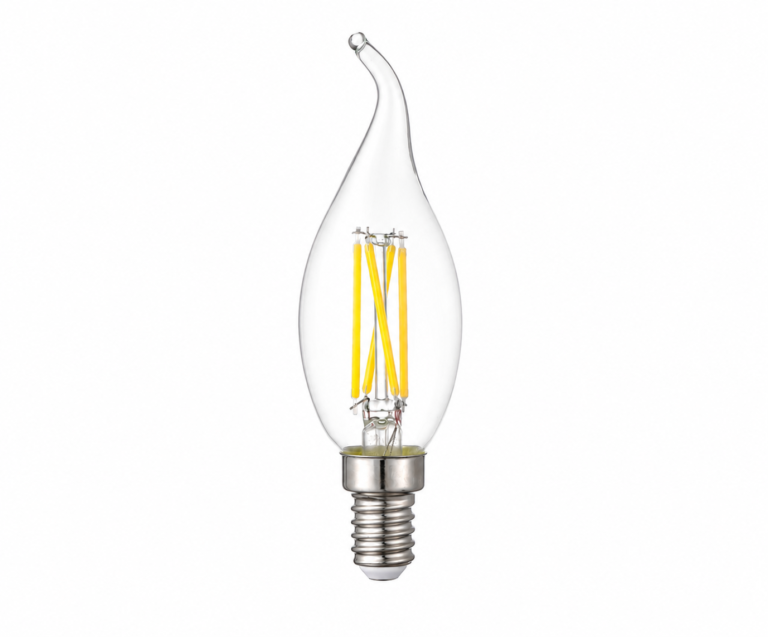
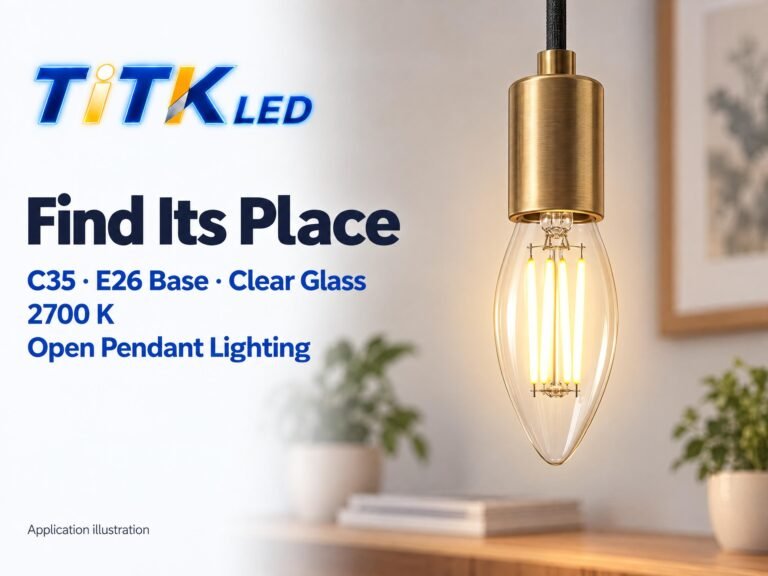
Rigid LED filament bulbs use slender LED elements arranged to resemble incandescent filaments. They are usually the first option to consider when the bulb will be exposed in a pendant, wall fitting, chandelier, or ceiling socket.
Their strengths are a familiar Edison appearance, broad availability, and compatibility with many decorative lamp shapes. They can work well in restaurants seeking a classic, industrial, rustic, or heritage-inspired look. Buyers should compare the visible filament layout carefully: a bulb may look attractive from one viewing angle but less balanced when installed in a group.
Important checks include the glass tint, filament color, light distribution, base type, overall dimensions, and whether the lamp is intended for open fixtures. Confirm the supplier’s electrical and thermal specifications before approving a final model.
Flexible filament bulbs
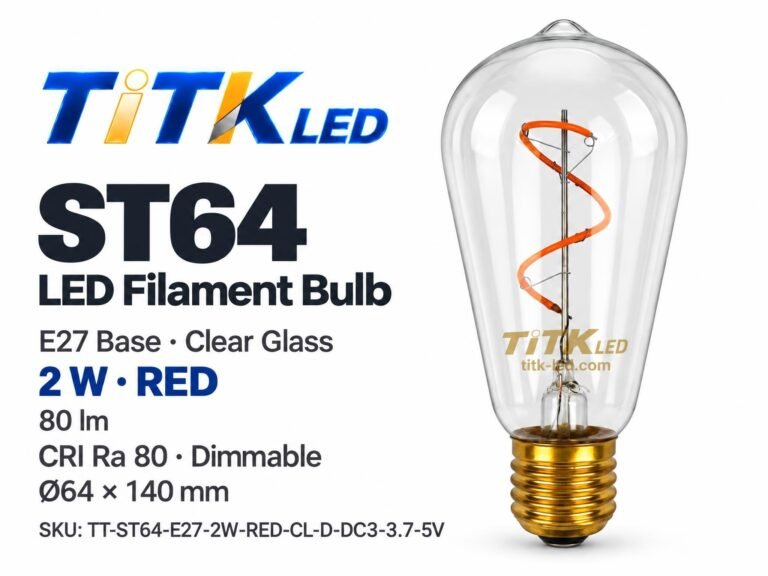
Flexible filament designs can support more varied visual patterns and may be useful when the lamp itself is a prominent design feature. They are worth considering for custom interiors, decorative clusters, and installations where an unusual filament shape supports the restaurant’s identity.
The trade-off is that visual complexity can make consistency more difficult to evaluate across batches. Buyers should request production samples or detailed technical drawings when ordering a large quantity. Check whether the filament arrangement remains visually even across different viewing angles and whether the lamp’s construction is suitable for the intended fitting.
See the flexible filament bulb range when comparing decorative filament structures.
Standard A-shape LED bulbs with an Edison influence
An A-shape bulb can provide a softer decorative reference while retaining a more conventional form. This approach suits restaurants that need a familiar lamp profile, moderate visual presence, or easier replacement across several fixture types.
Compared with highly elongated or oversized Edison forms, A-shape bulbs may appear less theatrical. They can nevertheless be a practical choice for dining areas where the bulb is visible but should not dominate the architecture. Confirm the required base, diameter, length, and clearance around the fitting before ordering.
Globe and tubular decorative bulbs
Globe bulbs create a rounded, softer visual statement and can work effectively in grouped pendants or wall-mounted fixtures. Tubular bulbs provide a more linear, architectural look and are often suitable for narrow shades, vertical arrangements, or industrial-inspired installations.
These forms should be selected with the fixture, not in isolation. A long bulb may be visually attractive but unsuitable where the socket, shade, or canopy limits available space. Conversely, a globe bulb may provide the desired presence but create more direct viewing glare in a low-hanging fitting.
For broader comparisons, review LED Edison bulb options alongside the fixture manufacturer’s dimensional requirements.
Decision criteria for restaurant procurement
Color appearance and visual comfort
Warm white and amber-toned lamps are commonly associated with intimate dining, bars, lounges, and evening service. A less strongly tinted warm lamp may be more suitable where menus, tableware, and food colors must remain easier to distinguish.
Do not assess color only from catalogue images. Ask for the stated color specification, color rendering information, and sample units. If lamps from different suppliers will be installed in the same room, verify that their appearance is consistent before placing a mixed order.
Dimming and control compatibility
Dimming can help restaurants adapt lighting between service periods, private events, cleaning, and late-night operation. However, an LED bulb must be compatible with the installed dimmer and control method. Poor matching may cause flicker, limited dimming range, unwanted noise, or inconsistent behavior among lamps.
Confirm whether the bulb is designated as dimmable, which control systems have been evaluated, and what installation conditions apply. Do not assume that a dimmable label guarantees identical performance with every dimmer. The installer should test the intended lamp, driver arrangement, and control equipment together.
Use the dimmable LED bulb category as a starting point, then request the supplier’s compatibility information for the project.
Glare, viewing angle, and fixture position
Exposed bulbs are often installed at eye level or below the normal ceiling line. A visually striking filament can still be uncomfortable if the lamp is too bright for its position or lacks suitable diffusion. Consider the observer’s typical viewing angle, the height of the pendant, the use of shades, and the spacing between lamps.
For table lighting, a lower-output decorative lamp may be appropriate when other layers provide illumination. For a high ceiling or open dining room, the bulb may need to contribute more useful light. The correct decision is therefore a system decision rather than a bulb-only decision.
Heat, enclosure, and operating environment
Restaurant environments can expose lamps to long operating hours, kitchen-adjacent heat, cleaning activity, humidity, and frequent switching. A bulb designed for an open decorative fitting should not automatically be used in a fully enclosed fixture.
Check the supplier’s stated operating conditions, enclosure limitations, environmental suitability, and installation orientation. In areas exposed to moisture, specify an appropriate fixture and confirm the complete assembly’s suitability rather than relying on the bulb description alone.
Specification and sourcing checklist
For distributor and project procurement, a clear specification reduces substitutions and inconsistent installations. Include the following in the request for quotation:
- Bulb shape, glass finish, filament pattern, and visual reference.
- Socket or base type, lamp dimensions, and fixture clearance.
- Input voltage and frequency requirements for the destination market.
- Color appearance, color rendering information, and light distribution.
- Dimmability and control-system compatibility.
- Operating environment, enclosure limitations, and switching conditions.
- Packaging, labelling, sample approval, and replacement expectations.
- Applicable market documentation and conformity requirements to be confirmed by the supplier.
For private-label or repeated commercial programs, also clarify production consistency, artwork approval, carton configuration, minimum order conditions, lead times, and the process for handling technical changes. These details are particularly important when multiple restaurant sites must maintain the same visual identity.
Approve the Production Reference and Quality Controls
For restaurant interiors, document what variation is acceptable in glass tint, filament position, printed markings, and critical dimensions. Small differences can become noticeable when bulbs are installed in a row or cluster, even when each item looks acceptable on its own.
Test representative samples in the actual fixture
Evaluate samples in the intended fixture, or in a close simulation of the final installation. The socket, shade, wall colour, ceiling height, and surrounding light can all change the result. If the order includes a custom finish, filament layout, base, label, or packaging format, the approved sample should represent that configuration. Retain an approved sample or documented approval record for later comparison.
- Compare visual consistency within the sample set.
- Review colour appearance from normal guest positions.
- Check glare, brightness, and light distribution in the intended area.
- Test dimming, startup behaviour, and operation with the specified controls.
- Verify socket fit and fixture clearance.
- Inspect glass, filament, and base appearance after handling and installation.
When dimming is required, confirm the operating conditions with the supplier and test the bulb with the equipment specified for the project.
Define pre-shipment inspection and packaging
Agree in advance on the inspection stage, acceptance criteria, how results will be recorded, and how nonconforming goods will be handled. The checks should cover product identity, appearance, critical dimensions, agreed electrical operation, consistency across cartons or production lots, and packaging protection.
Approve the individual box, internal protection, carton configuration, labels, and private-label artwork before production. Confirm barcode and carton-mark requirements, quantity per carton, and whether mixed models are permitted. The packed configuration should protect exposed glass and make model identification easy during receiving and replenishment.
Control documents and specification changes
Match the current datasheet, drawings, requested test reports or declarations, instructions, labels, artwork, and inspection records to the exact model, electrical configuration, destination market, and private-label version. Send one consolidated specification sheet and ask the supplier to respond line by line.
Require written approval before any change to the LED source, driver, glass, filament structure, base, label, or packaging. Keep the purchase order, approved sample reference, drawings, artwork, inspection records, and correspondence together for repeat orders and multi-site replenishment.
Which option is best for your restaurant?
Choose rigid LED filament bulbs when a recognizable Edison appearance and straightforward decorative specification are the main priorities. Consider flexible filament designs when the filament pattern is a central part of the interior concept and sample approval is available. Select A-shape bulbs when a restrained, familiar profile is preferred. Globe and tubular forms are useful when the fixture layout calls for a rounded or elongated visual element.
In every case, evaluate the bulb with the fitting, dimmer, installation height, and surrounding lighting. A successful restaurant scheme balances decorative character with visual comfort, service needs, replacement practicality, and documented compatibility.
TITK buyers and project partners should confirm current dimensions, electrical data, dimming information, market documentation, and availability directly with the supplier before final approval. Explore the LED filament bulb category and request suitable technical details for your application.