
G45 LED Filament Bulbs: A Safe Installation and Care Guide
A practical guide for installing and maintaining G45 LED filament bulbs, with safe checks for fit, voltage, dimming, and everyday care.

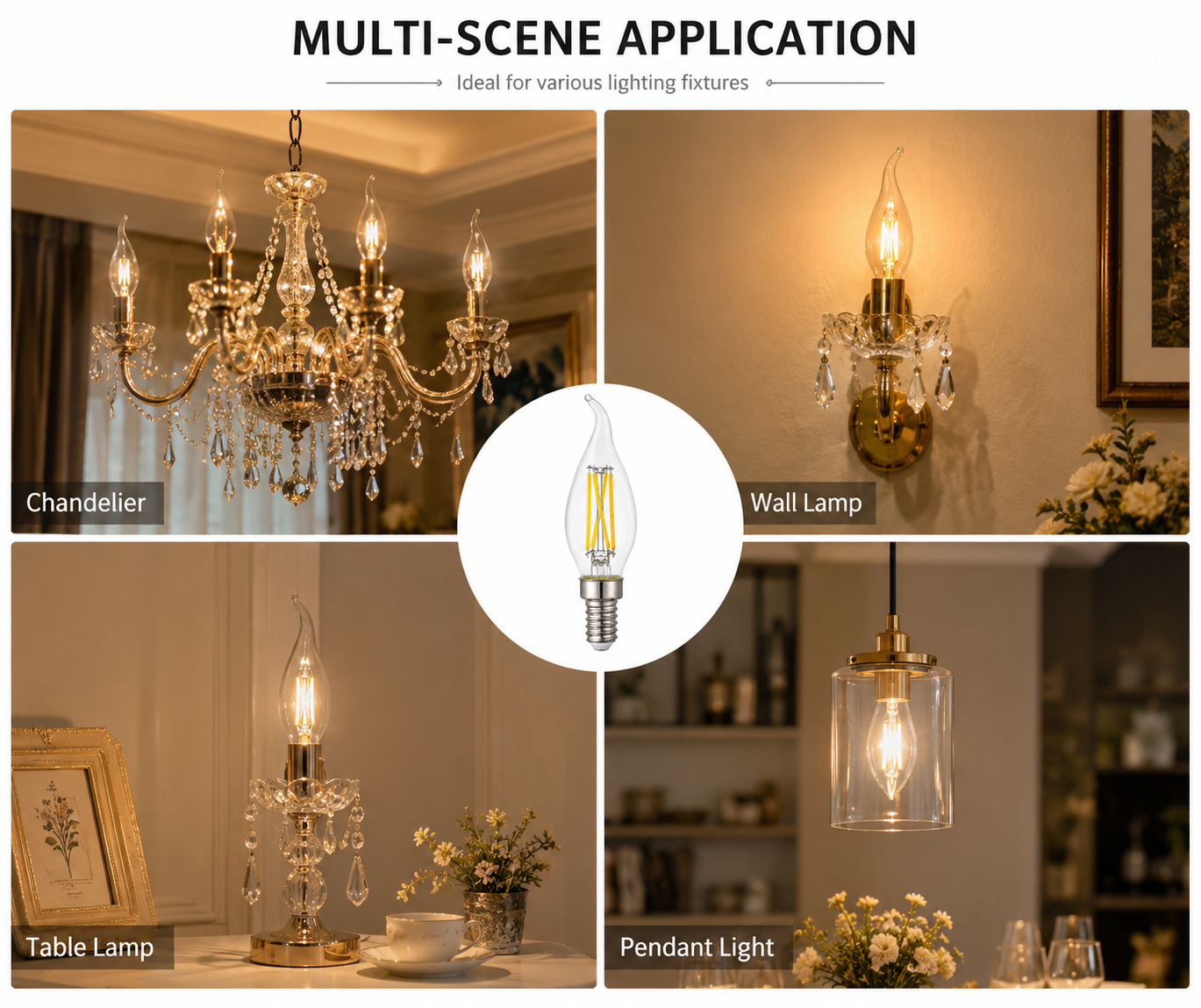
G45 LED filament bulbs are a popular choice for decorative lighting because their globe shape works well in visible fixtures while keeping the look simple and familiar. For international B2B buyers, distributors, installers, and informed consumers, the most practical approach is to treat the bulb as a project component: confirm the base, voltage, glass finish, and fixture fit before installation, then follow a careful maintenance routine after it is in service.
This guide focuses on safe, practical steps for selecting and handling G45 LED filament bulbs. It also reflects a basic truth that applies across LED filament bulbs: the right bulb is not just about shape. It must match the fixture, the electrical configuration, and the lighting result you want.
What to Check Before Installing a G45 LED Filament Bulb
Before installation, confirm the product specification for the exact model you are using. G45 bulbs can differ by base type, input voltage, dimming function, and glass finish depending on the model. Do not assume one G45 bulb is interchangeable with another simply because the shape is the same.
- Base type: Check whether the bulb uses E14, E26, E27, or B22, depending on the model and project requirement.
- Voltage: Confirm the input voltage on the individual bulb specification before use.
- Fixture size: Make sure the globe shape fits the lampshade, cage, pendant, or open fixture without crowding.
- Glass finish: Clear glass, amber tea glass, smoke grey glass, frosted glass, or milky glass may be available depending on the model.
- Dimming and control: If the application needs dimming, verify that the bulb is a dimmable version and that the dimmer is suitable for the lamp and project.
For buyers comparing broader product families, TITK’s LED Filament Bulbs range and Decorative LED Bulbs category can help you review related shapes and finishes. If your project includes special visual requirements, ask for the exact model specification before placing an order.
Safe Installation Basics for G45 LED Filament Bulbs
The installation process should be simple, but it still deserves attention. If you are not qualified to work on electrical systems, use a qualified electrician or installer, especially for commercial lighting and hospitality lighting projects.
- Switch off power at the appropriate point in the installation process. Do not work on a live fitting.
- Inspect the bulb and socket. Check for visible damage, loose parts, or signs of poor contact.
- Match the base carefully. The bulb should seat correctly without forcing.
- Install gently. Tighten only as needed for secure contact.
- Test the fixture after installation. Confirm that the bulb lights correctly and that the fixture remains stable.
In practice, these steps help reduce avoidable problems such as poor contact, fitting strain, or compatibility mistakes. They are also useful for bulk projects where consistent installation standards matter across many locations.
How to Handle Dimming and Color Temperature
If your project includes dimming, the bulb and control system should be checked together rather than separately. A dimmable LED bulb may still behave poorly if paired with an unsuitable dimmer or an incompatible fixture. For this reason, installers should confirm the complete configuration before rollout.
Color temperature is another important selection point. Depending on the model, TITK LED bulbs may be available in options such as 2200K, 2700K, 3000K, 4000K–4500K, or 6500K. For G45 applications, the right choice depends on the room atmosphere, fixture style, and intended use. Warm white is often preferred for relaxed decorative scenes, while cooler tones may suit task-oriented environments. Always confirm the available option for the specific bulb model.
If your sourcing plan includes adjustable light appearance, review Dimmable LED Bulbs only after confirming that the product version and the control method are suitable for the project.
Maintenance Routine for Long-Term Use
Maintenance for G45 LED filament bulbs is usually straightforward, but it should be consistent. Decorative bulbs are often visible in open fixtures, so dust and handling marks can affect the overall appearance even when the bulb is working properly.
Recommended maintenance steps
- Clean the bulb only when power is off and the bulb has cooled.
- Use a soft, dry cloth to remove dust from the glass.
- Avoid abrasive materials that may scratch the finish.
- Do not twist or press the glass unnecessarily during cleaning.
- Check the socket and fixture condition during routine maintenance visits.
For hospitality lighting and retail display areas, regular visual inspection is especially useful. A bulb may still operate but no longer match the desired presentation if the glass is dirty or the fixture is damaged.
Common Mistakes to Avoid
Many installation and maintenance issues come from simple mismatches rather than product defects. The table below summarizes the most common points to check.
| Issue | What to check | Practical action |
|---|---|---|
| Wrong base | E14, E26, E27, or B22 may differ by model | Confirm the socket before ordering |
| Voltage mismatch | Input voltage must match the intended application | Verify the exact product specification |
| Poor fit in fixture | Bulb diameter and height may affect clearance | Measure the fixture and shade space first |
| Dimmer issues | Not every dimmable bulb works the same way with every dimmer | Confirm the bulb and dimmer combination |
| Visible surface marks | Dust and handling can affect presentation | Use gentle cleaning and careful handling |
How G45 LED Filament Bulbs Fit B2B Projects
For distributors, importers, lighting brands, and project buyers, the value of G45 LED filament bulbs is in their flexibility. They suit many decorative lighting applications, but the final choice still depends on the fixture type, voltage, base, wattage, dimensions, and lighting requirements. That means a G45 bulb for a pendant light may not be the right choice for a wall sconce or a table lamp without a separate check.
This is where product selection and sourcing discipline matter. If you are building a range for retail or project supply, review the wider LED Bulbs category, then confirm which G45 versions are available for your target market. For projects that need a stronger decorative emphasis, the Decorative LED Filament Bulbs category may also be relevant.
TITK supports OEM and ODM cooperation for B2B customers, and customization may include product specifications, lamp base, input voltage, wattage, color temperature, glass finish, filament design, dimming functions, smart-control functions, product branding, private label, and packaging, depending on the project. Final feasibility should always be confirmed for the specific requirement.
Final Practical Advice
If you are planning a new installation or replacing existing decorative bulbs, start with the basics: confirm the base, confirm the voltage, check the fixture space, and decide whether dimming is required. Then choose the exact G45 LED filament bulbs model that matches the project instead of relying on shape alone.
For B2B sourcing, it is also wise to request the final specification before ordering, especially when the project involves multiple sites, mixed fixtures, or brand-specific packaging. If needed, contact TITK to discuss product selection, request a quotation, or confirm OEM/ODM options for your application.



