
G95 vs G125 Globe Bulbs: How to Choose the Right Oversized Decorative Bulb
A practical comparison of G95 vs G125 globe bulbs for buyers who need the right size, visual impact, and fixture fit before ordering.

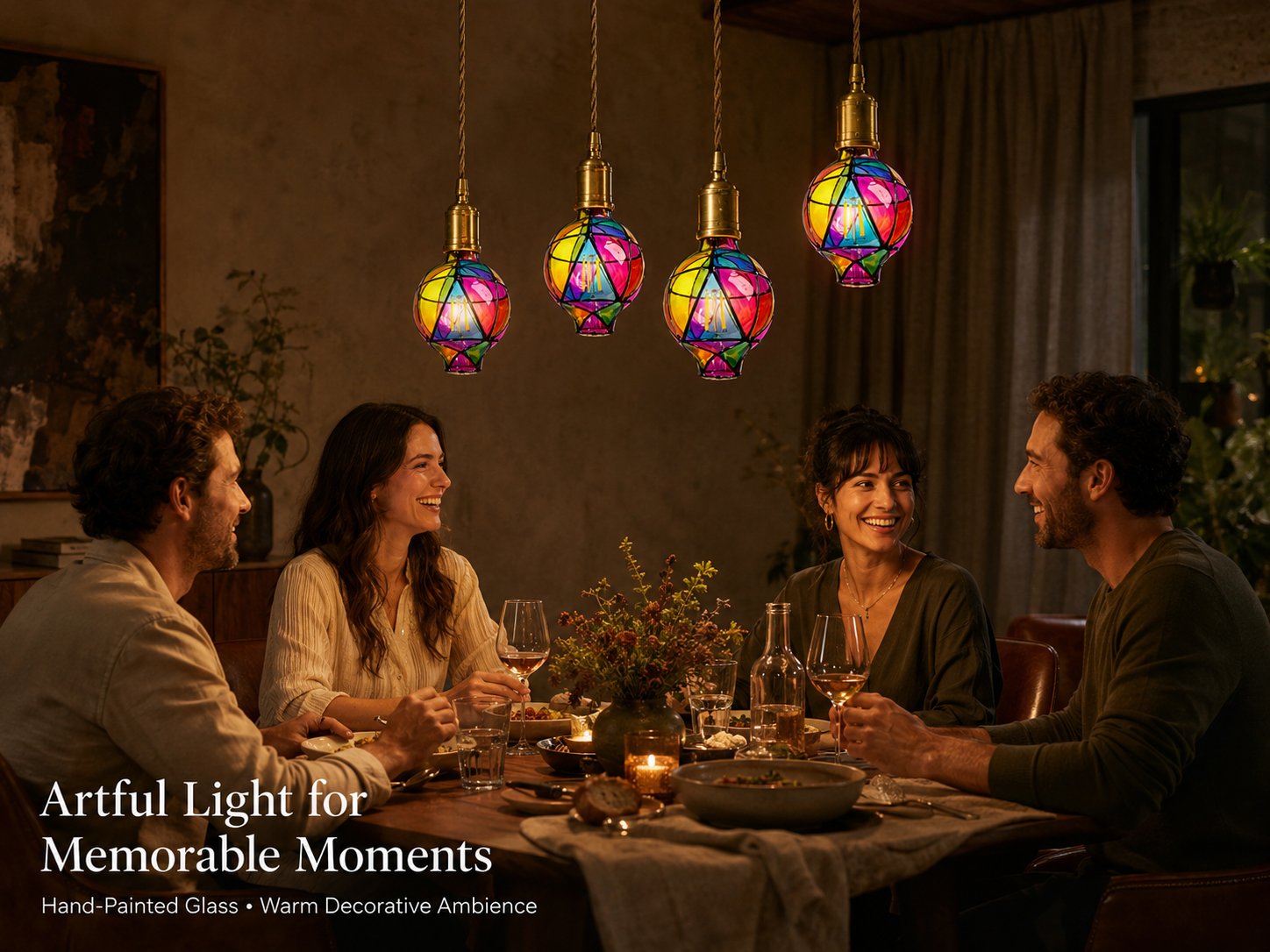
G95 vs G125 Globe Bulbs: Which Size Should You Specify?
When buyers compare G95 vs G125 globe bulbs, the real question is usually not which one is “better,” but which one fits the fixture, supports the design intent, and delivers the right visual scale. In decorative lighting, size changes the look immediately. A larger globe bulb can become a focal point, while a smaller one may feel more balanced in compact or multi-light arrangements.
This matters for globe bulbs used in pendants, chandeliers, wall sconces, and other decorative fittings. It also matters for B2B sourcing, because the bulb must match the fixture opening, the exposed bulb proportions, and the overall lighting concept. If you are working on commercial lighting or hospitality lighting, the wrong bulb size can make a project look inconsistent even when the electrical specification is correct.
What Is the Practical Difference Between G95 and G125?
The simplest difference is diameter. G95 bulbs are smaller than G125 bulbs, so they read as more restrained in a space. G125 bulbs are larger and more visually dominant. In decorative applications, that extra size can be exactly what a project needs, but it can also create fit or balance issues if the fixture was designed for a smaller globe.
For TITK’s product range, the G95 category includes a verified G95 Hand-Painted Decorative LED Filament Bulb with a 95 mm diameter, approximately 138 mm overall height, 4W power, 300 lm luminous flux, 2700K color temperature, E27 base, and AC 110–120 V or AC 220–240V options depending on the product configuration. The hand-painted decorative pattern is part of the design of that specific model.
For G125 bulbs, the key decision is usually visual scale rather than a single universal specification, because dimensions and performance can vary by model. Please confirm with TITK for the final specification.
When G95 Is the Better Choice
Choose G95 when the fixture benefits from a softer decorative presence. It is often easier to use in:
- multi-bulb pendants
- smaller decorative shades
- compact chandeliers
- wall sconces where bulb diameter is visible
- interiors that need a refined, less oversized look
G95 is also a practical choice when the design calls for a decorative bulb that is noticeable without taking over the fixture. In LED Globe Bulbs, this size often works well when balance matters more than maximum visual impact.
For informed consumers, G95 may also be easier to live with in spaces where the bulb is on display but should not dominate the room. For installers and distributors, it can be simpler to specify when fixture dimensions are tight or when several identical fixtures must maintain a consistent, controlled appearance.
When G125 Is the Better Choice
Choose G125 when the bulb is meant to stand out. A larger globe usually creates a stronger statement in:
- large pendants
- open decorative fixtures
- feature lighting in hospitality spaces
- showpiece residential interiors
- projects where the bulb itself is part of the design language
In larger interiors, G125 can help the fixture feel intentional rather than undersized. It is often the better option for projects that want a bold decorative effect with minimal visual clutter. If you are sourcing Decorative Light Bulbs, this is the size to consider when the bulb should be seen as a design object, not just a light source.
That said, the larger size can become a drawback if the fixture opening is narrow, if adjacent bulbs are too close together, or if the room design already has many strong visual elements.
Fit, Proportion, and Fixture Compatibility
Before choosing between G95 and G125, check three points:
- Fixture clearance — Make sure the bulb diameter will fit the shade, cage, or pendant opening.
- Visual proportion — Compare the bulb size to the fixture body and the surrounding furniture or architecture.
- Application context — Decide whether the bulb should blend in or become a feature.
This is why the question is not only about appearance. In practice, lighting design depends on how the bulb, fixture, and room work together. A bulb can look attractive in a sample photo and still be the wrong choice in a real installation if the proportions are off.
Performance Is Model-Specific, Not Size-Specific
Buyers sometimes assume a larger globe bulb automatically means higher performance. That is not a safe assumption. In LED sourcing, wattage, flux, color temperature, dimming behavior, and base type depend on the specific model, not just the bulb shape.
For example, TITK supplies a verified G95 decorative model with specific electrical and optical values, but those details should not be generalized to all G95 bulbs. The same caution applies to G125. If your project needs a certain output, a certain warm white look, or a specific base such as E26 or E27, confirm the exact configuration before ordering.
This applies across Decorative LED Bulbs and other product families. It is also important for buyers comparing Edison bulbs and globe styles, because decorative form does not guarantee identical performance.
How to Choose: A Simple Buyer’s Checklist
| Question | Choose G95 if… | Choose G125 if… |
|---|---|---|
| Fixture size | The opening or visible space is compact | The fixture is open and can support a larger bulb |
| Design intent | You want a balanced, understated decorative effect | You want a strong focal point |
| Room style | The space already has many visual elements | The space needs a bolder statement |
| Project type | Mixed residential or smaller commercial fixtures | Feature lighting, hospitality, or large decorative installations |
If the decision still feels unclear, request samples and compare them in the actual fixture. That is often the fastest way to judge proportion, especially in pendant lighting and chandelier lighting, where the same bulb can look very different depending on hanging height and surrounding surfaces.
Practical Next Steps for B2B Buyers
For distributors, installers, and OEM/ODM buyers, the most efficient sourcing workflow is simple:
- confirm the target fixture type
- measure visible diameter limits
- choose the visual scale you want
- confirm base, voltage, glass finish, and color temperature
- request a sample for real-world comparison
If your project uses bulb families across different rooms, you may also want to compare G95 and G125 with other sizes in the same decorative range. TITK’s LED Globe Bulbs category can be a useful starting point when you are standardizing a project specification.
For procurement teams, this is where LED bulb sourcing becomes more than price comparison. It is about matching form, function, and fixture compatibility. And for buyers working with wholesale LED bulbs, consistency across samples and final order approval should be confirmed before production.
Conclusion: Start with the Fixture, Not the Shape Name
In the G95 vs G125 globe bulbs decision, the right answer depends on proportion, installation context, and design priority. G95 is usually the safer choice when space is tighter or the look should stay refined. G125 is usually better when the bulb is expected to make a stronger decorative statement.
Because specifications can vary by model, the best next step is to confirm the exact base, voltage, finish, and performance requirements with TITK before ordering. If you are planning a project, you can also request a quotation or ask for samples to compare sizes in the actual fixture.



