How to Specify LED Bulbs for Hotel Rooms and Public Areas
A practical framework for selecting, testing, and ordering LED bulbs for guest rooms, corridors, restaurants, and other hotel spaces.

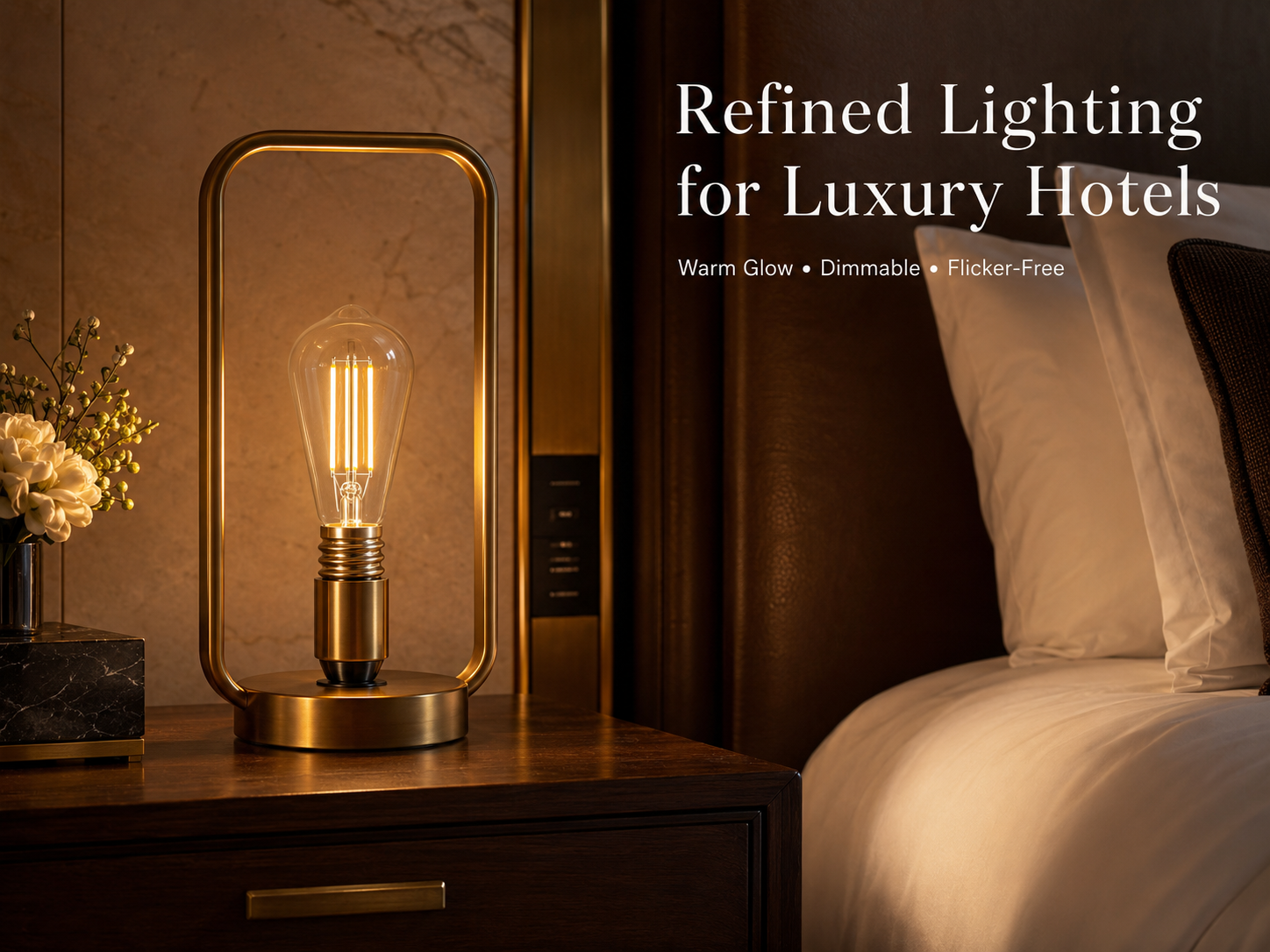
A successful hotel lighting project depends on more than choosing an attractive bulb shape. Guest rooms, corridors, restaurants, reception areas, and service spaces have different visual, technical, and operational requirements. A bulb that performs well in a decorative bedside lamp may be unsuitable for a dimmable chandelier, enclosed ceiling fitting, or high-use corridor.
The central question for project teams is therefore: how should LED bulbs be specified so that appearance, compatibility, maintenance, and supply requirements are controlled before installation? This hotel LED bulb specification framework provides a practical way to answer that question.
Start with a room-by-room lighting schedule
Before comparing suppliers, create a schedule that lists every bulb position and its intended function. Grouping products only by wattage or cap type can produce inconsistent results because the same electrical specification may look very different in different luminaires.
- Guest rooms: bedside lamps, desk lamps, floor lamps, wardrobes, bathroom mirrors, and decorative pendants.
- Public areas: reception, corridors, lounges, stairways, elevators, and waiting areas.
- Food and beverage spaces: restaurants, bars, cafés, and banquet rooms.
- Back-of-house areas: offices, storage rooms, kitchens, laundry areas, and staff circulation routes.
For each position, record the luminaire type, bulb dimensions, base, operating voltage, control method, required appearance, and whether the bulb is visible. Also note whether the fitting is enclosed, exposed, ventilated, or installed near moisture. These details should be confirmed from the luminaire manufacturer or the project engineer rather than assumed from photographs.
Define the visual specification
Color temperature and ambience
Color temperature should support the atmosphere and function of each area. Warmer light is commonly considered for intimate guest rooms, lounges, bars, and decorative features, while neutral options may be more suitable where staff need clearer visual conditions. The correct choice depends on the interior materials, wall colors, daylight contribution, and the lighting designer’s concept.
Do not specify color temperature as an isolated number. Request samples in the actual luminaire, because a clear glass bulb, amber glass bulb, frosted bulb, and filament-style bulb can create noticeably different impressions even when their nominal color temperature is similar.
Color quality and consistency
Hotels often use lighting to present textiles, food, artwork, finishes, and skin tones attractively. Ask suppliers to state the applicable color-rendering information and the tolerances used for production consistency. The project team should also clarify whether replacement bulbs will be matched to the original batch.
For multi-site hotel groups, consistency is especially important. A replacement bulb with a different glass tint, filament layout, or color appearance can be noticeable in a room or corridor. Approve a physical reference sample and retain its technical details for future purchasing.
Shape, glass, and decorative effect
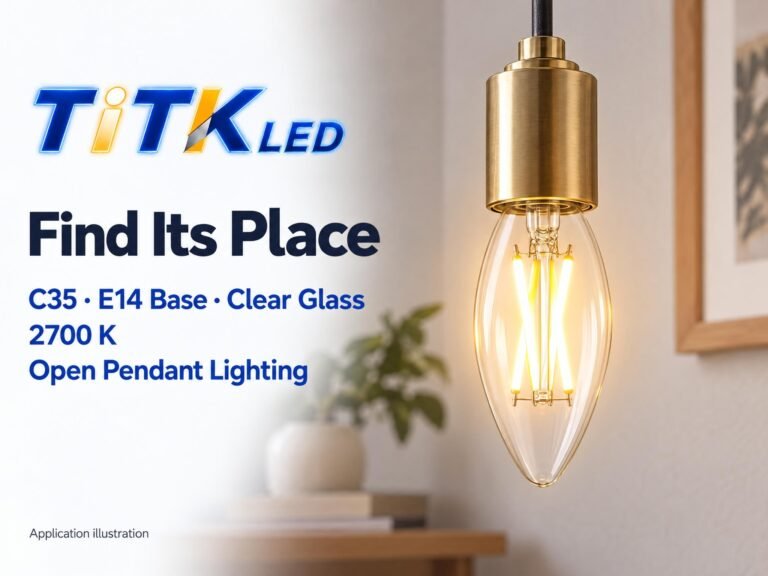
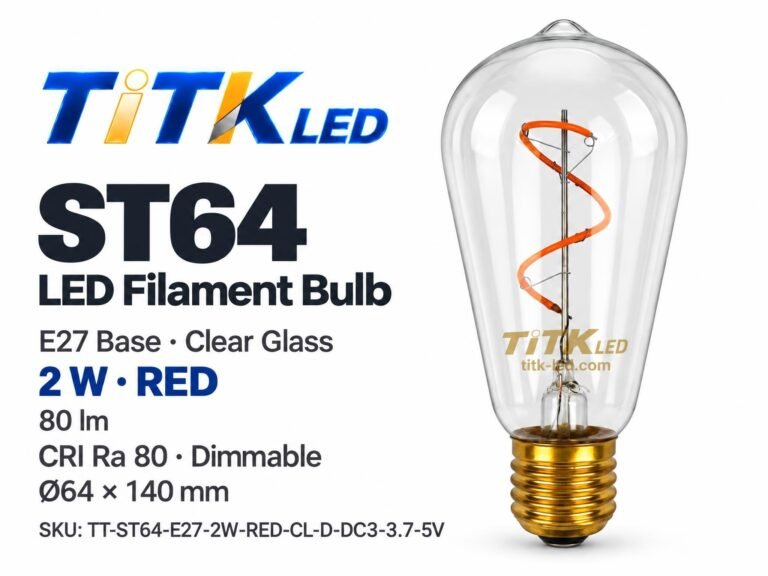
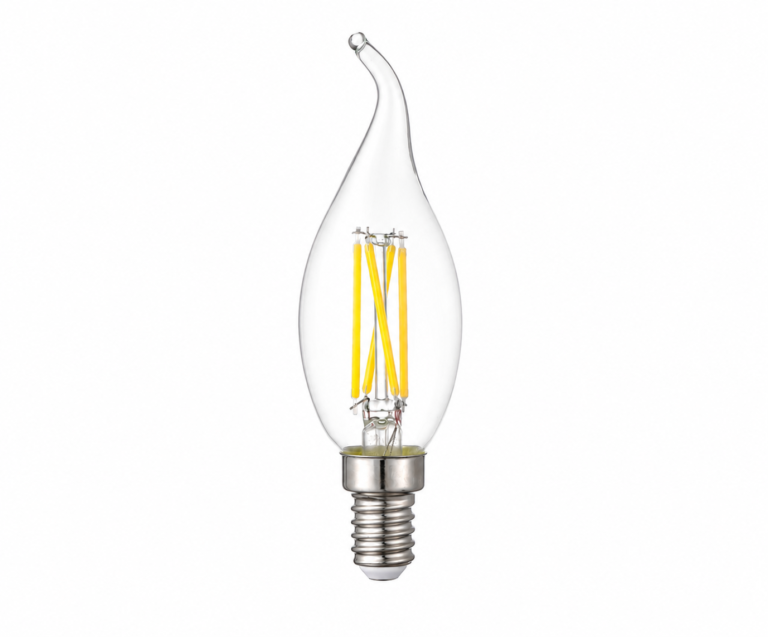
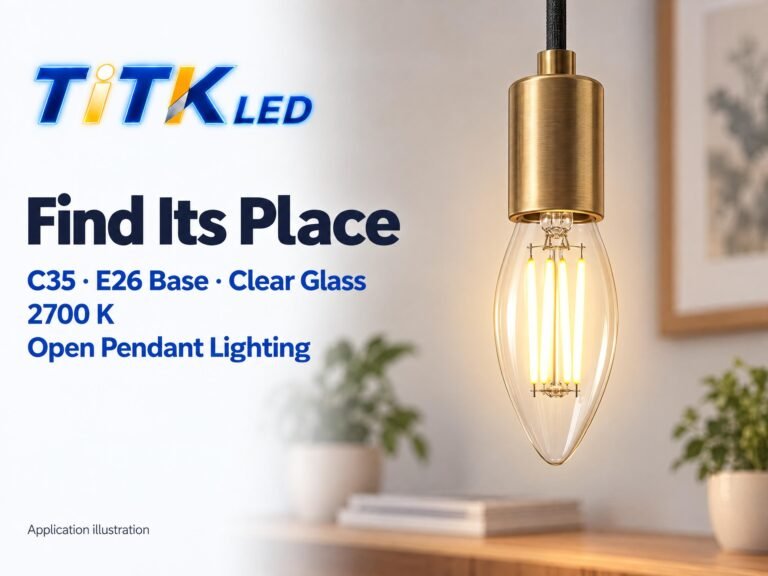
Bulb shape should fit both the luminaire and the design intent. Globe bulbs may suit exposed bathroom or lounge fittings, while candle forms can work in chandeliers and compact decorative fixtures. Edison-style bulbs may be selected where the bulb itself forms part of the interior design. TITK’s LED filament bulb range can be reviewed as one category, but the final selection should be checked against the fitting and project sample.
Check electrical and control compatibility
Electrical compatibility is a frequent source of field problems. Confirm the local supply voltage, frequency, base type, physical dimensions, and polarity requirements where relevant. A bulb may have the correct cap but still be unsuitable because of its length, diameter, heat conditions, or interaction with the fixture.
Dimming and control systems
If a hotel uses dimmers, smart controls, occupancy systems, or scene-setting equipment, specify the control environment before ordering. “Dimmable” should not be treated as a universal compatibility statement. The bulb, dimmer, minimum load, wiring arrangement, and control protocol may all affect operation.
Ask the supplier for the intended dimming method and any compatibility guidance. Then test the bulb with the exact dimmer or control equipment selected for the project. Check for visible flicker, limited dimming range, delayed starting, unwanted noise, unstable low-level operation, and unexpected behavior after power restoration. If the project requires a dedicated control protocol, obtain written confirmation rather than relying on a general product description. TITK’s dimmable LED bulb options may be relevant for this stage of evaluation.
Enclosed fixtures and thermal conditions
Many decorative and architectural fittings restrict airflow. Confirm whether the proposed bulb is suitable for enclosed use and identify any temperature limitations stated by the supplier. This is particularly important for recessed fittings, compact shades, outdoor-rated housings, and fixtures installed above ceilings.
Evaluate hotel-specific maintenance requirements
In hospitality environments, maintenance is not limited to replacing a failed bulb. Staff may need to work around guests, furniture, high ceilings, or scheduled events. A practical specification should therefore consider how quickly and safely a bulb can be replaced and whether housekeeping or engineering teams can identify the correct product.
- Use a clear internal product code for every approved bulb.
- Keep a replacement register showing base, shape, color appearance, control compatibility, and approved supplier.
- Store replacement stock in labeled cartons that distinguish similar-looking variants.
- Confirm that future orders can follow the approved sample and technical specification.
- Review whether decorative glass or exposed filament designs require additional handling care.
For exposed fittings, visual uniformity may matter more than it does in concealed fixtures. For concealed lamps, dimensions and optical distribution may be the dominant concerns. The maintenance plan should reflect these differences instead of applying one bulb standard to the entire property.
Use a structured sample and approval process
Request samples before committing to a large hotel order. The sample review should include the bulb installed in the intended luminaire, not only a loose product on a desk. Evaluate the result from normal guest viewing positions and under both daytime and evening conditions where possible.
A useful approval checklist includes:
- Visual appearance of the bulb when switched off and on.
- Color consistency between samples of the same model.
- Light distribution, glare, shadows, and reflections.
- Dimming behavior with the project’s actual control equipment.
- Physical fit, clearance, and access for replacement.
- Noise, flicker, starting behavior, and stability during normal operation.
- Packaging, labeling, and protection during transport.
Record the approved model, sample photographs, electrical data, control requirements, and installation restrictions. If a supplier proposes a substitution later, repeat the approval process rather than accepting an apparently equivalent product without testing.
Build the purchasing specification
A procurement document should be precise enough for a distributor, installer, and supplier to interpret it consistently. Include the project location, supply conditions, bulb code, base, dimensions, shape, glass finish, color requirement, color-rendering requirement, light distribution, dimming status, enclosure requirements, packaging expectations, and replacement policy.
Also clarify commercial details such as sample approval, minimum order quantities, lead-time expectations, carton labeling, mixed-model packing, and documentation supplied with each order. These terms must be confirmed directly with the supplier because availability and conditions vary by product and market.
For projects using private-label or OEM supply, approve artwork, product markings, packaging, and technical documents separately from the bulb itself. A well-defined specification reduces the risk of receiving a visually similar but technically different replacement.
Practical next steps for hotel buyers
Begin with a lighting audit of one representative guest room and one public area. Create the room-by-room schedule, identify control systems, and shortlist compatible bulb families. Next, request samples and test them in the actual luminaires with the project dimmers or controls. After approval, issue a written specification and retain the approved sample for future comparison.
For decorative applications, you can also compare decorative LED bulbs and LED globe bulbs according to the fixture, viewing distance, and desired ambience. Confirm all technical, regulatory, packaging, and supply details with the chosen supplier before placing an order.
For a hotel lighting project, TITK can be contacted to discuss the required bulb specifications and sample evaluation process. The strongest result will come from matching each product to the room function, luminaire, control system, and long-term maintenance plan.