
LED Bulb Importer FAQ for OEM and Wholesale Buyers
A practical FAQ for LED bulb importers covering specification alignment, sampling, quality checks, packaging, documentation, and supplier communication.

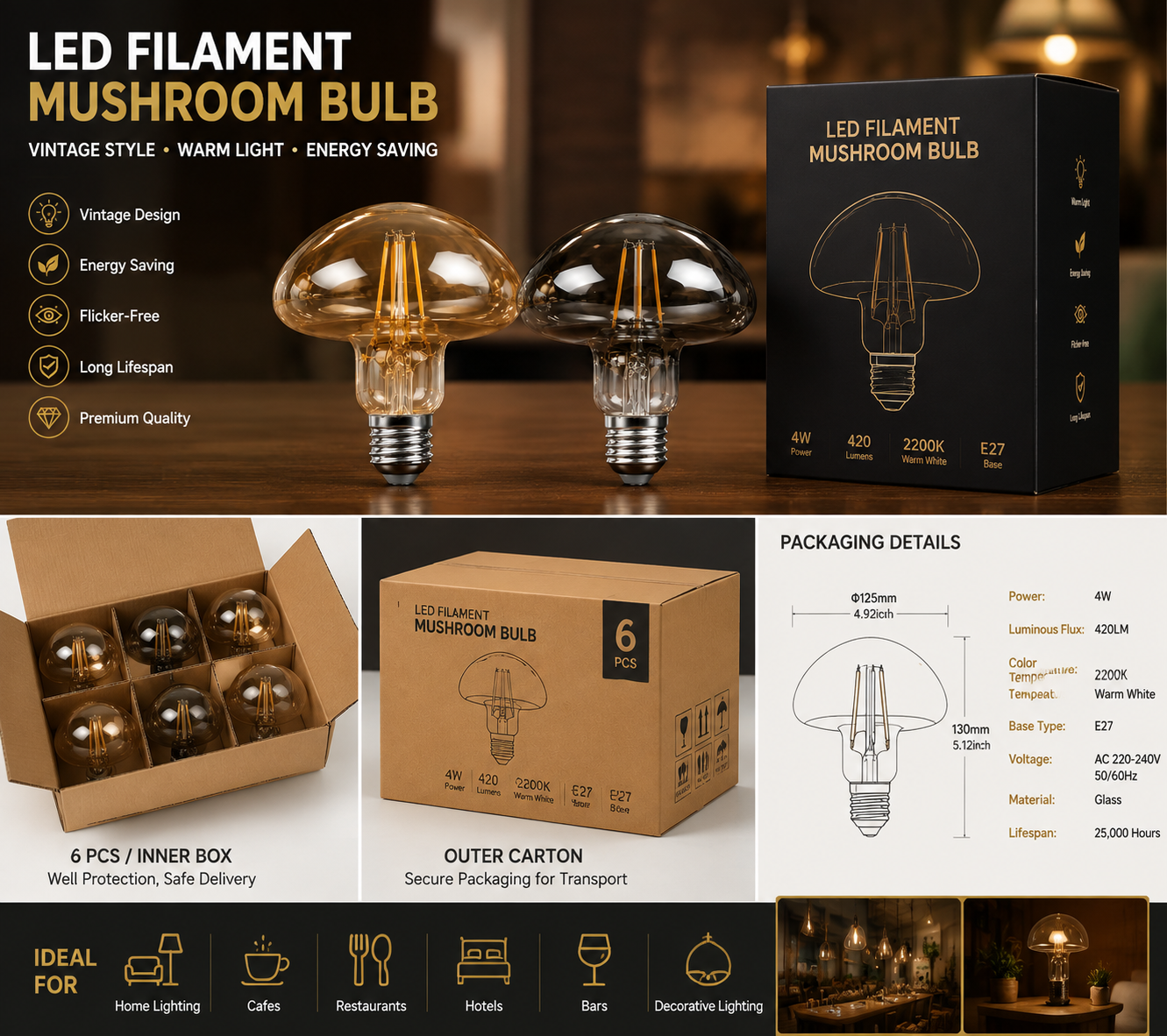
If you are preparing an order with an overseas supplier, a good LED bulb importer FAQ should do more than answer basic product questions. It should help you align specifications, request samples, check quality, confirm packaging, and keep communication clear from first inquiry to final approval.
For buyers working on wholesale LED bulbs, private label programs, or project supply, the details matter. A bulb can look suitable on a product page but still miss the mark on voltage, base type, color temperature, glass finish, or packaging. That is why clear documentation and structured communication are essential in LED bulb sourcing.
TITK, based in Zhongshan, Guangdong, China, focuses on LED filament bulbs and decorative LED bulbs for wholesale and B2B cooperation. Depending on the model and project, TITK supports OEM and ODM customization such as product specifications, lamp base, input voltage, wattage, color temperature, glass finish, filament design, dimming functions, smart-control functions, branding, private label, and packaging. Final feasibility should always be confirmed for the specific project.
What should I confirm first with an LED bulb supplier?
Start with the product definition. The first task in any LED bulb importer FAQ is specification alignment.
Before discussing price or packaging, confirm:
- Bulb shape and model family, such as C35, G45, A60, ST58, ST64, T30, G95, or other globe bulbs and candle bulbs
- Lamp base, such as E14, E26, E27, or B22, depending on the model
- Voltage, which must be confirmed for the individual product
- Color temperature, such as 2200K, 2700K, 3000K, 4000K–4500K, or 6500K, depending on the model
- Glass finish, such as clear, amber tea, smoke grey, frosted, or milky, depending on the model
- Whether the application needs dimmable LED bulbs, smart LED bulbs, or low-voltage LED bulbs
For buyers comparing decorative LED bulbs or LED Edison bulbs, the visual impression is only part of the decision. Base type, size, wattage, and fixture compatibility must also be checked.
How do I verify whether a sample is the right sample?
Request a sample only after the specification sheet is clear. A sample should match the agreed model, not just a similar-looking bulb.
Sample approval checklist
- Check the printed or labeled model details against the confirmed specification
- Measure dimensions against the fixture requirements
- Confirm that the base fits the intended socket type
- Test the sample in the actual application, such as pendant lighting, chandeliers, wall sconces, or table lamp lighting
- Confirm visual aspects such as glass finish and light color
For example, TITK offers verified configurations for selected models such as the ST58 / ST19 LED filament bulb, the ST64 / ST21 2.4G smart LED filament bulb, the G95 hand-painted decorative LED filament bulb, and the ST64 low-voltage dual-CCT LED filament bulb. These are model-specific configurations and should not be generalized to other products. Please confirm with TITK for the final specification.
For buyers evaluating LED filament bulbs, a sample is often the best way to check whether the product suits the intended lighting design before a larger order.
What quality checks should importers ask for?
Quality control for LED bulbs is usually a combination of material checks, assembly inspection, and performance verification. You do not need to ask for every internal production detail, but you should ask how the supplier controls the key points that affect function and appearance.
Useful questions include:
- How are filament assemblies checked during production?
- How are finished bulbs inspected before packing?
- What product features are reviewed for consistency, such as base, glass, and dimensions?
- How is dimming or smart-control function verified for applicable models?
- How are color temperature and CRI matched to the confirmed model specification?
If your order involves high CRI lighting requirements, confirm the exact product data for that model instead of assuming uniform performance across the full catalog. TITK provides verified specifications only where they are explicitly listed.
When importing for commercial projects, especially in commercial lighting and hospitality environments, quality checks should also consider fixture fit and visual consistency across the order.
How should I handle packaging requirements?
Packaging should be discussed early, especially for private label, retail, and distributor programs. In a professional sourcing process, packaging is not just a shipping detail. It is part of the product definition.
Ask the supplier to confirm:
- Whether standard or customized packaging is available for the chosen model
- What branding elements can be added under OEM or ODM cooperation
- How cartons, inner boxes, labels, and marks should be specified
- Whether the packaging supports your warehouse, retail, or project handling needs
For buyers using factory direct lighting programs, packaging also affects unpacking efficiency, product presentation, and downstream distribution. If your order includes private label lighting, confirm artwork requirements and approval steps before production begins.
Which documents should I request before placing an order?
Document control helps prevent misunderstandings later. Even when the product is simple, a clear paper trail reduces risk.
Ask your supplier to provide the documents needed for the order and destination market. Depending on the project, this may include product specifications, order confirmation details, packaging instructions, and shipment-related paperwork. Certification requirements vary by market and product, so do not assume a certificate applies unless it has been explicitly verified for that model.
For importers of LED bulb manufacturers and LED bulb suppliers, the most useful habit is to keep one master specification sheet per product version. That document should cover the exact model, base, voltage, wattage, color temperature, finish, and any optional functions.
How often should I communicate with the supplier?
Communication should be structured, not constant. The goal is to confirm each decision at the right stage.
Practical communication stages
- Inquiry stage: describe the model, application, quantity, and target market
- Specification stage: confirm base, voltage, wattage, color temperature, finish, and any special functions
- Sample stage: review and approve the sample against the agreed sheet
- Packaging stage: finalize branding, labels, and carton details
- Pre-shipment stage: confirm the final order details before dispatch
Clear communication is especially important for international buyers working across time zones. Short, specific messages are usually more effective than long general requests.
What are the most common importer mistakes?
Many import problems happen before production even starts. The most common mistakes include:
- Assuming all bulbs in a product family share the same voltage or base
- Ordering by appearance without confirming dimensions
- Skipping sample approval before mass production
- Mixing up warm white, neutral white, and cool white requests
- Forgetting to align packaging with channel needs
- Using vague language instead of a written specification sheet
These risks are easy to reduce when the buying process is disciplined. That matters whether you are sourcing vintage lighting for a retail program, planning lighting applications for a project, or building a catalog around custom LED bulbs.
How can TITK help buyers with LED bulb sourcing?
TITK focuses on LED filament bulbs and decorative LED bulbs for wholesale and B2B cooperation. The company supports OEM and ODM discussions for selected projects, including branding and packaging customization, while keeping final feasibility model-specific.
Useful product families include LED Filament Bulbs, LED Edison Bulbs, LED Candle Bulbs, and LED Bulbs. If you are building a decorative range, you can also review Decorative LED Bulbs for more shape and style options.
If you are buying for OEM LED bulbs or wholesale LED bulbs, the safest process is simple: confirm the specification first, evaluate a sample, document packaging and labeling, and keep communication precise at every step.
Final takeaway
A strong LED bulb importer FAQ should help you reduce uncertainty before production begins. The best sourcing decisions come from clear specification alignment, careful sample review, practical quality checks, defined packaging requirements, and direct supplier communication.
If you have a project in progress, contact TITK to confirm the right model, request a quotation, or discuss OEM and ODM options for your market.



