
How to Evaluate LED Bulb Optical Performance for Better Lighting Decisions
Compare beam spread, glare, color temperature, CRI, and glass finish to choose the right LED bulb optical performance for projects and retail.

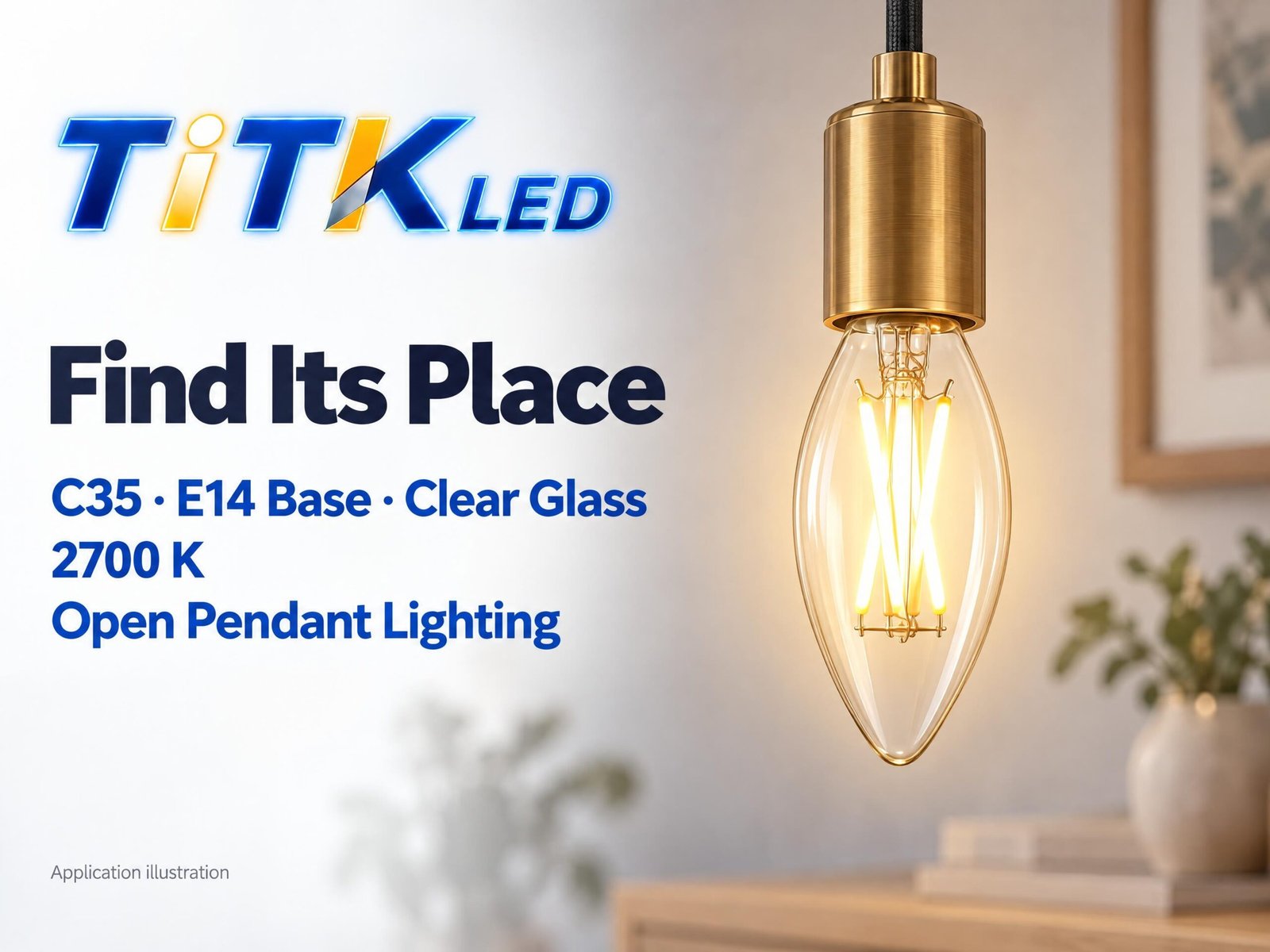
LED Bulb Optical Performance: What Buyers Should Compare
When buyers evaluate LED bulb optical performance, they are really comparing how a bulb looks and behaves once it is inside a fixture. That includes how the light spreads, how comfortable it feels to the eye, how colors appear, and how the bulb interacts with glass finish, shape, and lamp design.
For B2B buyers, distributors, and installers, the goal is not just to find a bulb that turns on. It is to select the right optical approach for the intended lighting applications—whether that is a pendant, chandelier, wall sconce, table lamp, or hospitality feature light.
TITK focuses on LED Filament Bulbs and Decorative LED Bulbs, so the optical choices often center on filament visibility, glass finish, color appearance, and dimming behavior. The best option depends on the fixture, the desired mood, and the level of visual emphasis the bulb should provide.
Core Optical Criteria to Review
1. Beam spread and light distribution
Beam spread describes how widely the light is distributed. A bulb with broader distribution is often better when the goal is ambient illumination. A more directional or visually concentrated appearance may suit decorative fixtures where the bulb itself is part of the design.
In practice, beam spread is influenced by the bulb shape, filament layout, and whether the glass is clear, frosted, or milky. Buyers should confirm the intended viewing distance and fixture type before selecting a model.
2. Glare control and visual comfort
Glare becomes more noticeable in exposed-bulb fixtures, especially in hospitality spaces and residential interiors where the lamp is visible from seated positions. A clear glass bulb can create a brighter visual presence and make the filament more prominent, while frosted or milky glass can soften the appearance.
There is no single best answer. For statement lighting, higher visual contrast may be desirable. For comfort-focused spaces, softer optics may be more appropriate.
3. Color temperature and atmosphere
Color temperature strongly affects how the light is perceived. TITK offers models that may be available in options such as 2200K, 2700K, 3000K, 4000K–4500K, and 6500K depending on the model. Warm light is often chosen for relaxed interiors, while cooler light may suit task-oriented or contemporary spaces.
For projects needing flexibility, some models support multiple color temperatures or adjustable CCT. Always confirm the specific product configuration before ordering.
4. Color rendering
For spaces where material finish, food presentation, or interior décor matters, high CRI lighting is often a key decision factor. A higher CRI generally helps colors appear more natural, which can matter in restaurants, retail, hotel lobbies, and residential accent lighting.
TITK verifies CRI on selected models only. Buyers should compare the confirmed CRI value for each bulb, not assume that all decorative lamps perform the same.
Technical Approaches: Which Optical Type Fits Which Project?
| Optical approach | Typical trade-off | Best-fit applications |
|---|---|---|
| Clear glass bulbs | Stronger filament visibility, more decorative impact, potentially more glare | Exposed pendants, chandeliers, vintage-style interiors, feature lighting |
| Frosted or milky glass bulbs | Softer appearance, less filament definition, reduced visual contrast | Residential spaces, comfort-focused interiors, wall sconces, vanity lighting |
| Amber tea or smoke glass bulbs | Distinctive mood, lower apparent brightness, stronger styling effect | Bars, cafés, hospitality accents, decorative displays |
| Warm CCT models | Relaxed atmosphere, less task-oriented appearance | Restaurants, lounges, bedrooms, dining areas |
| Adjustable or dual-CCT models | Greater flexibility, more specification checks needed | Projects needing changing scenes or multi-use rooms |
These are not absolute rules. The right choice depends on the fixture geometry, surrounding materials, and how much of the bulb remains visible.
Glass Finish and Filament Design Matter More Than Many Buyers Expect
Glass finish changes the way a bulb looks even before electrical performance is considered. TITK offers glass options that may include clear glass, amber tea glass, smoke grey glass, frosted glass, and milky glass depending on the model. That variety matters because the same fixture can feel very different with a different finish.
For example, decorative LED bulbs in exposed pendants usually benefit from a more deliberate visual presentation. Clear glass shows the filament clearly, while amber or smoke finishes can create a more atmospheric result. In contrast, if the bulb sits close to the viewer, a softer finish may reduce visual harshness.
Filament layout also affects optical performance. Some bulbs are designed to emphasize a vintage effect, while others are built to balance decorative appearance with more even light output. For buyers comparing Edison bulbs, the question is not only style but also how the filament arrangement will look when illuminated.
How to Match Optical Performance to the Application
Restaurants and cafés
For warm, social spaces, buyers often want a balance of comfort and design. In these settings, the bulb should support mood without producing excessive glare. Many projects favor warm CCT, clear or amber finishes, and visibly decorative shapes.
Hotels and hospitality interiors
In hospitality lighting, optical performance must support brand image and guest comfort at the same time. Lobby pendants, corridor sconces, and lounge fixtures may need different visual treatments. A decorative bulb can be effective when the fixture is exposed, but softer optics may work better where people sit or stand close to the source.
Retail and commercial interiors
In commercial lighting, color appearance and consistency are often important because they influence product presentation and customer perception. Buyers may prioritize confirmed CRI, color temperature, and fixture compatibility more than a purely decorative look.
Residential and designer fixtures
In homes, villas, and premium interiors, the optical decision often comes down to whether the bulb is a visible design element. For chandeliers, table lamps, and wall sconces, the shape and glass finish can be as important as the light itself.
Product-Level Decisions Buyers Should Confirm Before Ordering
- Base type: confirm E14, E26, E27, or B22 as required by the fixture.
- Voltage: verify AC or low-voltage configuration for the exact model.
- Color temperature: confirm the available CCT options and whether the model supports adjustable CCT.
- Glass finish: choose clear, amber, smoke, frosted, or milky according to the visual goal.
- Brightness and CRI: review the confirmed product specification instead of assuming performance from shape alone.
- Dimming or smart control: check compatibility if the project uses dimmable LED bulbs or control systems.
These checks are especially important for wholesalers, project contractors, and OEM/ODM buyers, because optical performance can change meaningfully from one model to another.
Where TITK Fits In
TITK is a Zhongshan, Guangdong-based LED lighting manufacturer and B2B supplier focused on LED filament and decorative bulb categories. Its product range includes LED Edison Bulbs, LED Candle Bulbs, globe bulbs, tubular bulbs, and selected dimmable and smart options. For project work, that range gives buyers multiple ways to match shape, glass, and optical effect to the fixture.
For example, the verified ST58 / ST19 configuration combines clear glass, 2700K warm white, dimmable operation, and 90+ CRI. The verified G95 hand-painted decorative bulb uses a decorative visual design with 2700K output, while the ST64 smart and low-voltage models illustrate how color modes and operating conditions can vary by product. These are model-specific examples, not universal specifications.
If you are sourcing for wholesale, private label, or project supply, the safest approach is to compare the actual product specification sheet and request samples where appearance is critical.
Conclusion: Optical Performance Is a Specification, Not Just a Style Choice
Good LED bulb optical performance is the result of several decisions working together: shape, glass finish, color temperature, CRI, dimming behavior, and how the bulb is seen inside the fixture. Buyers who compare these factors early are more likely to avoid mismatches at installation.
If you are planning a new project or comparing models for wholesale, request a quotation, confirm the final voltage and base, and ask TITK about the best model for your specific fixture requirements.
For a broader view of available product families, you can also review the full LED Bulbs category and the Decorative LED Bulbs range.



