
How to Evaluate an LED Filament Bulb Supplier for B2B Projects
A practical guide for B2B buyers on how to evaluate an LED filament bulb supplier by base, voltage, glass, CCT, OEM options, and project fit.

How should buyers evaluate an LED filament bulb supplier?
For international B2B buyers, the most important question is not simply who sells LED filament bulbs, but who can supply the right model consistently for your project. A reliable LED filament bulb supplier should help you match product shape, base, voltage, glass finish, color temperature, dimming function, and packaging to the application. That is especially important for wholesalers, distributors, lighting brands, installers, and project buyers who need repeatable specifications rather than one-off retail products.
TITK, the brand of Zhongshan Tituo Lighting & Electrical Appliances Co., Ltd., focuses on LED filament bulbs and decorative LED bulbs for wholesale, commercial lighting, hospitality lighting, lighting projects, distributors, importers, lighting brands, and OEM/ODM customers. The right supplier conversation should start with the application, then move to the exact model.
What product details should you confirm first?
The easiest sourcing mistake is to treat all filament bulbs as interchangeable. They are not. Even when two bulbs look similar, the wrong base, voltage, or glass finish can make a product unsuitable for the fixture or market.
1. Base compatibility
Depending on the product model and project requirements, TITK products may use E14, E26, E27, or B22 lamp bases. Confirm the socket before ordering. A bulb that fits one market standard may not fit another.
2. Voltage matching
Voltage must always be confirmed for the individual model. TITK manufactures products for different voltage applications, including AC 110–120 V, AC 220–240V, and DC low-voltage designs such as DC 3.7V or DC 5V on selected models. Never assume a low-voltage bulb can be connected directly to mains AC power.
3. Shape and glass finish
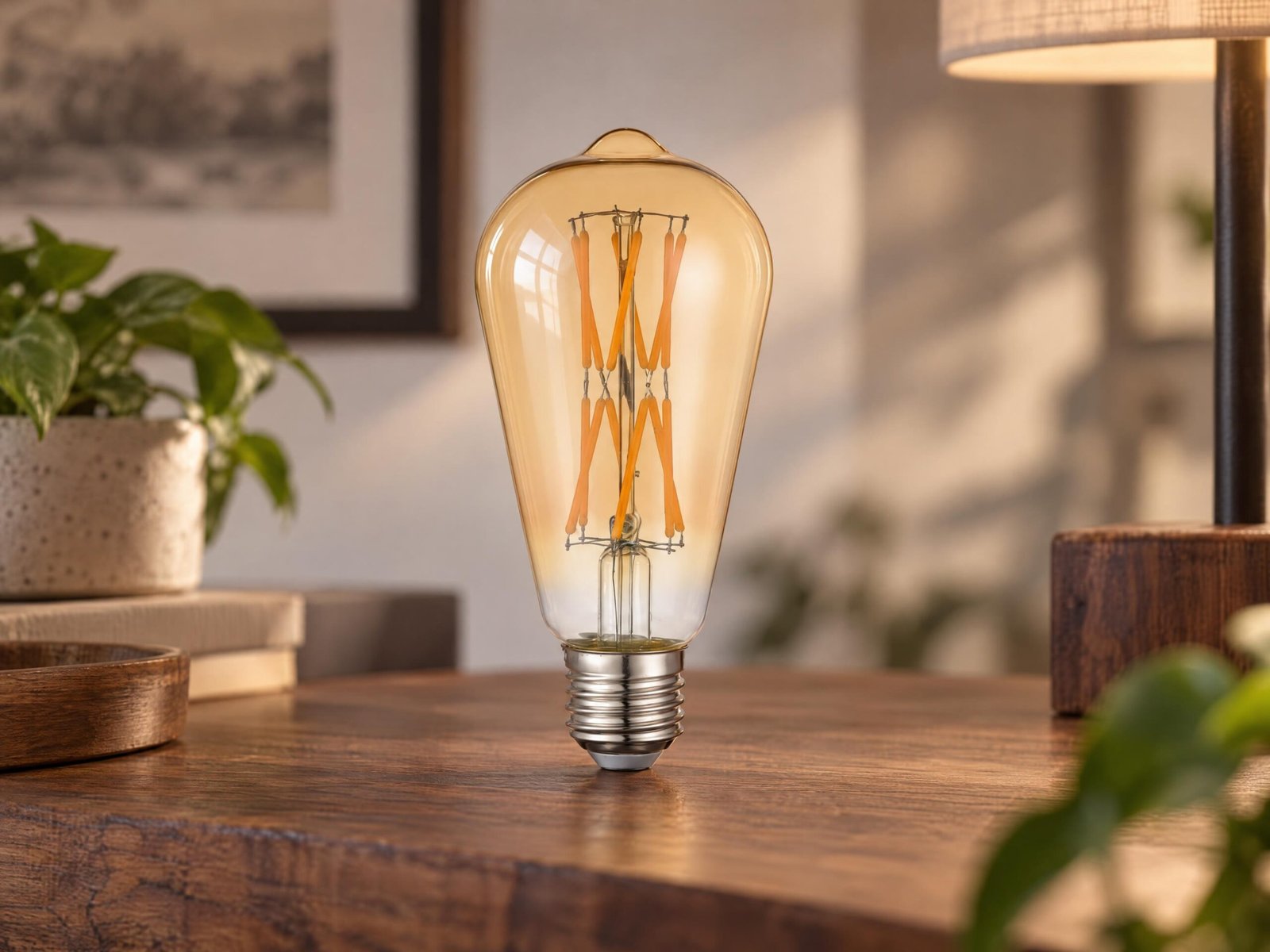
TITK offers product families such as C35 candle LED filament bulbs, G45 globe LED filament bulbs, A60 LED filament bulbs, ST58 Edison LED filament bulbs, ST64 Edison LED filament bulbs, ST21 Edison-style LED bulbs, T30 tubular LED bulbs, and larger globe options such as G80, G95, and G125. Depending on the model, glass finish options may include clear glass, amber tea glass, smoke grey glass, frosted glass, and milky glass.
For buyers comparing decorative LED bulbs, the shape and finish often matter as much as the light source itself.
Why color temperature and CRI matter in supplier selection
Color temperature determines how warm or cool the bulb appears, while CRI affects how natural colors are rendered. Depending on the model, TITK LED bulbs may be available in 2200K, 2700K, 3000K, 4000K–4500K, or 6500K. Some models support multiple color temperatures or adjustable CCT.
High-visibility spaces, display areas, and hospitality settings often require careful specification. For example, a buyer may prefer warm decorative light in a café or restaurant, while a commercial interior may need a more neutral appearance. If you are sourcing warm white lighting for a decorative fixture, confirm both the CCT and the glass finish before placing a wholesale order.
CRI is equally important. TITK verifies CRI values on selected models, including the following product-specific configurations:
- ST58 / ST19 LED Filament Bulb: CRI 90+, 2700K warm white, dimmable, clear glass, E26 base, AC 110–120 V
- ST64 / ST21 2.4G Smart LED Filament Bulb: CRI 90+, smooth dimming, adjustable color temperature, E26 base
- G95 Hand-Painted Decorative LED Filament Bulb: CRI 80+, 2700K, E27 base
For any other model, confirm the exact specification with TITK before ordering.
How do OEM buyers compare supplier capability?
For OEM LED bulbs and private-label projects, the key question is whether the supplier can align the product with your market requirements. TITK supports OEM and ODM cooperation for B2B customers, and depending on the project and product, customization may include product specifications, lamp base, input voltage, wattage, color temperature, glass finish, filament design, dimming functions, smart-control functions, product branding, private label, and packaging.
This is where a disciplined sourcing process helps. Ask for model-specific confirmation rather than general promises. A supplier that can customize one bulb family may not be able to customize every family in the same way.
Practical OEM questions to ask
- Which exact model fits my target fixture and market voltage?
- Which base options are available for that model?
- Can the color temperature or CCT be adjusted for the project?
- Is dimming supported on this specific version?
- Can packaging and branding be customized?
These questions are especially useful when sourcing from LED bulb suppliers for regional distribution or specification-based projects.
Which models are useful as starting points?
If you want to compare a supplier’s range before requesting samples, product pages can help you narrow the shortlist. TITK’s LED Filament Bulbs category is a practical starting point for shape and base comparisons, while the Decorative LED Filament Bulbs category is useful for buyers looking at visual effect and decorative applications.
For example, some buyers may prefer a classic vintage profile, while others want a more contemporary decorative globe. Product families such as ST64, ST58, A60, G95, and G125 can serve different fixture types and visual goals, depending on the model.
For a specific reference point, you can also review the LED Filament Bulb Manufacturer Vintage Decorative Lighting Supplier OEM & Wholesale LED Lighting Solutions product page to see how one decorative filament bulb configuration is presented for B2B sourcing.
What should buyers verify before placing a wholesale order?
A good supplier relationship reduces risk only when both sides confirm the same specification. Before you approve a quotation, verify the following:
| Item | Why it matters |
|---|---|
| Model | Prevents confusion between similar-looking bulb families |
| Base | Ensures fixture compatibility |
| Voltage | Prevents unsafe or unusable installation |
| Color temperature | Matches the visual requirement of the project |
| Glass finish | Affects appearance and decorative effect |
| Dimming or smart function | Ensures control compatibility |
| Packaging and branding | Supports retail or private-label needs |
If your project includes commercial lighting or hospitality lighting, it is worth checking sample approval carefully before full production. Even small variations in appearance can affect the final lighting design.
What are the practical next steps with TITK?
When you contact TITK, share the fixture type, target market, preferred base, voltage requirement, color temperature, and any decorative or branding needs. If you need a custom solution, mention whether the project is for wholesale distribution, retail packaging, or a specific installation.
For buyers working with pendant fixtures or statement luminaires, model selection is especially important. If you are comparing larger formats, the G125 LED filament bulb vintage Edison globe design page is another useful reference point.
TITK’s product range also includes options such as low-voltage LED filament bulbs, smart LED filament bulbs, dual-CCT LED bulbs, and decorative glass LED bulbs, depending on the model. The right choice depends on the project, not only on the bulb shape.
Conclusion
The best LED filament bulb supplier is the one that can match the exact model to your fixture, market, and specification requirements. For B2B buyers, that means confirming base, voltage, CCT, glass finish, dimming function, and customization needs before ordering. If you are building a wholesale program or preparing a project quotation, request samples and confirm the final specification with TITK before purchase.
Next step: contact TITK to request product specifications, discuss OEM/ODM options, or confirm the right filament bulb model for your market.



